
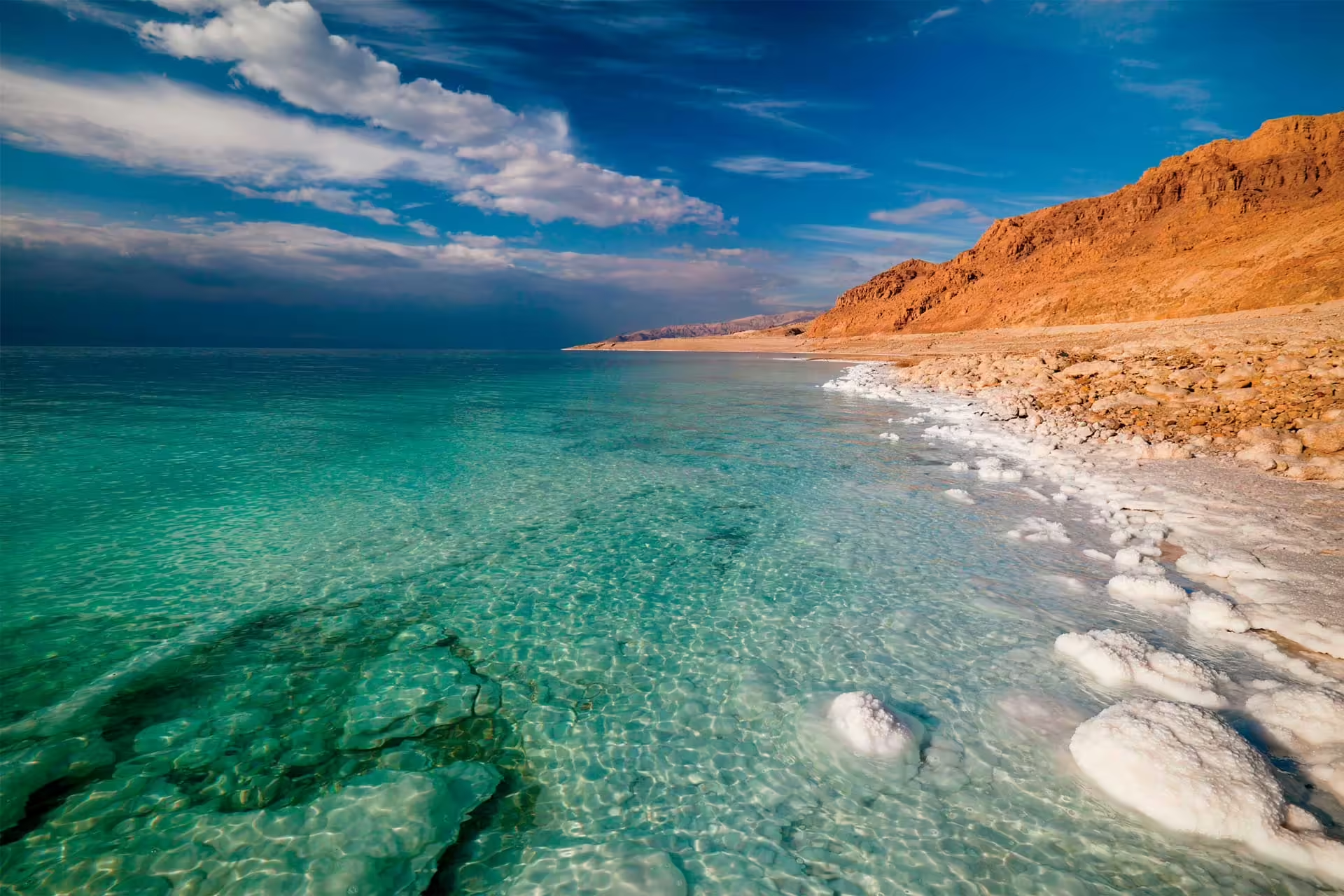
File:Dead_Sea_beach_00.JPG · Wikimedia Commons · See Wikimedia Commons
Dead Sea
Sign in to saveAlso known as Lake Asphaltitis, The Dead Sea, Sea of Lot, Asphaltic Lake, Lake Asphaltites, Sea of Arava, Sea of Zoar, Salt Sea
lake with no outflow (sea) in Western Asia
OverviewAI-generated
The Dead Sea is a body of water with an area of 1050 and a perimeter of 135. It has a length of 67 and a width of 18. The vertical depth of the sea is 360, and its volume is 148000. The watershed area covers 41650.
The elevation above sea level is -440.81. The salinity is 33.7. The subject is categorized under "Dead Sea" in Commons and has a gallery with the same name. It is described at a URL on placemania.sk. The source title is "Mŕtve more - Jordánsko - PlaceMania." The content has a character count of 18688 and is grounded. It is referenced by 1,787 other encyclopedia articles.
Synthesized by Vinony from 17 facts across 3 sources: Wikidata, Firecrawl, Vinony graph. Generated from structured data (not the Wikipedia text) and checked against those facts — may still contain errors.
Described at
Mŕtve more - Jordánsko - PlaceMania
Mŕtve more je hypersalinné jazero ležiace 427 metrov pod úrovňou svetového oceánu medzi Izraelom a Jordánskom. Jeho extrémna slanosť a rýchly pokles hladiny z neho robia jedinečný, no ohrozený geografický fenomén.
placemania.sk →Čakalo ho však niečo ešte horšie. Stredovekí kresťanskí pútnici, ktorí sa pri ňom zastavovali na ceste medzi horou Sinaj a Jeruzalemom, mu hovorili Diablovo more. Verili, že pod jeho hladinou číhajú kadejaké bizarné príšery, a že z neho stúpajú zapáchajúce a škodlivé výpary. Napokon ďalšou prezývkou, ktorá sa s ním spájala, bolo aj Smradľavé jazero. Nepochybne to súviselo so sírnym zápachom, ktorý z neho vychádzal a dodnes vychádza. Až v posledných päťdesiatich rokoch však Mŕtve more vstúpilo do fázy, ktorá preň môže byť naozaj smrteľná. V ohrození nie je len jedinečný fenomén, ktorý bol viac ako dve tisícročia charakteristickou črtou celej oblasti a ku ktorému sa viažu posvätné miesta židov, moslimov a kresťanov, ale aj celý okolitý ekosystém. Pri ústupe Mŕtveho mora vzniká množstvo prepadlísk ohrozujúcich neďaleké cesty, pozemky a hotely pre turistov a pútnikov, ktorí sa chcú okúpať v údajne blahodarných vodách mora. V nasledujúcich desaťročiach hrozí Mŕtvemu moru katastrofa, ktorú odvrátia len rázne a drastické opatrenia na jeho opätovné naplnenie. Zakladateľ projektu PlaceMania.sk a zodpovedá za jeho obsah, technické fungovanie a dlhodobý rozvoj. Cestovné zápisky na webe vychádzajú z vlastnej skúsenosti z ciest; faktografické záznamy o miestach vznikajú kombináciou verejných zdrojov, automatizovaného spracovania dát a redakčného overovania. Zameriava sa na netradičné lokality, ich historický a geografický kontext a menej známe súvislosti. Things to do near Mŕtve more, Dead Sea, Lake Amora, البحر الميت, Totes Meer, Mer Morte, Mar Muerto, Jazero, Prírodný útvar, lake, natural feature, Areedh Sub-District, Madaba Governorate, Jordan, الأردن, Jordánsko. Find tours, guided tours, local activities, attractions, tickets, excursions, sightseeing, day trips and travel experiences nearby. Coordinates: 31.5, 35.5. Na vrchole hory v najväčšej jordánskej biosférickej rezervácii sa nachádza dedina duchov. Kúpele z obdobia druhého islamského kalifátu zdobia fresky so súhvezdiami, záhradami rozkoše a nahými ženami. Pozrite si ďalšie zaujímave miesta vo svete, ktoré stoja za naplánovanie ďalšej cesty. Na mieste, kde kedysi bolo more, sa v púšti nachádzajú hrdzavé lode. Kedysi rušný rybársky prístav, dnes je toto polozabudnuté mesto vzdialené viac ako 150 kilometrov od pobrežia. Slané jazero pri Burgase, ktorého časť získava ružový odtieň vďaka mikroorganizmom Dunaliella salina. Chcete vidieť ďalšie úchvatné miesta ako Mŕtve more? Nájdeš ich u nás na mape. Objav s nami ďalšie úžasné miesta na zemi.
Excerpt from a page describing this subject · 18,688 chars · not written by Vinony
Wikidata facts
- Instance of
- hypersaline lake
- Has part
- Jordanian Dead Sea
- Country
- Palestine
- Located in
- Jordan
- Area
- 1050
- Elevation
- -440.81
- Image
- Dead sea.jpg
- Width
- 18
- Length
- 67
- Perimeter
- 135
Show 14 more facts
- inflows
- Ashalim Wadi
- Commons category
- Dead Sea
- topic's main category
- Category:Dead Sea
- Commons gallery
- Dead Sea
- basin country
- Palestine
- vertical depth
- 360
- volume as quantity
- 148000
- watershed area
- 41650
- category for the water basin
- Category:Dead Sea basin
- salinity
- 33.7
- different from
- Sea of Death
- on focus list of Wikimedia project
- Wikipedia:Vital articles/Level/4
- P8168
- Wei Guan
- described at URL
- www.placemania.sk/svetova-zaujimavost/mrtve-more
Sources (8)
via Wikidata · CC0
~40 min read
Encyclopedic overview
The Dead Sea (Arabic: اَلْبَحْر الْمَيِّت, romanized: al-Baḥr al-Mayyit; or اَلْبَحْر الْمَيْت, al-Baḥr al-Mayt; Hebrew: יַם הַמֶּלַח, romanized: Yam hamMelaḥ), also known by other names, is a landlocked salt lake bordered by Jordan to the east, the West Bank to the west and Israel to the southwest. It lies in the endorheic basin of the Jordan Rift Valley, and its main tributary is the Jordan River.
As of 2025, the lake's surface is 439.78 metres (1,443 ft) below sea level, making its shores the lowest land-based elevation on Earth. It is 304 m (997 ft) deep, the deepest hypersaline lake in the world. With a salinity of 342 g/kg, or 34.2% (in 2011), it is one of the world's saltiest bodies of water, 9.6 times as salty as the ocean—and has a density of 1.24 kg/litre, which makes swimming similar to floating. This salinity makes for a harsh environment in which plants and animals cannot flourish, hence its name. The Dead Sea's main, northern basin is 50 kilometres (31 mi) long and 15 kilometres (9 mi) wide at its widest point.
Excerpted from Wikipedia’s “Dead Sea” article, available under the CC BY-SA 4.0 licence.
Gallery (12)
On the map
Available in 152 languages
- Español
- Français
- Deutsch
- 中文
- 日本語
- Русский
- Português
- Italiano
- العربية
- हिन्दी
- Afrikaans
- Albanian
- Amharic
- Aragonese
- Aramaic
- Armenian
- Assamese
- Asturian
Show 133 more
- azb
- Azerbaijani
- Bahasa Indonesia
- Balinese
- Bangla
- Bashkir
- Basque
- bat_smg
- be_x_old
- Belarusian
- Bhojpuri
- Bikol
- Bosnian
- Breton
- Bulgarian
- Burmese
- Catalan
- cdo
- Cebuano
- Central Dusun
- Central Kurdish
- Chuvash
- Colognian
- Cornish
- Corsican
- Croatian
- Czech
- Danish
- Divehi
- Egyptian Arabic
- Esperanto
- Estonian
- Faroese
- Fiji Hindi
- Filipino
- Finnish
- Galician
- Georgian
- Gorontalo
- Greek
- Hebrew
- Hungarian
- hyw
- Icelandic
- Ido
- Inari Sami
- Interlingua
- Irish
- Javanese
- Kannada
- Kara-Kalpak
- Kashmiri
- Kashubian
- Kazakh
- kbp
- Khmer
- Kurdish
- Kyrgyz
- Lao
- Latin
- Latvian
- Limburgish
- Lithuanian
- Lower Sorbian
- Luxembourgish
- Macedonian
- Maithili
- Malagasy
- Malay
- Malayalam
- Marathi
- Mari
- Mazanderani
- Minangkabau
- Mingrelian
- Mongolian
- Moroccan Arabic
- Nederlands
- Nepali
- Newari
- Norwegian
- Norwegian Nynorsk
- Obolo
- Occitan
- Ossetic
- Papiamento
- Pashto
- Piedmontese
- Polski
- Punjabi
- pwn
- Quechua
- Romanian
- Rusyn
- Sanskrit
- Sardinian
- Serbian
- Serbian (Latin)
- Sicilian
- simple
- Slovak
- Slovenian
- Sundanese
- Svenska
- Swahili
- Tachelhit
- Tajik
- Tamil
- Tatar
- Telugu
- Tiếng Việt
- Toki Pona
- Türkçe
- Turkmen
- Ukrainian
- Upper Sorbian
- Urdu
- Uzbek
- Waray
- Welsh
- West Flemish
- Western Frisian
- Western Panjabi
- Wu Chinese
- Yiddish
- Zaza
- zh_classical
- zh_min_nan
- zh_yue
- Zhuang
- فارسی
- ไทย
- 한국어
via Wikidata sitelinks · CC0