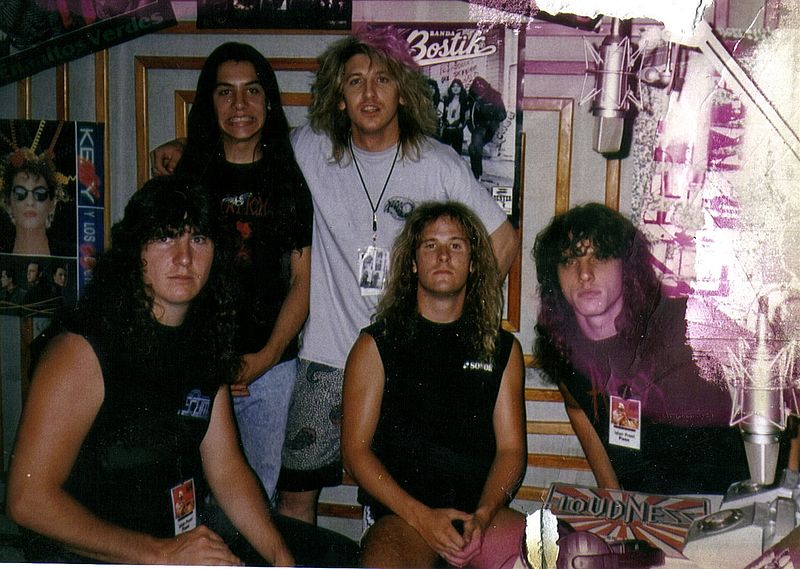
File:Death_Mexico_06-89.jpg · Wikimedia Commons · See Wikimedia Commons
death metal
Sign in to saveextreme subgenre of heavy metal music
Death metal is an extreme subgenre of heavy metal music that emerged from the broader heavy metal tradition. It matters as a significant cultural and musical movement that has influenced metal music and broader popular culture since its development.
AI-generated from the Wikipedia summary — may contain errors.
Wikidata facts
- Instance of
- music genre
- Subclass of
- extreme metal
- Country of origin
- United States
- Image
- 20140607 Gelsenkirchen RockHard 0423.jpg
Show 5 more facts
- topic's main category
- Category:Death metal
- inception
- 1985-01-01
- native label
- Death Metal
- different from
- deathrock
- Commons category
- Death metal
via Wikidata · CC0
~30 min read
Encyclopedic overview
Death metal is an extreme subgenre of heavy metal music. It typically employs heavily distorted and low-tuned guitars, played with techniques such as palm muting and tremolo picking; deep growling vocals; aggressive, powerful drumming, featuring double kick and blast beat techniques; minor keys or atonality; abrupt tempo, key, and time signature changes; and chromatic chord progressions. The lyrical themes of death metal may include slasher film-style violence, political conflict, religion, nature, philosophy, true crime and science fiction.
Building from the musical structure of thrash metal and early black metal, death metal emerged during the mid-1980s. Bands such as Venom, Celtic Frost, Slayer, and Kreator were important influences on the genre's creation. Possessed, Death, Necrophagia, Obituary, Autopsy, and Morbid Angel are often considered pioneers of the genre. In the late 1980s and early 1990s, death metal gained more media attention as a popular genre. Niche record labels like Combat, Earache, and Roadrunner began to sign death metal bands at a rapid rate.
Excerpted from Wikipedia’s “death metal” article, available under the CC BY-SA 4.0 licence.
Gallery (12)
Available in 64 languages
- Español
- Français
- Deutsch
- 中文
- 日本語
- Русский
- Português
- Italiano
- العربية
- Aragonese
- Armenian
- Azerbaijani
- Bahasa Indonesia
- Bangla
- Basque
- Bavarian
- be_x_old
- Belarusian
Show 45 more
- Bosnian
- Breton
- Bulgarian
- Burmese
- Catalan
- Central Kurdish
- Croatian
- Czech
- Danish
- Esperanto
- Estonian
- Finnish
- Galician
- Georgian
- Greek
- Hebrew
- Hungarian
- Icelandic
- Ido
- Latvian
- Lithuanian
- Macedonian
- Malay
- Nederlands
- Norwegian
- Norwegian Nynorsk
- Occitan
- Polski
- Romanian
- Scots
- Scottish Gaelic
- Serbian
- Serbian (Latin)
- simple
- Slovak
- Slovenian
- Svenska
- Tiếng Việt
- Türkçe
- Ukrainian
- Uzbek
- Wu Chinese
- فارسی
- ไทย
- 한국어
via Wikidata sitelinks · CC0