
File:Hendrick_Andriessen_-_Vanity_Piece_-_1914-DE_-_Museum_of_Fine_Arts_Ghent_(MSK).jpg · Wikimedia Commons · See Wikimedia Commons
Also known as bereft of life, perish, oblivion, mortis, fallen, meeting the Reaper, deaths, succumbs
生物停止生命活動
OverviewAI-generated
Death is an end, concept, and property that serves as the opposite of birth. It is a facet of the development of the human body and life, classified as an occurrence. The subject includes cell death and has immediate causes such as dying and clinical death. It is studied by sociology of death, forensic medicine, and thanatology.
The concept has characteristics including manner of death and cause of death, with parts of the class encompassing cause of death and manner of death. Causes include homicide and suicide. It is different from Tod and Death, and has Unicode characters 💀 and ☠. Death is described by sources including the Brockhaus and Efron Encyclopedic Dictionary, the Jewish Encyclopedia of Brockhaus and Efron, the Bible Encyclopedia of Archimandrite Nicephorus, and the Explanatory Dictionary of the Living Great Russian Language.
Synthesized by Vinony from 29 facts across 4 sources: Wikidata, Firecrawl, PubMed, Vinony graph. Generated from structured data (not the Wikipedia text) and checked against those facts — may still contain errors.
Research
1,399,307 papers- Place of death and associated factors among reviewed maternal deaths in Ethiopia: a generalised structural equation modelling.ReviewBMJ open · 2023Tesfay N, Tariku R, Zenebe A et al.DOI: 10.1136/bmjopen-2022-060933
- Maternal death analysis based on data from the nationwide registration system in Japan (2010-2018).ReviewPathology international · 2021Wakasa T, Ishibashi-Ueda H, Takeuchi MDOI: 10.1111/pin.13076
- Sudden death of feedlot cattle.ReviewJournal of animal science · 1998Glock RD, DeGroot BDDOI: 10.2527/1998.761315x
- Global and regional causes of maternal deaths 2009-20: a WHO systematic analysis.The Lancet. Global health · 2025Cresswell JA, Alexander M, Chong MYC et al.DOI: 10.1016/S2214-109X(24)00560-6
- Incompleteness and misclassification of maternal death recording: a systematic review and meta-analysis.BMC pregnancy and childbirth · 2023Ahmed SMA, Cresswell JA, Say LDOI: 10.1186/s12884-023-06077-4
- Maternal sudden death: A nationwide retrospective study.BJOG : an international journal of obstetrics and gynaecology · 2023Braund S, Leviel J, Morau E et al.DOI: 10.1111/1471-0528.17294
- Sudden unexpected death in epilepsy.ReviewThe Indian journal of medical research · 2017Duble SN, Thomas SVDOI: 10.4103/ijmr.IJMR_548_17
- Characteristics of sudden death by clinical criteria.Medicine · 2023Sefton C, Keen S, Tybout C et al.DOI: 10.1097/MD.0000000000033029
via PubMed
Described at
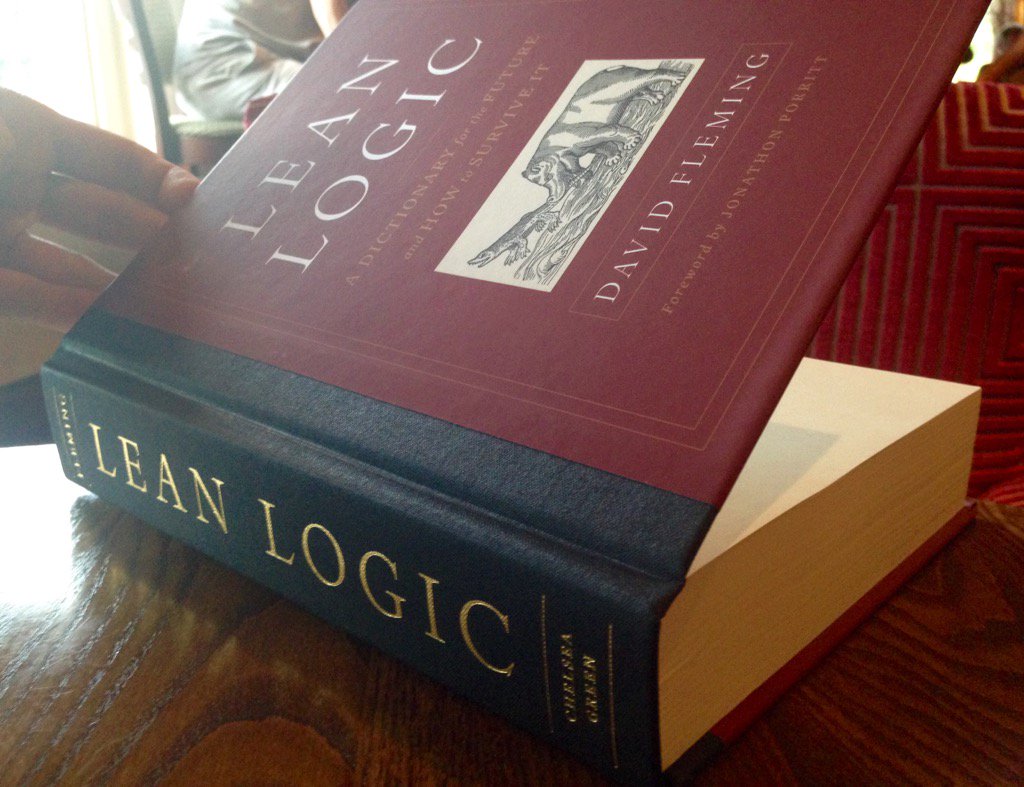
Death - LEAN LOGIC
The means by which an ecosystem keeps itself alive, selects its fittest, controls its scale, gives peace to the, The means by which an ecosystem keeps itself alive, selects its fittest, controls its scale, gives peace to the tormented, enables young life, and accumulates a grammar of inherited meaning as generations change places. A natural system lies in tension between life and death: death is as important to it as life. A lot of death is a sign of a healthy large population. Too much death is a sign that it is in danger; it is not coping; its terms of coexistence with its habitat are breaking down. Too little death is a sign of the population exploding to levels which will destroy it and the ecology that supports it. No death means that the system is already dead.
leanlogic.online →Link to a page describing this subject · 4,342 chars · not written by Vinony
Wikidata facts
- Instance of
- property
- Subclass of
- occurrence
- Image
- Dead baby bird.jpg
- Said to be same as
- brain death
- Has parts of class
- manner of death
Show 17 more facts
- Commons category
- Death
- opposite of
- birth
- topic's main category
- Category:Death
- topic has template
- Template:Death
- facet of
- life
- on focus list of Wikimedia project
- Wikipedia:Vital articles/Level/4
- NCI Thesaurus ID
- C28554
- has immediate cause
- clinical death
- WordLift URL
- data.thenextweb.com/tnw/entity/death
- Unicode character
- ☠
- ICPC 2 ID
- A96
- exact match
- erlangen-crm.org/current/E69_Death
- has characteristic
- cause of death
- equivalent class
- pcp-on-web.de/ontology#Death
- P8168
- Heinrich Müller
- has cause
- Suicide
- described at URL
- baike.sogou.com/v69726.htm
via Wikidata · CC0
Article · 中文
死亡(英語:death),是相對於生命體存在(存活)的生命現象,指维持一个生物存活的所有的永久终止。能够导致死亡的现象一般有:衰老、被捕食、营养不良、疾病、窒息、自杀、他杀、餓死、脱水以及意外事故還有死刑(如槍斃或砍頭),过敏和药物过量,或者受伤。 除了燈塔水母這個可能的例外之外,已知生物都会不可避免地经历死亡,在人类社会中,死亡這自然现象被宗教和哲学关注了几千年。这些关注中可能包含有一种信念,即某种复活(相关于亚伯拉罕诸教)、转世(相关于古印度宗教,如婆羅門教、佛教等),或者意识永久消失,被称为「」。人类死亡之日稱為忌日、死忌。死亡之后的纪念仪式可能包括各种丧礼或葬礼。人的尸体通常被称为遗体,一般会土葬或火化,但亦有海葬、天葬、冰葬等多种其他方法处理遗体。 雖然在法律上常認為人死後沒有和活人相同的權利,但一些法律制度,其目的是爲了保護死人的權利,因此死人也有人權,不能認為死人沒有人權;另外死亡並非是一個單一的事件而是一個過程,而死亡判定在法律和醫學上有時也有爭議。
Abstract from DBpedia / Wikipedia · CC BY-SA
Gallery (52)
Available in 180 languages
- Español
- Français
- Deutsch
- 中文
- 日本語
- Русский
- Português
- Italiano
- العربية
- हिन्दी
- abstract
- Afrikaans
- Akan
- Albanian
- Albanian
- Amharic
- Aragonese
- Aramaic
Show 161 more
- Armenian
- Assamese
- Asturian
- Avaric
- azb
- Azerbaijani
- Bahasa Indonesia
- Bangla
- Bashkir
- Basque
- bat_smg
- Bavarian
- be_x_old
- Belarusian
- Bhojpuri
- Bikol
- Bosnian
- Breton
- btm
- Buginese
- Bulgarian
- Buriat
- Burmese
- Catalan
- cdo
- Cebuano
- Central Kurdish
- Chechen
- Church Slavic
- Chuvash
- Cornish
- Croatian
- Czech
- dag
- Danish
- Divehi
- Egyptian Arabic
- Erzya
- Esperanto
- Estonian
- Extremaduran
- Fiji Hindi
- Filipino
- Finnish
- fiu_vro
- Galician
- Gan Chinese
- gcr
- Georgian
- Greek
- Guarani
- guw
- Haitian Creole
- Hakka Chinese
- Hausa
- Hebrew
- Hungarian
- hyw
- Iban
- Icelandic
- Ido
- Iloko
- Ingush
- Interlingua
- Inuktitut
- Irish
- Javanese
- Jju
- Kabyle
- Kannada
- Kazakh
- kbp
- Khmer
- Kikuyu
- Kurdish
- Kyrgyz
- Lao
- Latin
- Latvian
- Ligurian
- Limburgish
- Lingala
- Lithuanian
- Lombard
- Low German
- Macedonian
- Malagasy
- Malay
- Malayalam
- Maltese
- Marathi
- Mingrelian
- Mongolian
- Moroccan Arabic
- nah
- Nederlands
- Newari
- Nias
- Nigerian Pidgin
- Norwegian
- Norwegian Nynorsk
- Occitan
- Pampanga
- Papiamento
- Pashto
- Piedmontese
- Polski
- Punjabi
- Quechua
- roa_rup
- Romanian
- Rusyn
- Santali
- Scots
- Serbian
- Serbian (Latin)
- Shona
- Sicilian
- Silesian
- simple
- Sindhi
- Sinhala
- Slovak
- Slovenian
- Somali
- Sundanese
- Svenska
- Swahili
- Tamil
- Tatar
- Telugu
- Tibetan
- Tiếng Việt
- Toki Pona
- Tulu
- Türkçe
- Turkmen
- Tyap
- Ukrainian
- Urdu
- Uzbek
- Veps
- Walloon
- Waray
- Welsh
- Western Frisian
- Western Mari
- Western Panjabi
- Wu Chinese
- Yakut
- Yiddish
- Yoruba
- Zaza
- zh_classical
- zh_min_nan
- zh_yue
- Zhuang
- Zulu
- فارسی
- ไทย
- 한국어
via Wikidata sitelinks · CC0