Encyclopedia of Life · EOL (see source)
Dendrochirotida
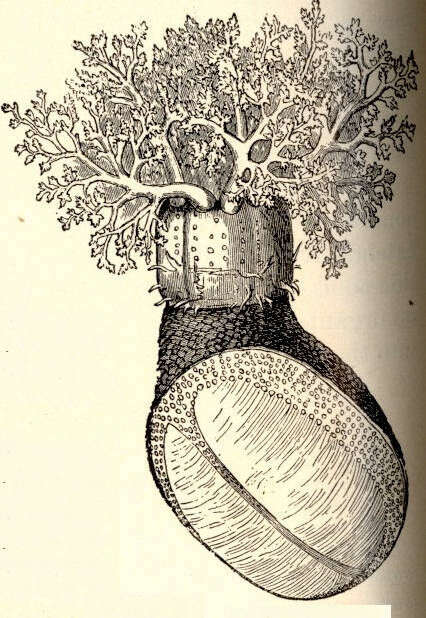
Sign in to saveDendrochirotida are an order of sea cucumbers. Members of this order have branched tentacles and are suspension feeders. Examples include Thyonella and Cucumaria.
Species
樹手目
ORDER
- KingdomAnimalia
- PhylumEchinodermata
- ClassHolothuroidea
- OrderDendrochirotida
Царство: Животные Подцарство: Эуметазои Без ранга: Двусторонне-симметричные Без ранга: Вторичноротые Тип: Иглокожие Класс: Голотурии Отряд: Dendrochirotida Международное научное название Dendrochirotida Grube, 1840 Изображенияна Викискладе ITIS 158142NCBI 7707EOL 2021FW 31228 Dendrochirotida (лат.) — отряд иглокожих из класса голотурий (Holothuroidea). Этот большой и широко распространённый отряд объединяет наиболее примитивных представителей данного класса, обладающих лучше выраженной пятилучевой симметрией, древовидными щупальцами и амбулакральными ножками, имеющими присоски и служащие для движения. Основная масса видов этого отряда обитает главным образом в прибрежных водах и на глубинах до 500-1000 м, и лишь единичные виды опускаются на более значительную глубину. В рамках этого отряда можно наблюдать голотурий с весьма разнообразной формой тела, чрезвычайно приспособленных для проживания в различных условиях[1][2]. Самым крупным видом отряда является Cucumaria frondosa с длиной тела до 60 см. Отряд содержит 555 видов в 90 родах из восьми семейств[3]: Cucumariidae Ludwig, 1894 Cucumellidae Thandar & Arumugam, 2011 Heterothyonidae Pawson, 1970 Paracucumidae Pawson & Fell
via GBIF
Museum specimens
- Specimen records
- 132
- With media
- 32
- Collections
- LACM, USNM, CAS, SIO, AUM, NMV
- Recorded in
- United States, Panama, Mexico, Antarctica, Greenland, Nicaragua, Australia
Wikidata facts
- Instance of
- taxon
- Image
- Pseudocolochirus axiologus.jpg
Show 4 more facts
- taxon rank
- order
- Commons category
- Dendrochirotida
- taxon name
- Dendrochirotida
- topic's main category
- Category:Dendrochirotida
Sources (1)
via Wikidata · CC0
~2 min read
Encyclopedic overview
3 sectionsContents
- Characteristics
- Taxonomy
- References
Dendrochirotida are an order of sea cucumbers. Members of this order have branched tentacles and are suspension feeders. Examples include Thyonella and Cucumaria.
==Characteristics== Holothurians in this order are characterised by ten to thirty much branched tentacles which are sometimes digitate. They also have ring structures composed of ten calcareous plates circling the pharynx. They have both retractor and introvert muscles which means they can retract the tentacles into the mouth when not feeding. The body wall is either firm with large ossicles or of a soft consistency with few ossicles. In some genera the animals attach themselves to hard surfaces but in others they burrow into soft sediments. Prey is captured by the sticky tentacles and transferred to the mouth. The larvae are lecithotrophic, not feeding on plankton but surviving only on materials already present in the eggs until they settle and become juveniles.
Excerpted from Wikipedia’s “Dendrochirotida” article, available under the CC BY-SA 4.0 licence.