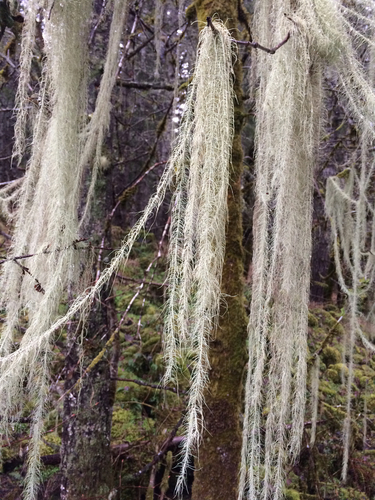
(c) B. Phalan, some rights reserved (CC BY), uploaded by B. Phalan · cc-by
Dolichousnea
Sign in to saveDolichousnea is a genus of fruticose lichens in the family Parmeliaceae. It has three species. The widely distributed type species, Dolichousnea longissima, is found in boreal regions of Asia, Europe, and North America.
Species
Methuselah's Beard Lichen
GENUS
- KingdomFungi
- PhylumAscomycota
- ClassLecanoromycetes
- OrderLecanorales
- FamilyParmeliaceae
via GBIF
Museum specimens
- Specimen records
- 6
- Family
- Parmeliaceae
- Collections
- MEL
- Recorded in
- Norway, Germany, Denmark, Mexico, Mauritius
Wikidata facts
- Instance of
- taxon
- Parent taxon
- Parmeliaceae
- Image
- Lichen Dolichousnea longissima IMG 4844.JPG
Show 5 more facts
- taxon rank
- genus
- taxon author citation
- (Y.Ohmura) Articus
- taxon name
- Dolichousnea
- taxonomic type
- Dolichousnea longissima
- Commons category
- Dolichousnea
Sources (2)
via Wikidata · CC0
~2 min read
Encyclopedic overview
5 sectionsContents
- Taxonomy
- Description
- Species
- References
- Cited literature
Dolichousnea is a genus of fruticose lichens in the family Parmeliaceae. It has three species. The widely distributed type species, Dolichousnea longissima, is found in boreal regions of Asia, Europe, and North America.
==Taxonomy== Dolichousnea was originally circumscribed as a subgenus of the large genus Usnea, by Japanese lichenologist Yoshihito Ohmura in 2001. He considered that it was possible to treat the three taxa as a genus, but thought it more suitable to treat Dolichousnea at the rank of subgenus, because the taxa have the synapomorphies of the genus Usnea: a fruticose thallus, a central cartilaginous axis throughout the thallus, and the presence of usnic acid in the cortex. In 2004, Kristina Articus proposed to raise the subgenus to generic rank, a decision that was accepted in later analyses.
Excerpted from Wikipedia’s “Dolichousnea” article, available under the CC BY-SA 4.0 licence.