OverviewAI-generated
Dragon Ball GT is a Japanese animated television series produced by Toei Animation. The single-season series consists of 64 episodes and aired from February 7, 1996, to November 19, 1997. It was broadcast during the Winter 1996 season. The show’s genres include Action, Adventure, Comedy, and Fantasy, with themes centered on Martial Arts.
The series has a status of Finished Airing. On the Jikan platform, it holds a score of 6.52 based on 453,120 ratings, with a rank of 7,637 and a popularity score of 359. The official website for the series is hosted by Toei Animation.
Synthesized by Vinony from 23 facts across 4 sources: Wikidata, Firecrawl, Jikan, Vinony graph. Generated from structured data (not the Wikipedia text) and checked against those facts — may still contain errors.
Anime · MyAnimeList
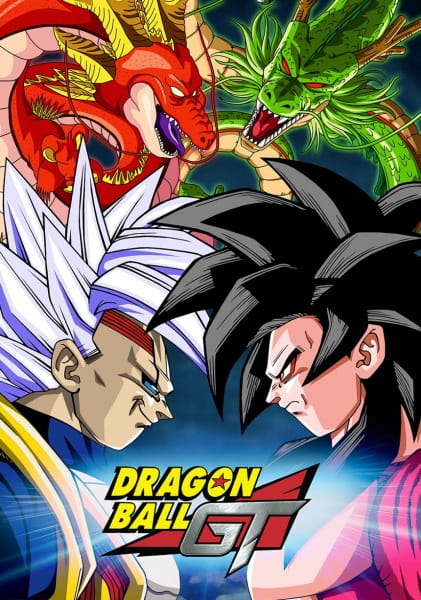
Dragon Ball GT
- Score
- 6.52/10 (453,120 votes)
- Rank
- #7637
- Popularity
- #359
- Type
- TV
- Episodes
- 64
- Status
- Finished Airing
- Aired
- 1996–1997
- Season
- Winter 1996
- Studios
- Toei Animation
Emperor Pilaf finally has his hands on the Black Star Dragon Balls after years of searching, which are said to be twice as powerful as Earth's normal ones. Pilaf is about to make his wish for world domination when he is interrupted by Gokuu Son. As a result, Pilaf flubs his wish…
via Jikan · MyAnimeList
Key facts
- Genre
- Adventure Fantasy comedy Martial arts
- Based on
- Dragon Ball , by Akira Toriyama
- Developed by
- Aya Matsui [ ja ] (#1–50)
- Directed by
- Osamu Kasai [ ja ]
- Voices of
- Masako Nozawa Yūko Minaguchi Takeshi Kusao Ryō Horikawa Shinobu Satouchi Atsushi Kisaichi
- Music by
- Akihito Tokunaga
- Opening theme
- " Dan Dan Kokoro Hikareteku " by, Field of View
- Ending theme
- " Hitori ja Nai " by, Deen (#1–26) " Don't You See! " by, Zard (#27–41) " Blue Velvet " by, Shizuka Kudo (#42–50) " Sabitsuita Machine Gun de Ima o Uchinukō " by Wands (#51–64)
- Country of origin
- Japan
- Original language
- Japanese
- Number span no of episodes
- 64 ( list of episodes )
- Executive producers
- Kōzō Morishita [ ja ] Kenji Shimizu [ ja ] (#1–26) Toru Kawai (#27–64) Seiichi Hiruta (#27–41) Tatsuya Yoshida (#42–64)
- Producers
- Kōji Kaneda (#1–26) Seiichi Hiruta (#1–26)
- Cinematography
- Sanko Production
- Editor
- Shinichi Fukumitsu
- Running time
- 24 minutes
- Production companies
- Fuji Television Toei Animation
- Network
- Fuji Television
via Wikipedia infobox
Official website
Link to the official site · 3,218 chars · not written by Vinony
Wikidata facts
- Country of origin
- Japan
- Original language
- Japanese
- Followed by
- Dragon Ball Super
- Follows
- Dragon Ball Z
- Main subject
- Japanese mythology
- Voice actor
- Paolo Torrisi
- Production company
- Toei Animation
- Narrative location
- Dragon World
- FilmAffinity ID
- 807379
- Distribution format
- video on demand
- Official website
- www.toei-anim.co.jp/TV/dragonball/index.html
Show 12 more facts
- media franchise
- Dragon Ball
- start time
- 1996-02-07
- end time
- 1997-11-19
- original broadcaster
- Fuji Television
- characters
- Uub
- number of episodes
- 64
- number of seasons
- 1
- has list
- list of Dragon Ball GT episodes
- list of episodes
- list of Dragon Ball GT episodes
- distributed by
- Hulu
- after a work by
- Akira Toriyama
- theme music
- Dan Dan Kokoro Hikareteku
via Wikidata · CC0
~34 min read
Encyclopedic overview
Dragon Ball GT (Japanese: ドラゴンボールGT, Hepburn: Doragon Bōru Jī-Tī) is a Japanese anime television series based on Akira Toriyama's Dragon Ball manga franchise that ran from February 1996 to November 1997. Produced by Toei Animation, the series premiered in Japan on Fuji Television and its FNS affiliates, running for a total of 64 episodes. Unlike Dragon Ball and Dragon Ball Z, the previous two television adaptations in the Dragon Ball media franchise, Dragon Ball GT does not adapt the manga. It serves as an anime-exclusive sequel to the Dragon Ball Z anime series, with an original story incorporating the same characters and universe. It follows the exploits of Son Goku, the series' main protagonist who is turned back into a child due to a Black Star Dragon Ball wish. After discovering that if they do not recollect all the balls within one year, the Earth will explode, Goku, his granddaughter Pan, and Trunks set off to traverse the universe in an attempt to find them.
Despite the series being a non-manga adaptation, franchise creator Akira Toriyama designed new characters and concepts for Dragon Ball GT. Chronologically, it is the last Dragon Ball series (taking place after Dragon Ball Z) and until the release of Dragon Ball Super (2015–2018), GT was the final televised series of the original Dragon Ball anime trilogy. Another later anime series where Toriyama was more involved in the production, Dragon Ball Daima (2024–2025), borrows several concepts featured in GT.
Excerpted from Wikipedia’s “Dragon Ball GT” article, available under the CC BY-SA 4.0 licence.