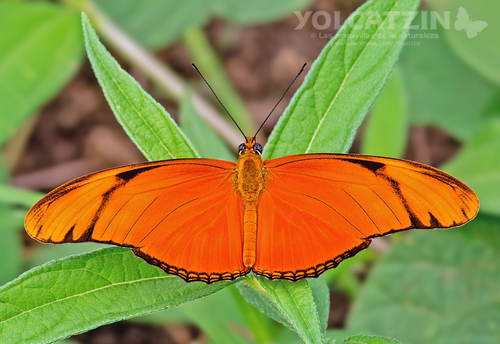
(c) Eduardo Axel Recillas Bautista, some rights reserved (CC BY-NC), uploaded by Eduardo Axel Recillas Bautista · cc-by-nc
Species
Julia Heliconian
species
via · Kew POWO
Museum specimens
- Specimen records
- 239
- With media
- 132
- Family
- Rosaceae
- Collections
- UNIVERSITY OF ALBERTA MUSEUMS, NY, ANSP, VPI, RSA, CLEVELAND MUSEUM OF NATURAL HISTORY, OH (CLEV)
- Recorded in
- Canada, Greenland, United States, Colombia, Saint Lucia, Brazil
Wikidata facts
- Instance of
- taxon
- Parent taxon
- Dryadoideae
- Image
- Dryas drummondii6.jpg
Show 8 more facts
- Commons category
- Dryas (Rosaceae)
- taxon rank
- genus
- taxon name
- Dryas
- taxon common name
- velesa
- has fruit type
- achene
- taxonomic type
- Dryas octopetala
- homonymous taxon
- Dryas
Sources (2)
via Wikidata · CC0
~4 min read
Encyclopedic overview
Dryas is a genus of perennial cushion-forming evergreen dwarf shrubs in the family Rosaceae, native to the arctic and alpine regions of Europe, Asia and North America. The genus is named after the dryads, the tree nymphs of ancient Greek mythology. The classification of Dryas within the Rosaceae has been unclear. The genus was formerly placed in the subfamily Rosoideae, but is now placed in subfamily Dryadoideae.
The species are superficially similar to Geum (with which they share the common name avens), Potentilla, and Fragaria (strawberry). However, Dryas are distinct in having flowers with eight petals (rarely seven or up to ten), instead of the five petals found in most other genera in the Rosaceae. The flowers are erect and white with a yellow centre (Dryas integrifolia, Dryas octopetala) or pendulous and all-yellow (Dryas drummondii), and held conspicuously above the small plants. This makes them very popular in rockeries and alpine gardens. The hybrid Dryas × suendermannii, with cream coloured flowers, has gained the Royal Horticultural Society's Award of Garden Merit.
Excerpted from Wikipedia’s “Dryas” article, available under the CC BY-SA 4.0 licence.