Dryopteris · Kew POWO · Kew Plants of the World Online
Dryopteris
Sign in to saveAlso known as dryopters
The moth genus Dryopteris is now considered a junior synonym of Oreta.
OverviewAI-generated
Dryopteris is a taxon at the genus rank within the family Polypodiaceae. It belongs to the order Polypodiales, class Polypodiopsida, and phylum Tracheophyta. The taxonomic type for this genus is Dryopteris filix-mas. Common names for the group include woodfern, Mangeløv, Wurmfarne, Wood ferns, and isikomokomo. The genus status is accepted, with Adanson listed as the authority.
Records for Dryopteris have been documented in the United States, Canada, Switzerland, Japan, and Pakistan. The genus has also been introduced to regions including Argentina South, Chatham Is., Falkland Is., New Zealand North, and New Zealand South.
Synthesized by Vinony from 28 facts across 6 sources: Wikidata, PubMed, Plants of the World, WoRMS, iDigBio, Vinony graph. Generated from structured data (not the Wikipedia text) and checked against those facts — may still contain errors.
Species
Genus
- PhylumTracheophyta
- ClassPolypodiopsida
- OrderPolypodiales
- FamilyPolypodiaceae
Common Name: isikomokomo (Zulu)
via · Kew POWO
Museum specimens
- Specimen records
- 12,678
- With media
- 11,085
- Family
- Dryopteridaceae
- Collections
- UNIVERSITY OF VERMONT, VT, UNIVERSITY OF ALBERTA MUSEUMS, CM, LFCC, BRIT
- Recorded in
- United States, Canada, Switzerland, Japan, Pakistan
Research
453 papers- Dryopteris crassirhizoma Nakai.: A review of its botany, traditional use, phytochemistry, pharmacological activity, toxicology and pharmacokinetics.Journal of ethnopharmacology · 2024
- Dryopteris×subdiffracta (Dryopteridaceae), a new natural hybrid fern from Guangxi, China.PhytoKeys · 2024
- Antimicrobial Acylphloroglucinol Meroterpenoids and Acylphloroglucinols from Dryopteris crassirhizoma.Planta medica · 2023
- Dryopteris juxtapostia Root and Shoot: Determination of Phytochemicals; Antioxidant, Anti-Inflammatory, and Hepatoprotective Effects; and Toxicity Assessment.Antioxidants (Basel, Switzerland) · 2022
- Phytochemical constituents from rhizomes of Dryopteris crassirhizoma and their anti-inflammatory activity.Natural product research · 2024
via PubMed
Wikidata facts
- Instance of
- taxon
- Image
- Dryopteris filix mas nf.jpg
Show 7 more facts
- Commons category
- Dryopteris
- taxon rank
- genus
- taxon name
- Dryopteris
- topic's main category
- Category:Dryopteris
- taxon common name
- glistovnica
- taxonomic type
- Dryopteris filix-mas
via Wikidata · CC0
~7 min read
Encyclopedic overview
6 sectionsContents
- Selected species
- Ecology
- Cultivation and uses
- See also
- References
- External links
The moth genus Dryopteris is now considered a junior synonym of Oreta.
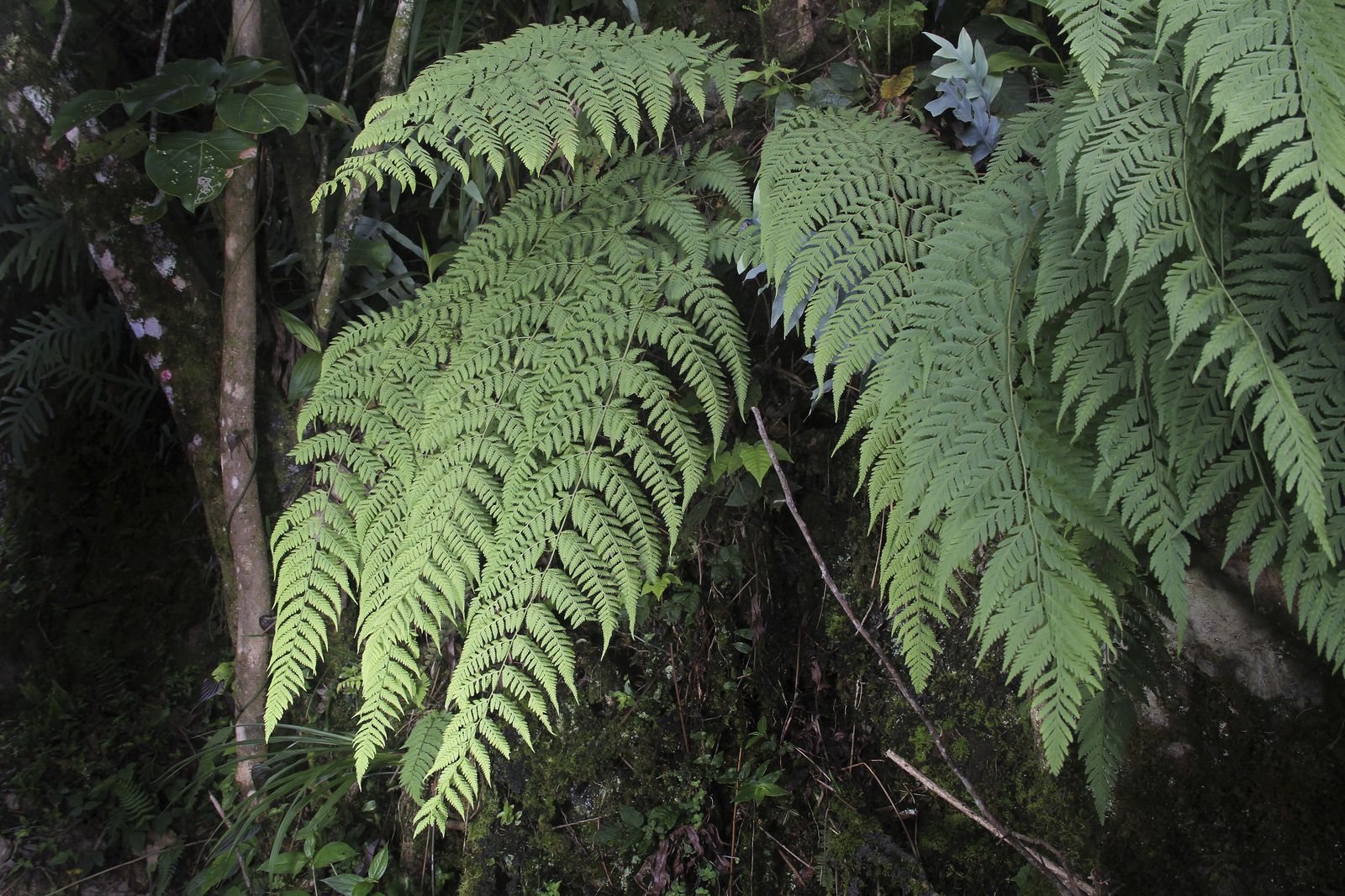
Dryopteris , commonly called the wood ferns, male ferns (referring in particular to Dryopteris filix-mas), or buckler ferns, is a fern genus in the family Dryopteridaceae, subfamily Dryopteridoideae, according to the Pteridophyte Phylogeny Group classification of 2016 (PPG I). There are about 300-400 species in the genus. The species are distributed in Asia, the Americas, Europe, Africa, and the Pacific islands, with the highest diversity in eastern Asia. It is placed in the family Dryopteridaceae, subfamily Dryopteridoideae, according to the Pteridophyte Phylogeny Group classification of 2016 (PPG I). Many of the species have stout, slowly creeping rootstocks that form a crown, with a vase-like ring of fronds. The sori are round, with a peltate indusium. The stipes have prominent scales.
Excerpted from Wikipedia’s “Dryopteris” article, available under the CC BY-SA 4.0 licence.