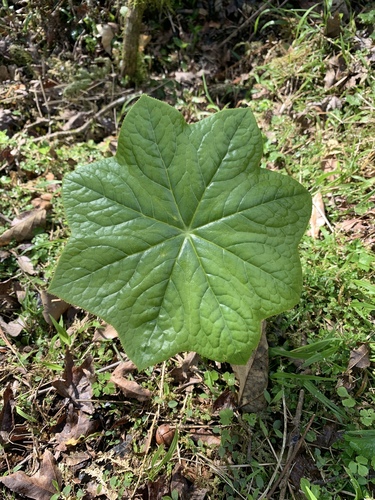
(c) Chung-Yen, some rights reserved (CC BY-NC-SA), uploaded by Chung-Yen · cc-by-nc-sa
Dysosma
Sign in to saveDysosma is a group of herbaceous perennials in the Berberidaceae or barberry family described as a genus in 1928. It is native to China and Indochina.
Species
many-flowered Chinese mayapple
GENUS
- KingdomPlantae
- PhylumTracheophyta
- ClassMagnoliopsida
- OrderRanunculales
- FamilyBerberidaceae
via GBIF · Kew POWO
Museum specimens
- Specimen records
- 4
- With media
- 4
- Family
- Berberidaceae
- Collections
- MO
- Recorded in
- China
Wikidata facts
- Instance of
- taxon
- Parent taxon
- Berberideae
- Image
- Dysosma veitchii - Kunming Botanical Garden - DSC03007.JPG
Show 5 more facts
- Commons category
- Podophyllum
- taxon name
- Dysosma
- taxon rank
- genus
- taxon common name
- 八角莲属
Sources (2)
via Wikidata · CC0
~2 min read
Encyclopedic overview
1 sectionsContents
- References
Dysosma is a group of herbaceous perennials in the Berberidaceae or barberry family described as a genus in 1928. It is native to China and Indochina.
The genus is not universally recognised by this name, as some authorities include the plants in the genus Podophyllum. Dysosma is recognised by other authorities as including only those Podophyllum species which originate in China. Dysosma grow as perennial, rhizomatous wildflowers on the damp and humus-rich floors of deciduous forests. The single umbrella-shaped leaves grow on an erect stem that usually stands , but with height varying with species. The leaves may be completely green or mottled and flecked with purple; they have an entire or deeply serrated edge depending on species. The flowers are nodding and in a range of colours. The fruit is a dark red berry. Species Dysosma aurantiocaulis - Yunnan, possibly Myanmar - Endangered Dysosma delavayi - Guizhou, Sichuan, Yunnan, Shaanxi Dysosma difformis - Guangxi, Guizhou, Hubei, Hunan, Sichuan, Vietnam Dysosma furfuracea - Yunnan Dysosma guangxiensis - Guangxi Dysosma lichuensis - Hubei Dysosma majoensis - Guangxi, Guizhou, Hubei, Sichuan, Yunnan Dysosma majorensis - Guangxi, Guizhou, Hubei, Sichuan Dysosma pleiantha - Anhui, Fujian, Guangdong, Guangxi, Henan, Hubei, Hunan, Jiangxi, Sichuan, Taiwan, Zhejiang Dysosma tsayuensis - Tibet - Endangered Dysosma veitchii - Guizhou, Sichuan, Yunnan - Endangered Dysosma versipellis - Anhui, Guangdong, Guangxi, Guizhou, Henan, Hubei, Hunan, Jiangxi, Shanxi, Yunnan, Zhejiang - Endangered
Excerpted from Wikipedia’s “Dysosma” article, available under the CC BY-SA 4.0 licence.