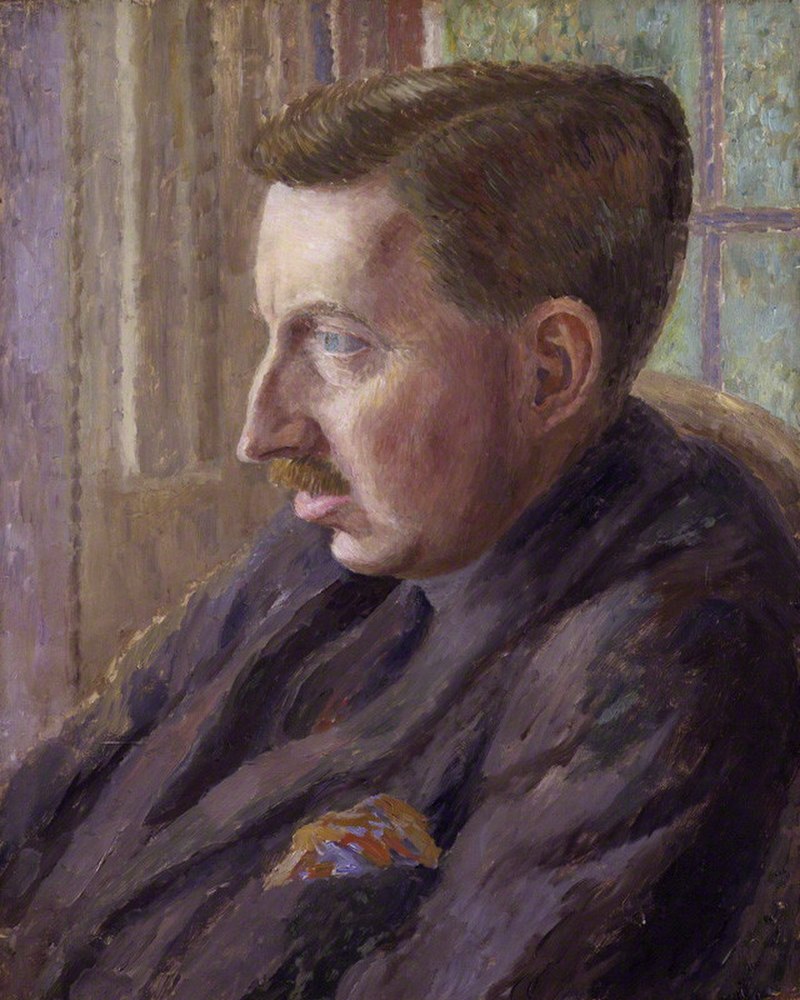
File:E._M._Forster_von_Dora_Carrington,_1924-25.jpg · Wikimedia Commons · See Wikimedia Commons
E. M. Forster
Sign in to saveAlso known as EM Forster, E Forster, Edward Morgan Forster, Edward Forster
English novelist (1879-1970)
E. M. Forster was an English novelist who lived from 1879 to 1970 and is remembered for his influential literary works exploring themes of social class, personal relationships, and human connection. His novels continue to be widely read and studied because they offer thoughtful examinations of early twentieth-century English society and the complexities of how people relate to one another.
AI-generated from the Wikipedia summary — may contain errors.
Person · Open Library
- Born
- 1 January 1879
- Died
- 7 June 1970
- Works
- 454
Top works
- Aspek-aspek novel
- Izbrannoe
- Howards end
- Aspects of the novel
- Alexandria
via Open Library + Wikidata
Film & TV
Coventry, Warwickshire, England, UK
Edward Morgan Forster OM CH (1 January 1879 – 7 June 1970) was an English author. He is best known for his novels, particularly A Room with a View (1908), Howards End (1910) and A Passage to India (1924). He also wrote numerous short stories, essays, speeches and broadcasts, as well as biographies and pageant plays. His short story "The Machine Stops" (1909) is often viewed as the beginning of…
Known for
- E. M. Forster: His Longest Journey — Self (archive footage)2019
via TMDB
Wikidata facts
- Instance of
- human
- Given name
- Morgan
- Family name
- Forster
- Gender
- male
- Citizenship
- United Kingdom of Great Britain and Ireland
- Place of birth
- London
- Place of death
- Coventry
- Occupation
- essayist
- Educated at
- King's College
- Languages spoken
- English language
- Award
- Order of Merit
- Notable work
- Where Angels Fear to Tread
- Field of work
- performing arts
- Genre
- realism
- Movement
- Bloomsbury Group
- Image
- E. M. Forster von Dora Carrington, 1924-25.jpg
Show 18 more facts
- Commons category
- E. M. Forster
- date of birth
- 1879-01-01
- date of death
- 1970-06-07
- topic's main category
- Category:E. M. Forster
- cause of death
- stroke
- manner of death
- natural causes
- Commons gallery
- E. M. Forster
- member of
- Bavarian Academy of Fine Arts
- nominated for
- Nobel Prize in Literature
- birth name
- Edward Morgan Forster
- writing language
- English language
- start of work period
- 1901-00-00
- Commons Creator page
- Edward Morgan Forster
- P8168
- Aichen
- described at URL
- heritage.humanists.uk/e-m-forster
- name in native language
- E. M. Forster
- P12674
- Anton Losinger
- subject has role
- eponym
Sources (7)
via Wikidata · CC0
~29 min read
Encyclopedic overview
Edward Morgan Forster (1 January 1879 – 7 June 1970) was an English author. He is best known for his novels, particularly A Room with a View (1908), Howards End (1910) and A Passage to India (1924). He also wrote numerous short stories, essays, speeches and broadcasts, as well as biographies and pageant plays. His short story "The Machine Stops" (1909) is often viewed as the beginning of technological dystopian fiction. He also co-authored the libretto to Benjamin Britten's opera Billy Budd (1951). Many of his novels examine class differences and hypocrisy. His views as a humanist are at the heart of his work.
Considered one of the most successful English novelists of the Edwardian era, he was nominated for the Nobel Prize in Literature in 22 separate years. He declined a knighthood in 1949, though he received the Order of Merit upon his 90th birthday. Forster was made a Member of the Order of the Companions of Honour in 1953, and in 1961 he was one of the first five authors named as a Companion of Literature by the Royal Society of Literature.
Excerpted from Wikipedia’s “E. M. Forster” article, available under the CC BY-SA 4.0 licence.
Gallery (12)
Available in 65 languages
- Español
- Français
- Deutsch
- 中文
- 日本語
- Русский
- Português
- Italiano
- العربية
- हिन्दी
- Afrikaans
- Armenian
- azb
- Bahasa Indonesia
- Bangla
- Basque
- be_x_old
- Breton
Show 46 more
- Bulgarian
- Catalan
- Central Kurdish
- Croatian
- Czech
- Danish
- Egyptian Arabic
- Esperanto
- Estonian
- Finnish
- Galician
- Greek
- Hebrew
- Hungarian
- Icelandic
- Irish
- Kannada
- Latin
- Latvian
- Macedonian
- Malayalam
- Mingrelian
- Nederlands
- Norwegian
- Norwegian Nynorsk
- Polski
- Punjabi
- Romanian
- Serbian
- Serbian (Latin)
- simple
- Sindhi
- Svenska
- Tamil
- Türkçe
- Ukrainian
- Urdu
- Welsh
- Western Frisian
- Western Panjabi
- Wu Chinese
- Zaza
- zh_yue
- فارسی
- ไทย
- 한국어
via Wikidata sitelinks · CC0