Eastern Oregon
Sign in to savenon-officially recognized geographic region with varying boundaries within the eastern portion of the State of Oregon, USA
Described at
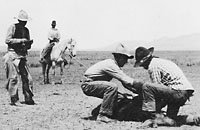
Eastern Oregon
Eastern Oregon is bounded north-south by the Wallowa Mountains and the Alvord Desert, and east-west by the Snake River Valley and the Ochoco National Forest. T…
oregonhistoryproject.org →Eastern Oregon is bounded north-south by the Wallowa Mountains and the Alvord Desert, and east-west by the Snake River Valley and the Ochoco National Forest. The region’s ten counties are home to a range of peoples, including the Nez Perce, Burns Paiute, Cayuse, Walla Walla, and Umatilla Indians; Hispanic communities from Milton-Freewater to Nyssa; descendants of Chinese and Japanese settlers from John Day to Ontario; and Europeans from the Scotch in Althena to the Basques in Jordan Valley. At the Oregon-Idaho state line, the Four Rivers Cultural Center in Ontario celebrates the confluence of these diverse worlds. Like the rivers that sustain this region—the Snake, Malheur, Owyhee, and Payette—varied cultures flow from different sources. Since 1910, the annual Pendleton Round-Up has drawn cowboys and cowgirls, ropers, riders, and tourists for three days of saddle-bronc riding, calf roping, bareback riding, steer wrestling, and the Happy Canyon pageant. Cowboy culture thrives in the Round-up’s events and material arts. A visitor might encounter the work of the Severe Brothers Saddlery. Duff Severe, who died in 2004 at the age of eighty-four, received a National Heritage Award for his artistry in making utilitarian and miniature saddles. He and his brother, who have saddles in the Smithsonian Institution collection, bequeathed their skills to sons and nephews who run the saddlery. Historically, the Pendleton Round-Up has brought European and indigenous people together. The September date both allowed grain farmers to complete their harvest and built on an indigenous tradition of fall reunion. Today, Native American communities gather in a temporary teepee village near the rodeo grounds, selling frybread, traditional jewelry, and beaded baseball caps. As festivals everywhere do, Round-Up engenders a “time out of time” feeling, as normal social boundaries break down and strangers greet one another on the street. Yet, this event also reveals fissures in the social fabric. The Happy Canyon pageant is a western saga of battles between white settlers and Native people, but each group relates the tale with their own view of history. The narratives any community creates are mythic—not false, but partial in their explanation of origins or interpretation of events. At the Umatilla Reservation in Pendleton, home to the Cayuse, Walla Walla, and Umatilla, exhibits look at Indian-white relations. The treaty of 1855 with the U.S. government strictly circumscribed the homeland the tribes call “Nicht-yow-way.” In 2005–2006, the tribes shared with visitors an indigenous view of the Lewis and Clark Expedition, with a “treaty drama” and other programs at the Tamástslikt Cultural Institute. A permanent exhibit, “Who We Were, Who We Are, Who We Will Be,” recounts the story of precontact culture, the arrival of white settlers, and visions of the future. Tamástslikt also features the work of Native artists such as Maynard White Owl Lavadour, a Cayuse/Nez Perce artist who earned a Governor’s Arts Award in 1997. Lavadour learned to bead and make cradleboards from his great-grandmother Susie Williams and his grandmother Eva Williams Lavadour. Highway 82 from La Grande winds through the canyons and valleys between the Umatilla and Wallowa Whitman national forests, alongside and crossed by a series of officially designated wild and scenic rivers in the Grande Ronde Basin: Joseph Creek and the Wallowa, Minam, Lostine, and Wenaha. Punctuating the landscape are small communities of farmers and ranchers, as well as traditional and contemporary artists. The towns of Enterprise and Joseph support thriving sculpture foundries established during the 1990s. Alongside bronze renderings of western life, the work of folk artists appears in shows throughout eastern Oregon. Harold McLaughlin of Enterprise retired from farming at age eighty-six and built wooden tables and picture frames from salvaged lumber. Hope McLaughlin made traditional quilts, sometimes ten to tw
Excerpt from a page describing this subject · 20,419 chars · not written by Vinony
Wikidata facts
- Part of
- Oregon
- Named after
- Oregon
- Country
- United States
- Located in
- Oregon
Show 2 more facts
via Wikidata · CC0