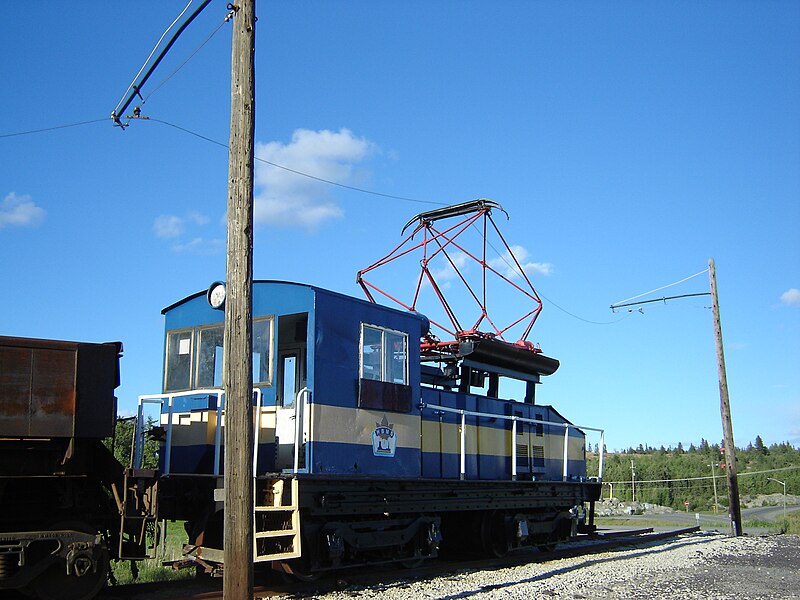
File:DC_Electric_Locomotive.jpg · Wikimedia Commons · See Wikimedia Commons
electric locomotive
Sign in to saveAlso known as electrically-powered locomotive
locomotive powered by electricity
Wikidata facts
- Subclass of
- electric vehicle
- Image
- ЧС7-282, Россия, Орловская область, станция Орёл (Trainpix 147617).jpg
Show 6 more facts
- Commons category
- Electrically-powered locomotives
- topic's main category
- Category:Electric locomotives
- source of energy
- electricity
- start time
- 1837-00-00
- discoverer or inventor
- Robert Davidson
- described by source
- Brockhaus and Efron Encyclopedic Dictionary
via Wikidata · CC0
~40 min read
Encyclopedic overview
Škoda ChS4-109 with a Moscow–Odesa train in Vinnytsia railway station The Siemens ES64U4 is the current confirmed holder as the fastest electric locomotive at 357 km/h (222 mph) in 2006. Two FS Class E.464 locomotives at Formia-Gaeta station An electric locomotive is a type of locomotive powered by electricity from overhead lines, a third rail or on-board energy storage such as a battery or a supercapacitor. Locomotives with on-board fuelled prime movers, such as diesel engines or gas turbines, are classed as diesel–electric or gas turbine–electric and not as electric locomotives, because the electric generator/motor combination serves only as a power transmission system.
Electric locomotives benefit from the high efficiency of electric motors, often above 90% (not including the inefficiency of generating the electricity). Additional efficiency can be gained from regenerative braking, which allows kinetic energy to be recovered during braking to put power back on the line. Newer electric locomotives use AC motor-inverter drive systems that provide for regenerative braking. Electric locomotives are quiet compared to diesel locomotives since there is no engine and exhaust noise and less mechanical noise. The lack of reciprocating parts means electric locomotives are easier on the track, reducing track maintenance. Power plant capacity is far greater than any individual locomotive uses, so electric locomotives can have a higher power output than diesel locomotives and they can produce even higher short-term surge power for fast acceleration. Electric locomotives are ideal for commuter rail service with frequent stops. Electric locomotives are used on freight routes with consistently high traffic volumes, or in areas with advanced rail networks. Power plants, even if they burn fossil fuels, are far cleaner than mobile sources such as locomotive engines. The power can also come from low-carbon or renewable sources, including geothermal power, hydroelectric power, biomass, solar power, nuclear power and wind turbines. Electric locomotives usually cost 20% less than diesel locomotives, their maintenance costs are 25–35% lower, and cost up to 50% less to run.
Excerpted from Wikipedia’s “electric locomotive” article, available under the CC BY-SA 4.0 licence.