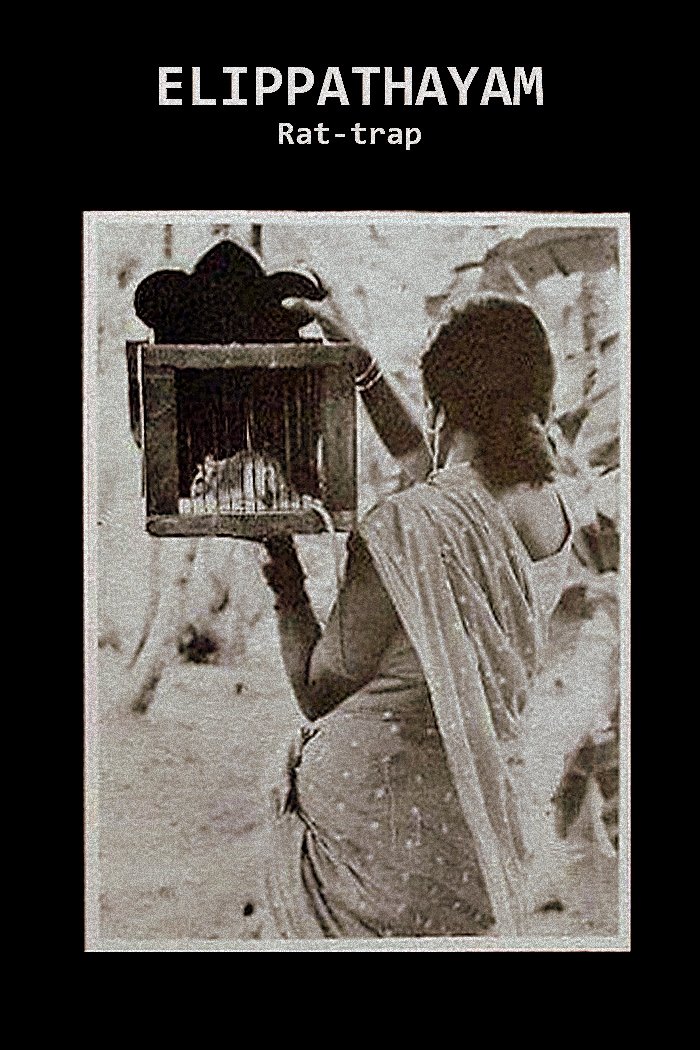
Poster from TMDB
Elippathayam
Sign in to saveAlso known as Rat-Trap
Elippathayam (Translation: The Rat Trap) is a 1982 Malayalam film written and directed by Adoor Gopalakrishnan. It stars Karamana Janardanan Nair, Sharada, Jalaja, and Rajam K. Nair. The film documents the feudal life in Kerala at its twilight overshadowed with grief, and a sense of carelessness/avoidance as a form of revolt. The protagonist is disenfranchised and trapped within himself and does not want to - unable to change with the social changes taking place around him. The film premiered at the 1982 Cannes Film Festival. It was also screened at the London Film Festival where it won the Su
Film · TMDB
7.3Unni is the last male heir of a decaying feudal family in rural Kerala. His inability to accept the socio-economic changes of a new society causes him to gradually withdraw into isolation and paranoia.
Cast
- Karamana Janardanan Nair as Unni
- Sharada as Rajamma
- Jalaja as Sreedevi
- Rajam K. Nair as Janamma
- Joycee
- B K Nair
This product uses the TMDB API but is not endorsed or certified by TMDB.
Wikidata facts
- Instance of
- film
- Genre
- drama film
- Country of origin
- India
- Original language
- Malayalam
- Director
- Adoor Gopalakrishnan
- Screenwriter
- Adoor Gopalakrishnan
- Cast member
- Sharada
- Composer
- M. B. Sreenivasan
- Producer
- K. Ravindranathan Nair
- Cinematographer
- Mankada Ravi Varma
- Duration
- 116
- FilmAffinity ID
- 396665
Show 2 more facts
- publication date
- 1982-10-01
- title
- എലിപ്പത്തായം
Sources (2)
via Wikidata · CC0
~5 min read
Encyclopedic overview
6 sectionsContents
- Plot
- Cast
- Reception
- Awards
- References
- External links
Elippathayam (Translation: The Rat Trap) is a 1982 Malayalam film written and directed by Adoor Gopalakrishnan. It stars Karamana Janardanan Nair, Sharada, Jalaja, and Rajam K. Nair. The film documents the feudal life in Kerala at its twilight overshadowed with grief, and a sense of carelessness/avoidance as a form of revolt. The protagonist is disenfranchised and trapped within himself and does not want to - unable to change with the social changes taking place around him. The film premiered at the 1982 Cannes Film Festival. It was also screened at the London Film Festival where it won the Sutherland Trophy.
==Plot== A middle-aged man, Unni, and his two sisters live in an ancient tharavadu (manor) in Kerala. They struggle as the traditional feudal way of life becomes untenable. Eventually, succumbing to the adverse conditions surrounding him, Unni becomes entrapped in his attitudes and ways, helpless like a rat in a trap. The movie's title, 'Rat Trap,' is a metaphor for a state of oblivion to changes in the external world, such as the disintegration of the feudal system in which some are caught, leading to irrelevance and destruction.
Excerpted from Wikipedia’s “Elippathayam” article, available under the CC BY-SA 4.0 licence.