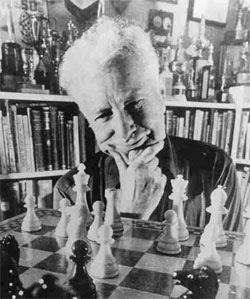
File:ArpadElo.jpg · Wikimedia Commons · See Wikimedia Commons
Elo rating system
Sign in to saveAlso known as ELO
method for calculating the relative skill levels of players in zero-sum games such as chess
Described at
Das Elo-Bewertungssystem für Schach und mehr - YouTube
Teile deine Videos mit Freunden, Verwandten oder der ganzen Welt
youtube.com →Das Elo-System ist eine Methode zur Bewertung von Spielern im Schach und anderen Wettkampfspielen. Ein neuer Spieler startet mit einer Wertung von 1000. Diese Wertung steigt bei Siegen, sinkt bei Niederlagen. Mit der Zeit spiegelt die Wertung eines Spielers sein Können im Vergleich zur Gesamtbevölkerung wider. Mein Video basierte größtenteils auf „A Comprehensive Guide to Chess Ratings“ von Prof. Mark E. Glickman ( . Im Folgenden sind einige Punkte aufgeführt, die ich eigentlich ansprechen wollte, aber ich habe sie gekürzt, damit das Video nicht zu lang wird! Einige Erklärungen zum Elo-System besagen, dass es auf der Normalverteilung basiert, was nicht ganz stimmt. Die ursprüngliche Idee von Elo modellierte die Fähigkeiten jedes Spielers als Normalverteilung. Die Differenz zwischen den Stärken der beiden Spieler wäre dann ebenfalls normalverteilt. Die Formel für eine Normalverteilung ist jedoch etwas kompliziert, daher wird heute bevorzugt, jeden Spieler anhand einer Extremwertverteilung zu modellieren. Die Differenz zwischen den Stärken der beiden Spieler ergibt dann eine logistische Verteilung. Diese hat die Eigenschaft, dass ein Spieler mit einer um 400 Punkte höheren Wertung als ein anderer Spieler eine zehnmal höhere Gewinnwahrscheinlichkeit hat. Das macht die Formel einfacher anzuwenden. In der Praxis ist der Unterschied zwischen einer logistischen Verteilung und der Normalverteilung gering. Logistische Verteilung auf Wikipedia: Wir ersetzen e durch die Basis 10, s=400, mu=R A - R B und x=0 in der Verteilungsfunktion. Für die Aktualisierungsformel gehe ich davon aus, dass sich die Wertung um maximal 32 Punkte erhöhen oder verringern kann, und ich habe erklärt, dass es dafür keinen besonderen Grund gibt. Dieser Wert wird als K-Faktor bezeichnet. Je höher der K-Faktor, desto mehr Gewicht wird der Turnierleistung des Spielers beigemessen (und damit seiner Leistung vor dem Turnier). Bei hochklassigen Schachturnieren wird ein K-Faktor von 16 verwendet, da man davon ausgeht, dass die Wertung vor dem Turnier ungefähr stimmt und daher weniger stark schwankt. Manche Turniere verwenden andere K-Faktoren. Im ursprünglichen Elo-System werden Remis nicht berücksichtigt, sondern als halber Sieg und halber Niederlage gewertet. Die oben genannte Arbeit von Mark Glickman enthält eine Formel, die Remis berücksichtigt. Ebenso enthält die Arbeit eine Formel, die den Vorteil für Weiß berücksichtigt. Ein weiterer Kritikpunkt an Elo ist die Zuverlässigkeit der Wertung. Die Wertung eines Spielers, der selten spielt, ist ein weniger zuverlässiges Maß für seine Stärke. Um dieses Problem zu lösen, entwickelte Mark Glickman Glicko und Glicko2. Beschreibungen dieser Methoden finden Sie unter . Positiv ist, dass das Elo-System seinem Vorgänger, dem sogenannten Harkness-System, um Längen voraus war. Ursprünglich wollte ich auch das Harkness-System erklären, daher hier die Absätze, die ich gestrichen habe: „Beim Harkness-System wurde der Durchschnitt der Ratings aller Spieler ermittelt. Wenn am Ende des Turniers der Prozentsatz der gewonnenen Partien 50 % betrug, wurde die neue Rating-Bewertung als Durchschnittsbewertung festgelegt. Wenn man besser oder schlechter als 50 % war, wurden für jeden Prozentpunkt über oder unter 50 10 Punkte zur Durchschnittsbewertung addiert oder abgezogen. Dieses System war nicht das beste und konnte zu merkwürdigen Ergebnissen führen. So konnte ein Spieler beispielsweise jede Partie verlieren und trotzdem Punkte gewinnen.“ Dieses Video wurde von Outray Chess vorgeschlagen. Die Mathematik ist etwas schwieriger, aber mir gefiel die Idee, also habe ich ein Video vor einer Wand gemacht. The fact that Elo isn't acronym is the biggest plot twist in the history of anime. Daten zu Zielgruppeninteraktionen und Websitestatistiken zu erheben. Mit den gewonnenen Informationen möchten wir verstehen, wie unsere Dienste verwendet werden, und die Qualität dieser Dienste verbessern. Wählen Sie „Weitere Optionen“ aus, um sich zusätzlich
Excerpt from a page describing this subject · 14,161 chars · not written by Vinony
Wikidata facts
- Instance of
- game mechanic
- Named after
- Arpad Elo
- Sport
- chess
Show 4 more facts
- Stack Exchange tag
- chess.stackexchange.com/tags/elo
- different from
- Elo
- discoverer or inventor
- Arpad Elo
- described at URL
- youtube.com/watch?v=AsYfbmp0To0
Sources (2)
via Wikidata · CC0
~40 min read
Encyclopedic overview
Arpad Elo, the inventor of the Elo rating system The Elo rating system is a method for calculating the relative skill levels of players, originally designed for rating chess players. It is a special case of the Bradley–Terry model. The Elo system was invented as an improved chess rating system over the previously used Harkness rating system and has since been adapted for use in other zero-sum games and sports, including tennis, association football (soccer), American football, baseball, basketball, pool, various board games and esports. It is named after its creator Arpad Elo, a Hungarian-American chess master and physics professor.
The difference in the ratings between two players serves as a predictor of the outcome of a match. Two players with equal ratings who play against each other are expected to score an equal number of wins. A player whose rating is 100 points greater than their opponent's is expected to score 64%; if the difference is 200 points, then the expected score for the stronger player is 76%.
Excerpted from Wikipedia’s “Elo rating system” article, available under the CC BY-SA 4.0 licence.