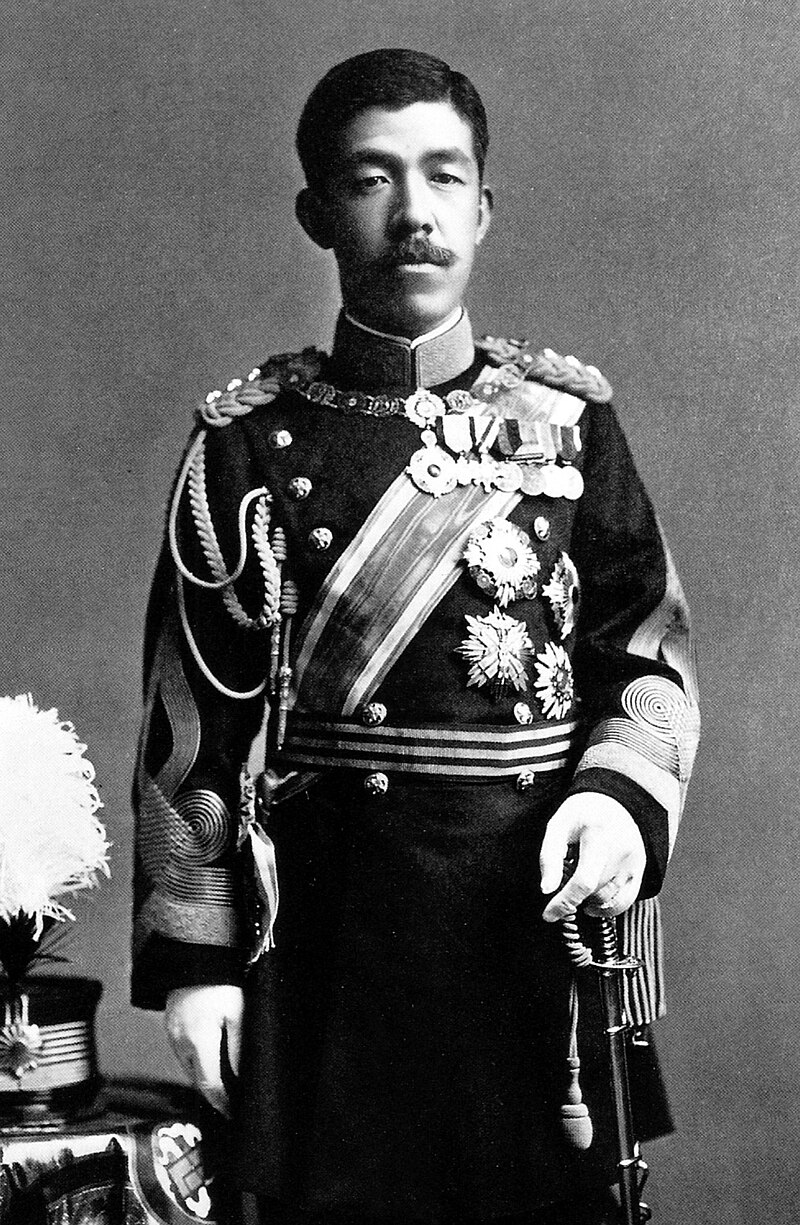
File:Emperor_Taishō_(cropped).jpg · Wikimedia Commons · See Wikimedia Commons
Emperor Taishō
Sign in to saveAlso known as Yoshihito, Taisho, Emperor Taisho, Taishou, Taishō, Taishō-tennō, Yoshihito, Prince Haru, Prince Haru
Emperor of Japan from 1912 until 1926
Emperor Taishō ruled Japan from 1912 to 1926, a period that saw the country transition from a traditional empire into a modern industrial power. His reign is significant in Japanese history because it marked important changes in the nation's politics, military, and international standing during the early 20th century.
AI-generated from the Wikipedia summary — may contain errors.
Wikidata facts
- Instance of
- human
- Gender
- male
- Citizenship
- Japan
- Place of birth
- Akasaka Estate
- Place of death
- Hayama Imperial Villa
- Spouse
- Empress Teimei
- Father
- Emperor Meiji
- Mother
- Yanagiwara Naruko
- Occupation
- aristocrat
- Position held
- heir apparent
- Languages spoken
- Chinese
- Native language
- Japanese
- Religion
- Shinto
- Family
- Imperial House of Japan
- Noble title
- Imperial prince
- Hair colour
- black hair
- Anthem
- Kimigayo
- Military branch
- Imperial Japanese Army
- Military rank
- dai-gensui
- Image
- Emperor Taishō.jpg
- Residence
- Tokyo Imperial Palace
Show 17 more facts
- Commons category
- Emperor Taishō
- cause of death
- myocardial infarction
- date of death
- 1926-12-25
- Unicode character
- ㍽
- date of birth
- 1879-08-31
- topic's main category
- Category:Emperor Taishō
- manner of death
- natural causes
- place of burial
- Musashi Imperial Graveyard
- name in native language
- 大正天皇
- Commons gallery
- 大正天皇
- posthumous name
- 大正
- era name
- Taishō period
- date of burial or cremation
- 1927-02-08
- writing language
- Japanese
- honorific prefix
- Imperial Highness
- medical condition
- pneumonia
- name in kana
- たいしょうてんのう
via Wikidata · CC0
~13 min read
Encyclopedic overview
HouseImperial House of Japan FatherEmperor Meiji MotherYanagiwara Naruko ReligionShinto Signature
Emperor Taishō (born Yoshihito; 31 August 1879 – 25 December 1926) was Emperor of Japan from 29 July 1912 until his death in 1926. His reign was marked by a domestic political shift toward liberal democracy, called Taishō Democracy. He oversaw Japan's participation in World War I on the side of the Allies, the Spanish flu epidemic, and the Great Kantō Earthquake of 1923. His poor health limited his public duties and contributed to his death at age 47.
Excerpted from Wikipedia’s “Emperor Taishō” article, available under the CC BY-SA 4.0 licence.
Gallery (7)
Available in 72 languages
- Español
- Français
- Deutsch
- 中文
- 日本語
- Русский
- Português
- Italiano
- العربية
- हिन्दी
- Afrikaans
- Albanian
- Azerbaijani
- Bahasa Indonesia
- Basque
- Belarusian
- Bulgarian
- Burmese
Show 53 more
- Catalan
- cdo
- Central Kurdish
- Croatian
- Czech
- Danish
- Egyptian Arabic
- Esperanto
- Estonian
- Filipino
- Finnish
- Georgian
- Greek
- Hakka Chinese
- Hebrew
- Hungarian
- Icelandic
- Latin
- Latvian
- Lithuanian
- Malay
- Malayalam
- Marathi
- Mongolian
- Nederlands
- Northern Frisian
- Norwegian
- Piedmontese
- Polski
- Romanian
- Scots
- Serbian
- Serbian (Latin)
- simple
- Slovak
- Sundanese
- Svenska
- Swahili
- Talysh
- Tiếng Việt
- Türkçe
- Ukrainian
- Urdu
- Waray
- Western Panjabi
- Wu Chinese
- Yoruba
- zh_classical
- zh_min_nan
- zh_yue
- فارسی
- ไทย
- 한국어
via Wikidata sitelinks · CC0