Encyclopedia of Life · EOL (see source)
Endiandra
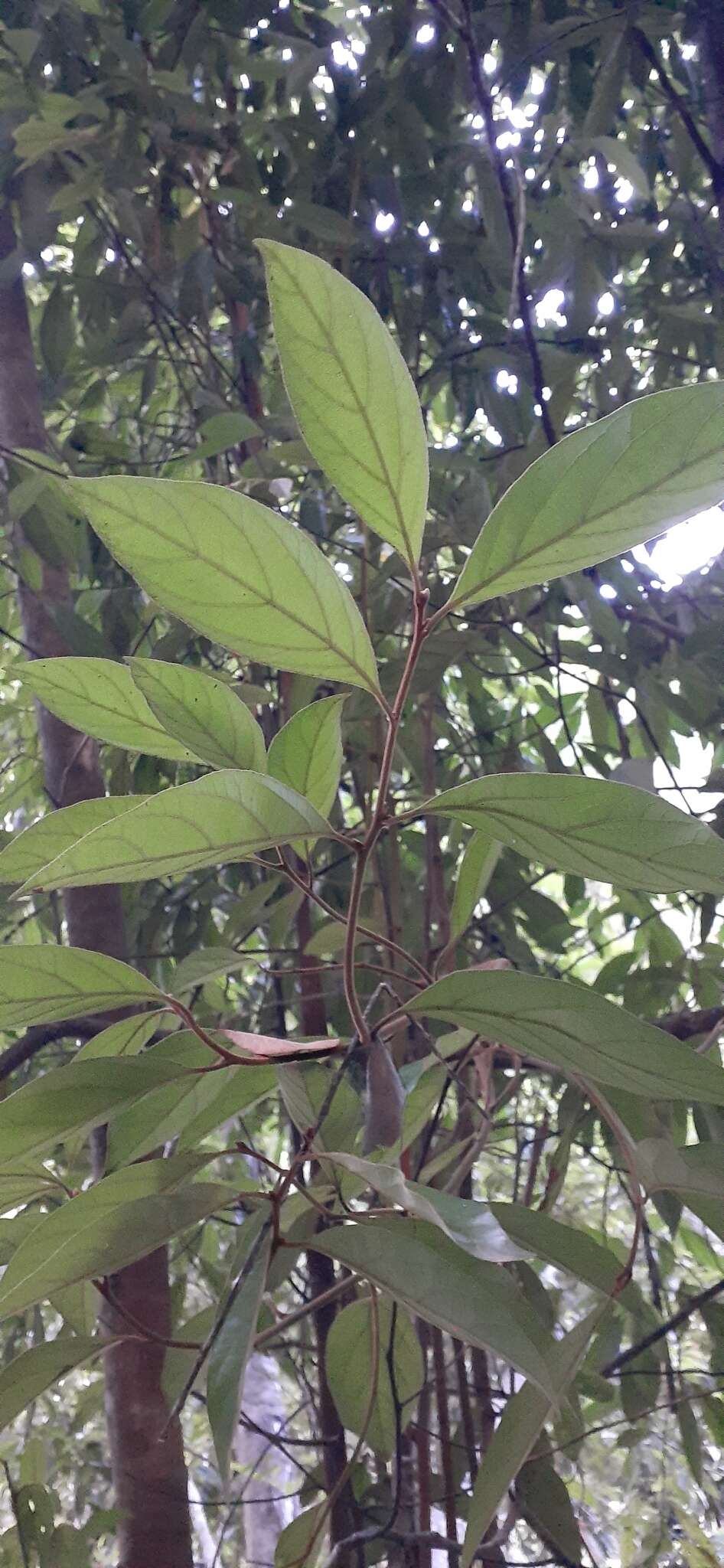
Sign in to saveEndiandra is a genus of about 126 species of plants, mainly trees, in the laurel family Lauraceae. They are commonly called "walnut" despite not being related to the Northern Hemisphere walnuts (Juglans spp.) which are in the family Juglandaceae.
Species
GENUS
- KingdomPlantae
- PhylumTracheophyta
- ClassMagnoliopsida
- OrderLaurales
- FamilyLauraceae
Endiandra es un género de aproximadamente 100 especies de plantas, principalmente árboles en la familia Lauraceae. Tienen una amplia distribución en todo el sudeste de Asia, Australia y en el oeste de Océano Pacífico. En Australia, a menudo se utilizan como pantalla, debido a la espesa fronda de varias de sus especies. Algunas de las especies están en peligro de extinción de Australia, por ejemplo, Endiandra globosa y Endiandra floydii. Especies Endiandra discolor Endiandra globosa Endiandra floydii Endiandra sieberi Endiandra pubens Endiandra palmerstonii
via GBIF · Kew POWO
Museum specimens
- Specimen records
- 1,026
- With media
- 948
- Family
- Lauraceae
- Collections
- US, MICH, A, MO, GH
- Recorded in
- Indonesia, Papua New Guinea, Malaysia, Philippines
Wikidata facts
Show 6 more facts
- taxon name
- Endiandra
- taxon rank
- genus
- topic's main category
- Category:Endiandra
- Commons category
- Endiandra
- taxon common name
- 土楠属
Sources (2)
via Wikidata · CC0
~8 min read
Encyclopedic overview
3 sectionsContents
- Ecology
- Species
- References
Endiandra is a genus of about 126 species of plants, mainly trees, in the laurel family Lauraceae. They are commonly called "walnut" despite not being related to the Northern Hemisphere walnuts (Juglans spp.) which are in the family Juglandaceae.
==Ecology== Shrubs and trees with lauroid leaves mostly, with bisexual flowers, usually with a large edible berry ovoid or globose, and seated directly on the pedicel. The seeds are dispersed by animals and birds. They have a broad distribution across South East Asia, Australia and into the western Pacific Ocean.
Excerpted from Wikipedia’s “Endiandra” article, available under the CC BY-SA 4.0 licence.