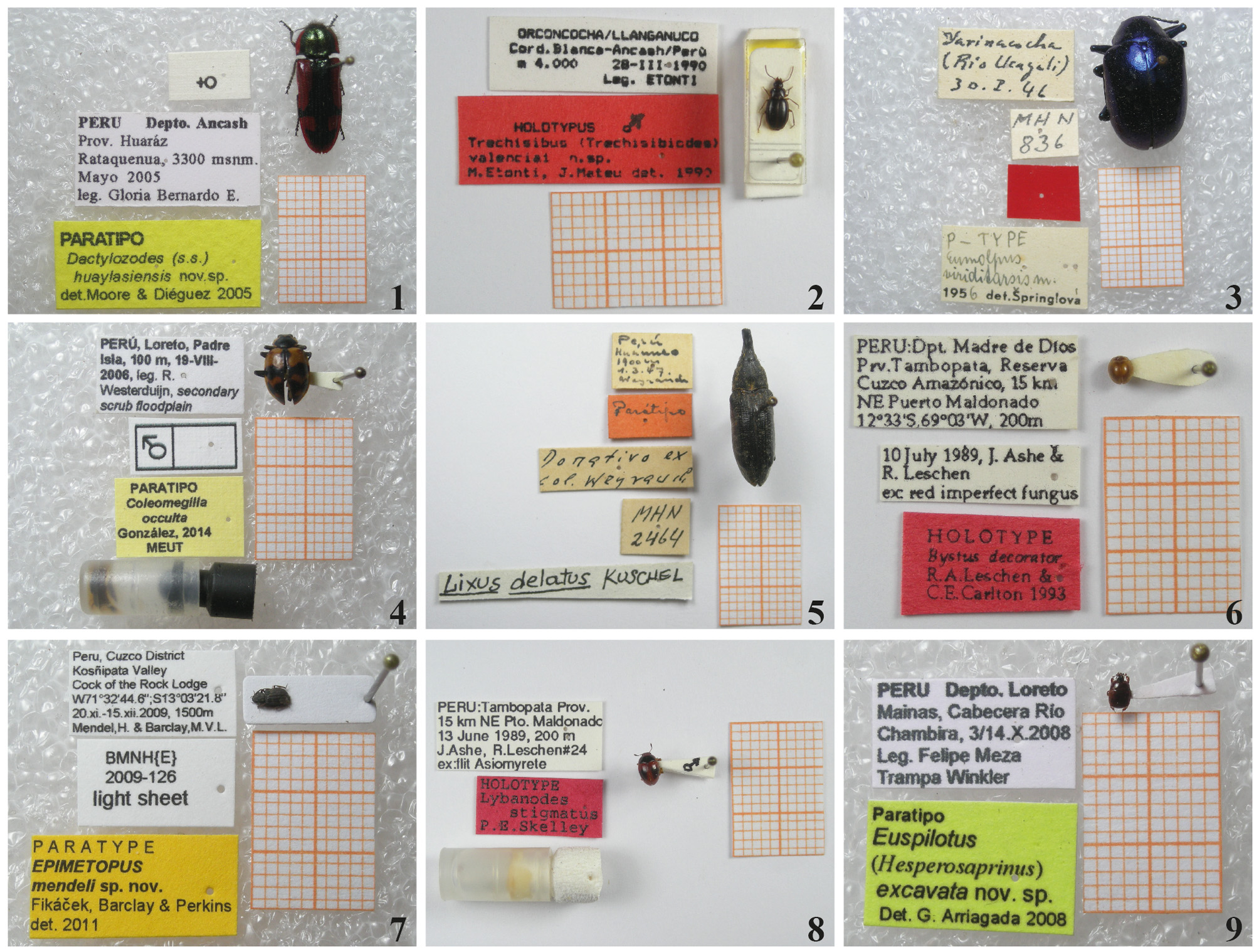
Asenjo, Angélico;Figueroa, Luis
Endomychidae
Sign in to saveEndomychidae, or handsome fungus beetles, is a family of beetles with representatives found in all biogeographic realms. There are around 120 genera and 1300 species. The family was established based on the type genus Endomychus, a genus erected in 1795 by Panzer which was applied to a species that Linnaeus called Chrysomela coccinea. As the common name suggests, Endomychidae feed on fungi. Crowson, in his influential treatment of the beetles, placed the family within the Cucujoidea. They have a tarsal formal of 4-4-4 or 3-3-3 and the wings lack a closed radial cell. The second antennal segmen
Species
FAMILY
- KingdomAnimalia
- PhylumArthropoda
- ClassInsecta
- OrderColeoptera
- FamilyEndomychidae
Mycetina cruciata Плеснеед багряный Плеснееды (лат. Endomychidae) — семейство жуков из надсемейства кукуйоидных (Cucujoidea). Самые ранние находки плеснеедов в ископаемом состоянии относятся к середине мелового периода (бирманский янтарь)[1]. Содержание 1 Описание 2 Классификация 2.1 Подсемейства 3 Примечания 4 Литература 5 Ссылки Описание Длина имаго 1—18 мм, личинок — 2—10 мм. Антенны обычно 11-члениковые (4—7 члениковые в подсемействе Pleganophorinae и 8—10 члениковые у большинства Anamorphinae) с булавой из 1—3 члеников. Лапки 3-х или 4-члениковые. Чёрные, коричневые, красные или жёлтые; часто с контрастирующими пятнами на переднеспинке и надкрыльях. Некоторые виды мимикрируют в окраске под жуков из семейств Chrysomelidae, Coccinellidae, Erotylidae и Tenebrionidae[2]. Питаются плесневыми грибами, также известен один хищный вид (Saula japonica) и несколько, предположительно мирмекофилов или термитофилов (Merophysia, Pleganophorus и другие)[3]. Классификация Относится к серии семейств Кукуйиформные (Cucujiformia, =Chrysomelomorpha). 12 подсемейств, 130 родов и более 1700 видов и подвидов (Shockley et al. 2009)[2]. В Европе 75 видов[4]. Подсемейства Anamorphinae Strohecker, 1953 (
via GBIF
Museum specimens
- Specimen records
- 5,527
- With media
- 224
- Family
- Endomychidae
- Collections
- INECOL, UTC, UMNH, TTU, UCSB, UNM
- Recorded in
- Mexico, United States, Nicaragua, Cameroon, Bolivia, Myanmar
Wikidata facts
- Instance of
- taxon
- Parent taxon
- Coccinelloidea
- Image
- Mycetina.cruciata.-.calwer.46.11.jpg
Show 5 more facts
- Commons category
- Endomychidae
- taxon rank
- family
- taxon name
- Endomychidae
- topic's main category
- Category:Endomychidae
- taxon common name
- soppmarihøner
via Wikidata · CC0
~4 min read
Encyclopedic overview
4 sectionsContents
- Genera
- Fossil genera
- References
- External links
Endomychidae, or handsome fungus beetles, is a family of beetles with representatives found in all biogeographic realms. There are around 120 genera and 1300 species. The family was established based on the type genus Endomychus, a genus erected in 1795 by Panzer which was applied to a species that Linnaeus called Chrysomela coccinea. As the common name suggests, Endomychidae feed on fungi. Crowson, in his influential treatment of the beetles, placed the family within the Cucujoidea. They have a tarsal formal of 4-4-4 or 3-3-3 and the wings lack a closed radial cell. The second antennal segment has a sensory appendage that is as long as the third antennal segment. The family has also been grouped with the Coccinellidae in a group called the Trimera for having pseudotrimerous tarsi. A 2015 molecular phylogeny study found that the Cucujoidea were found to be non-monophyletic and the Endomychidae was refined with the removal of the Anamorphinae from within the family and elevated to the status of a full family, Anamorphidae. Mycetaeinae and Eupsilobiinae were also found not to belong within the clades of the core Endomychidae, and likewise reclassified into the families Mycetaeidae and Eupsilobiidae.
The subfamilies that are included: Danascelinae Endomychinae (including Stenotarsinae) Epipocinae Leiestinae Lycoperdininae Merophysiinae Pleganophorinae Xenomycetinae
Excerpted from Wikipedia’s “Endomychidae” article, available under the CC BY-SA 4.0 licence.
Gallery (4)
Available in 21 languages
- Español
- Français
- Deutsch
- 日本語
- Русский
- Italiano
- العربية
- Asturian
- Cebuano
- Czech
- Egyptian Arabic
- Hungarian
- Lithuanian
- Nederlands
- Norwegian
- Polski
- Svenska
- Tiếng Việt
via Wikidata sitelinks · CC0