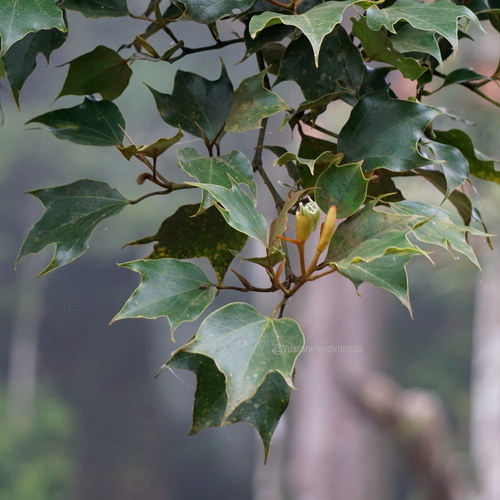
(c) Yusran E. Ritonga, some rights reserved (CC BY-NC), uploaded by Yusran E. Ritonga · cc-by-nc
Exbucklandia
Sign in to saveExbucklandia is a genus of flowering plants in the family Hamamelidaceae. They are medium to large trees whose natural range is from eastern India through southern China and southward through the Malay Peninsula. In India and China, they are widely cultivated for their impressive foliage and valuable lumber. A few have been grown in the southernmost parts of the United States. To speakers of English, Exbucklandia is generally known as the Pipli tree, from the Bengali name for the species Exbucklandia populnea.
Species
GENUS
- KingdomPlantae
- PhylumTracheophyta
- ClassMagnoliopsida
- OrderSaxifragales
- FamilyHamamelidaceae
马蹄荷属(学名:Exbucklandia)是金缕梅科下的一个属,为常绿乔木植物。该属共有4种,分布于印度、马来西亚至中国。[1] 参考文献 ^ 中国种子植物科属词典. 中国数字植物标本馆. (原始内容存档于2012-04-11). 外部链接 維基物種中有關马蹄荷属的數據 这是一篇與植物相關的小作品。你可以通过编辑或修订扩充其内容。 查 论 编 取自“https://zh.wikipedia.org/w/index.php?title=马蹄荷属&oldid=45410307” 分类: 金缕梅科 马蹄荷属 隐藏分类: 维基数据有相关图片而本地未添加 WikispeciesLatinName 全部小作品 植物小作品
via GBIF · Kew POWO
Museum specimens
- Specimen records
- 97
- With media
- 20
- Family
- Hamamelidaceae
- Collections
- UCMP, UF, A, UOMNH, YPM, BPBM
- Recorded in
- United States, Indonesia
Wikidata facts
- Instance of
- taxon
- Image
- Exbucklandia populnea 2.jpg
Show 7 more facts
- taxon name
- Exbucklandia
- taxon rank
- genus
- topic's main category
- Category:Exbucklandia
- Commons category
- Exbucklandia
- taxonomic type
- Exbucklandia populnea
- taxon common name
- 马蹄荷属
Sources (2)
via Wikidata · CC0
~8 min read
Encyclopedic overview
8 sectionsContents
- Cultivation
- Species
- Description
- Affinities
- Evolution
- History
- References
- External links
Exbucklandia is a genus of flowering plants in the family Hamamelidaceae. They are medium to large trees whose natural range is from eastern India through southern China and southward through the Malay Peninsula. In India and China, they are widely cultivated for their impressive foliage and valuable lumber. A few have been grown in the southernmost parts of the United States. To speakers of English, Exbucklandia is generally known as the Pipli tree, from the Bengali name for the species Exbucklandia populnea.
== Cultivation == Propagation is usually by seed, but cuttings have been successful under favorable conditions. Plantations of the young trees must be fenced against cattle and deer which eat whatever leaves they can reach. If Exbucklandia is grown in the open, the trunk forks and branches are retained close to the ground. In the forest, where it usually grows, the trunk is single, straight, and free of branches for 9 to 18 metres. Saplings grow slowly for the first few years, then more quickly later on.
Excerpted from Wikipedia’s “Exbucklandia” article, available under the CC BY-SA 4.0 licence.