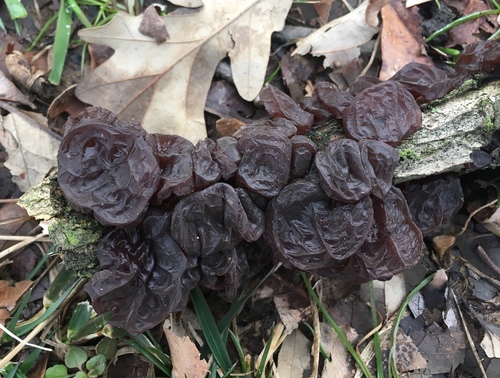
(c) Ashley M Bradford, some rights reserved (CC BY-NC), uploaded by Ashley M Bradford · cc-by-nc
Exidia
Sign in to saveExidia is a genus of fungi in the family Auriculariaceae. The species are saprotrophic, occurring in attached or recently fallen dead wood, and produce gelatinous basidiocarps (fruit bodies). The fruit bodies are diverse, pustular, lobed, button-shaped or cup-shaped. Several species, including the type species Exidia glandulosa, have sterile pegs or pimples on their spore-bearing surface. The genus has a cosmopolitan distribution and around 20 species are currently recognized worldwide. Initial molecular research indicates the genus is artificial.
Species
American Amber Jelly Fungus
GENUS
- KingdomFungi
- PhylumBasidiomycota
- ClassTremellomycetes
- OrderTremellales
- FamilyExidiaceae
via GBIF
Museum specimens
- Specimen records
- 537
- With media
- 276
- Family
- Exidiaceae
- Collections
- LSUM, ILLS, HCOA, DUKE, FLAS, BPI
- Recorded in
- United States, Canada, Brazil, Costa Rica, Ecuador, Guatemala
Wikidata facts
- Instance of
- taxon
- Parent taxon
- Auriculariaceae
- Image
- Exidia glandulosa 74739.jpg
Show 5 more facts
- taxon rank
- genus
- Commons category
- Exidia
- taxon name
- Exidia
- topic's main category
- Category:Exidia
- taxon author citation
- Fr.
Sources (2)
via Wikidata · CC0
~4 min read
Encyclopedic overview
5 sectionsContents
- Taxonomy
- Description
- Microscopic characters
- Species
- References
Exidia is a genus of fungi in the family Auriculariaceae. The species are saprotrophic, occurring in attached or recently fallen dead wood, and produce gelatinous basidiocarps (fruit bodies). The fruit bodies are diverse, pustular, lobed, button-shaped or cup-shaped. Several species, including the type species Exidia glandulosa, have sterile pegs or pimples on their spore-bearing surface. The genus has a cosmopolitan distribution and around 20 species are currently recognized worldwide. Initial molecular research indicates the genus is artificial.
==Taxonomy== Exidia species were originally placed in the genus Tremella along with many other gelatinous fungi. The genus Exidia was separated from Tremella by Fries in 1822, based mainly on fruit body shape. Fries initially included species now assigned to Auricularia within the genus.
Excerpted from Wikipedia’s “Exidia” article, available under the CC BY-SA 4.0 licence.
Gallery (12)
Available in 15 languages
- Français
- Deutsch
- 中文
- Русский
- Italiano
- Cebuano
- Egyptian Arabic
- Estonian
- Lithuanian
- Nederlands
- Polski
- Slovenian
- Svenska
- Ukrainian
via Wikidata sitelinks · CC0