
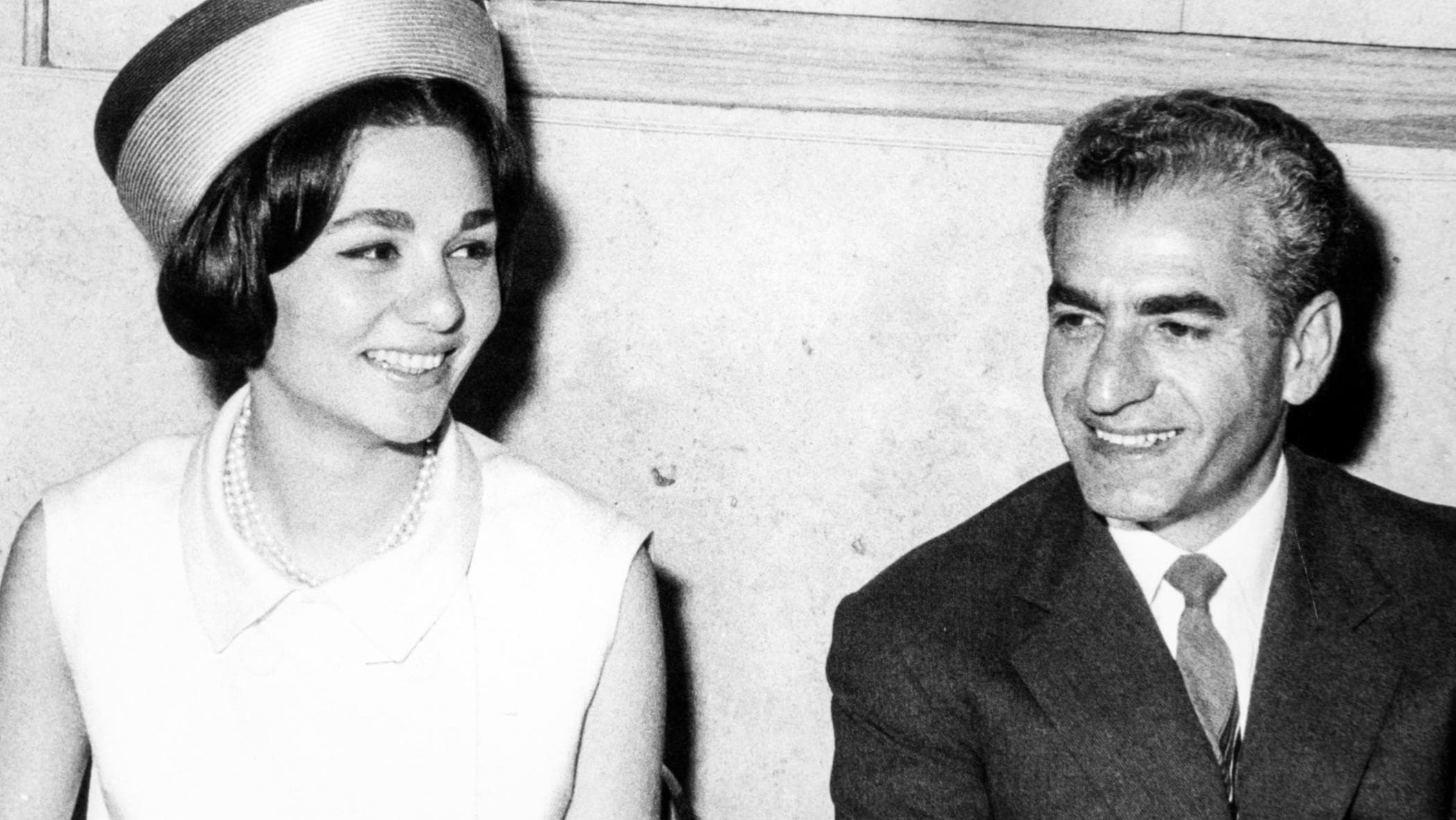
File:Shahbanu_of_Iran.jpg · Wikimedia Commons · See Wikimedia Commons
Farah Pahlavi
Sign in to saveAlso known as Farah Diba, Farah Diba Pahlavi
queen/empress consort of Iran from 1959 to 1979
Farah Pahlavi was the queen and empress consort of Iran during the reign of Shah Mohammad Reza Pahlavi from 1959 until the Iranian Revolution in 1979. She is historically significant as a prominent figure during a transformative period in Iran's modern history, when the country underwent major social and political upheaval that ultimately led to the establishment of an Islamic republic.
AI-generated from the Wikipedia summary — may contain errors.
Person · Open Library
- Born
- 14 October 1938
- Works
- 4
Top works
- Wspomnienia z miłości do mojego króla
- 1001 Days
- An Enduring Love
- Mémoires
via Open Library + Wikidata
Film & TV
Tehran, Iran
Farah Pahlavi (Persian: فرح پهلوی, née Farah Diba (فرح دیبا); born 14 October 1938) is the widow of the last Shah of Iran, Mohammad Reza Pahlavi, and was successively Queen and Shahbanu (empress consort) of Iran from 1959 to 1979. She was born into a prosperous family whose fortunes were diminished after her father's early death. [wikipedia]
Known for
- Pure White — Self (archive footage)2022
- Banquet of History2021
- A Night at the Opera2020
- The last two days — Self2019
- Mostashregh — Self (archive footage)2019
- Farah Diba Pahlavi: The Last Empress — Self2018
- Shahbanoo — Herself2016
- From Tehran to Cairo — Self2011
- hayedeh: legendary persian diva2009
- The Queen and I2008
via TMDB
Official website

Queen Farah Pahlavi Shahbanou Of Iran
The Official site of Queen Farah Pahlavi. Latest News & Royal Events Of Her Imperial Majesty Empress Farah Pahlavi Shahbanou of IRAN (Persia)., On Sunday, June 14, 2026, Her Majesty Empress Farah Pahlavi attended the annual Empress Farah Pahlavi Cup at the Polo Club of France. The Empress Farah Pahlavi Cup is one of the Polo Club of France’s most prestigious annual tournaments, drawing a large number of spectators each year to enjoy this elegant and historic sport. The origins of Chogan known internationally today as polo can be traced back to ancient Persia, dating at least to the Achaemenid Empire. Over the centuries, the sport spread throughout the region and eventually to many parts of the world. From its earliest days, Chogan was regarded as the sport of kings and nobility, a distinction it continues to enjoy today. An interesting reminder of its importance in Persian history is the vast size of Naqsh-e Jahan Square in Isfahan, which was designed in part to accommodate Chogan matches and exhibitions held during the Safavid era, reflecting the Safavid monarchs’ great enthusiasm for the sport.
farahpahlavi.org →Link to the official site · 15,665 chars · not written by Vinony
Described at
Le grandi storie d’amore: Farah Diba e lo Scià di Persia - d la Repubblica
Lei era innamorata, ma ignorava il destino toccato a due donne prima di lei, ex mogli di Reza Pahlevi cui erano toccate in sorte sofferenze, malattie e sventure
d.repubblica.it →Con la prima moglie, la principessa Fawzia d'Egitto, le cose erano iniziate male, perché quello con Reza Pahlevi, allora diciannovenne, era stato un matrimonio concordato tra famiglie in cui gli sposi non si erano mai incontrati. Lei, con quei suoi grandi occhi azzurri, era nota per la sua bellezza paragonata a quella di dive come Hedy Lamarr e Vivien Leigh, e il suo pedigree aveva dato lustro alla neonata dinastia Pahlavi: lo scià era infatti un militare salito al potere rovesciando i Qajar dopo un colpo di Stato, quindi non aveva sangue blu né titoli di studio. 1951 Soraya seconda moglie di Mohammad Reza Pahlavi. Photo by ARCHIVE / AFP Mohammed Reza Shah Pahlavi con la terza moglie Farah Diba e il loro bambino, Reza. Photo by Universal History Archive/Getty Images Nel 67 si decise di celebrare l'incoronazione della coppia a imperatori, cerimonia rimandata per anni che pose sul capo di Farah la corona di Van Cleef & Arpels originariamente disegnata per Soraya. Ma più sfarzosa fu quella organizzata anni dopo (1971) per celebrare i 2.500 anni dalla fondazione dell’Impero persiano, ricordata come quella "la festa che costò il trono al re” . A livello diplomatico fu un successo, grazie alla partecipazione di capi di Stato e membri delle famiglie reali di tutto il mondo, ma lo sfarzo, il lusso, le giornate intere trascorse tra spettacoli e banchetti fecero infatti indignare l'opposizione, Khomeini in testa, e criticare uno Scià che sembrava più preoccupato della propria immagine internazionale che del benessere del suo popolo. Nel 1979, dopo anni di scioperi, proteste e malumori, scoppiò la rivoluzione islamica e la famiglia reale dovette lasciare il Paese. L'Ayatollah Khomeini tornò dall'esilio e l'Iran divenne una repubblica islamica. L'esilio fu complicato per i Pahlavi, che si rifugiarono in Egitto mentre cercavano di ottenere un permesso di ingresso negli Stati Uniti per far curare l'ex scià, nel frattempo ammalatosi di cancro. Reza Pahlavi, ultimo imperatore dell'Iran, morì in Egitto nel 1980, poco più di un anno dopo aver lasciato il suo Paese. Il presidente dell'Egitto, Anwar el Sadat, che li aveva accolti con affetto e rispetto, fu assassinato nel 1981. Negli Stati Uniti, Farah arrivò da sola con i suoi figli e non le toccò miglior sorte per gli anni a venire: i due figli più piccoli finirono per suicidarsi, vittime di depressione e dipendenze conseguenza, secondo Farah, dell'esilio. Anche la regina Fawzia andò in esilio dopo la rivoluzione di Nasser che rovesciò suo fratello, ma poté tornare in Egitto negli anni '70, dove morì nel 2013. Soraya, invece, era già morta nel 2001. Farah Diba ha 85 anni e da Parigi , dove oggi vive, sostiene le lotte dei giovani che lottano per un Iran democratico. Quanto al primogenito della coppia, Reza Pahlavi, oggi ha 64 anni e si batte per tornare sul trono dell’Iran come potenziale alternativa al regime degli ayatollah, presentandosi come l'unico candidato valido per guidare una transizione dalla Repubblica islamica.
Excerpt from a page describing this subject · 18,031 chars · not written by Vinony
Wikidata facts
- Instance of
- human
- Given name
- Faraḥ
- Gender
- female
- Citizenship
- Iran
- Place of birth
- Tehran
- Spouse
- Mohammad Reza Pahlavi
- Child
- Leila Pahlavi
- Occupation
- queen consort
- Position held
- empress consort
- Languages spoken
- Azerbaijani
- Religion
- Shia Islam
- Family
- Pahlavi dynasty
- Noble title
- Shahbanu
- Official website
- www.farahpahlavi.org
- Image
- Farah Diba 1959 Iran.jpg
- Number of children
- 4
- Residence
- United States
Show 11 more facts
- Commons category
- Farah Pahlavi
- date of birth
- 1938-10-14
- Commons gallery
- فرح پهلوی
- name in native language
- فرح پهلوی
- birth name
- Fərəh Diba
- social classification
- commoner
- Commons Creator page
- Farah Pahlavi
- social media followers
- 41000
- member of
- Académie des beaux-arts
Sources (8)
via Wikidata · CC0
~23 min read
Encyclopedic overview
Farah Pahlavi (Persian: فرح پهلوی; née Diba [دیبا]; born 14 October 1938) is a member of the Pahlavi dynasty. She is the last queen and empress (شهبانو, Shahbânu) of Iran, and is the third wife and widow of the last shah of Iran, Mohammad Reza Pahlavi.
She was born into a prosperous Iranian family whose fortunes were diminished after her father's early death. While studying architecture in Paris, she was introduced to the Shah at the Iranian embassy, and they were married in December 1959. The Shah's first two marriages had not produced a son—necessary for royal succession—resulting in great rejoicing at the birth of Crown Prince Reza in October of the following year. As a philanthropist, she advanced the welfare of Iranian civil society through the establishment of charities and founded Iran's Shiraz University, Iran's first American-style university, increasing the number of women students. She also facilitated the recall of Iranian antiquities from museums abroad.
Excerpted from Wikipedia’s “Farah Pahlavi” article, available under the CC BY-SA 4.0 licence.