Person · Open Library
- Works
- 3
Top works
- Arthur Nikisch
- Gustav Mahler Erinnerungen und Eindrucke Aus Den Hamburger Jahren
- Gustav Mahler
via Open Library + Wikidata
Music · MusicBrainz
- Type
- Person
- Gender
- Male
- Origin
- Germany
- Active from
- 1862-10-12
- Active to
- 1949-12-16
Discography
via MusicBrainz · CC0
Listeners · Last.fm
- Listeners
- 87
- Total plays
- 280
<a href="https://www.last.fm/music/Ferdinand+Pfohl">Read more on Last.fm</a>
Described at
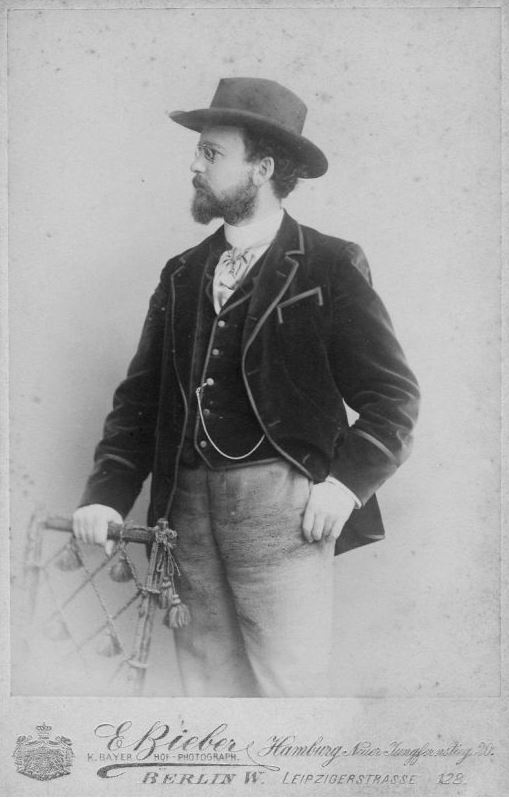
Ferdinand Pfohl (1862-1949) - Mahler Foundation
Learn about the significance of Pfohl and its impact on modern culture. Discover the unique aspects and contributions of Pfohl in this informative blog post.
mahlerfoundation.org →Continued the Musikfeuilletons in the “Hamburger Nachrichten” on the recommendation of Hans von Bulow (1830-1894) . Year 1892 : 25-12-1892 Hamburg : Mahler becomes friendly with Ferdinand Pfohl. Mahler invited Pfohl for a rehearsal for the premiere of Symphony No. 1 . Visited Mahler in his Hamburg home. Henriette Lazarus (1834-1903) . Pfohl was amongst the most highly regarded music critics in Germany; his opinions carried a great deal of weight. Amongst music circles he was particularly well known as a writer and composer (Willscher in Musik in Geschichte und Gegenwart, 2005). His compositions include a lot of lieder, some piano pieces and works for orchestra. The Pfohl-Woyrsch-Society, Pfohl-Woyrsch-Gesellschaft e.V. Hamburg is going to revive his music and to inform about his musical and literary works. Pfohl was amongst the most highly regarded music critics in Germany; his opinions carried a great deal of weight (Schaal in MGG 1962). Amongst music circles he was particularly well-known as a writer and music critic. His music was performed fairly frequently during his lifetime and received much acclaim. The following statement is taken from a review written by Heinrich Chevalley on the debut of Pfohl’s “Ocean Symphony” with full orchestra and organ. “All these movements testify, without exception, to his rich musical invention, a remarkable knowledge of the rules of counterpoint, and an unusual, truly dazzling talent of orchestration. … pure brilliance and richness in the new, innovative combination of sounds. … only a genius could so advantageously employ the orchestral body to such fantastic heights.” In 1911, Pfohl published a biography about Richard Wagner that was widely circulated, and also guides to six operas by this Bayreuth master in which he demonstrated his exceptional analytical abilities (Schaal in ‘Musik in Geschichte und Gegenwart’ 1962). Pfohl also wrote a comprehensive portrait of celebrated conductor Arthur Nikisch, with whom he had formed close ties. Numerous other books were devoted mainly to music and composers of the 19th century. He was well acquainted with a great number of music personalities of his time, and even befriended some of them: Eugen d Albert, Feruccio Busoni, Edvard Grieg, Engelbert Humperdinck, Gustav Mahler, Jules Massenet, Giacomo Puccini, Max Reger, Richard Strauss, Siegfried und Cosima Wagner, Ermanno Wolf-Ferrari, and Felix Woyrsch. His correspondence with Humperdinck has been preserved as have several letters he received from Mahler and Reger.. Many other letters from significant personalities have gone missing. Since his student days in Leipzig, Pfohl enjoyed a friendship with the great composer Ferruccio Busoni. After Busoni’s early death, Pfohl published a particularly memorable article in “Musikwelt” (1925). As part of the Busoni estate, ten of Pfohl’s letters to Busoni are now kept in the state library (Staatsbibliothek) in Berlin. Pfohl was born on the 12th October, 1862 in a small west Bohemian town, Elbogen, located on the Eger River (the town is called Loket, on the Ochre River, in today’s Czech Republic). His father, Ferdinand Pfohl Sr., was a leading member of the municipal in Elbogen for many years. However this changed with his visit to a performance of Parsifal in 1883 in Bayreuth, which renewed in him the conviction that music was his true calling: “You belong to music, only and exclusively to music, and music to you; music is your blood, your soul.” As a result, he broke off his studies of law and moved to musically-rich Leipzig in 1885, where he studied music theory and composition with Professor Oskar Paul and attended lectures in the faculty of philosophy at the University of Leipzig. His first major orchestral piece, “The Apsarase”, debuted in 1887 in the Albert Hall in Leipzig, followed by “Savonarola” in 1889, a symphonic poem. From his Leipzig years, the lieder cycle “Mondrondels”, from the “Pierrot Lunaire” collection by Giraud, should be espe
Excerpt from a page describing this subject · 12,361 chars · not written by Vinony
Wikidata facts
- Instance of
- human
- Given name
- Ferdinand
- Gender
- male
- Citizenship
- Germany
- Place of birth
- Loket
- Place of death
- Hamburg
- Occupation
- music critic
- Languages spoken
- German
- Genre
- symphonic music
- Image
- Ferdinand Pfohl - klamroth color.jpg
Show 5 more facts
- date of birth
- 1862-10-12
- date of death
- 1949-12-16
- Commons category
- Ferdinand Pfohl
- described at URL
- mahlerfoundation.org/mahler/contemporaries/ferdinand-pfohl
- significant person
- Ferruccio Busoni
Sources (2)
via Wikidata · CC0