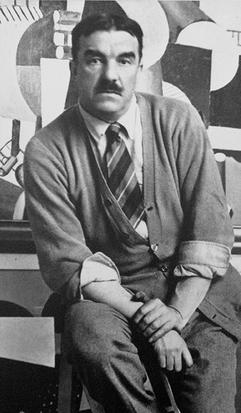
File:Fernand_Léger,_c._1916.jpg · Wikimedia Commons · See Wikimedia Commons
Fernand Léger
Sign in to saveAlso known as Fernand Leger, Fernan Lezeh, Fernan Lez'eh, Fernan Lezhe, Ferunan Reje, F. Leger, Leger, fernand leger
French painter (1881–1955)
OverviewAI-generated
Joseph Henri Fernand Léger was a French painter, film director, sculptor, and scenographer. Born in Argentan, Orne, Lower Normandy, he was educated at the Académie Julian and the École nationale supérieure des arts décoratifs. His artistic output spanned painting, sculpture, and cinematography, with genres including portrait, figure painting, landscape painting, and religious painting. He was influenced by Henri Rousseau and associated with the cubism and modernism movements.
Léger participated in World War I and was sponsored by Daniel-Henry Kahnweiler. He was a member of the American Abstract Artists and the Koninklijke Vlaamse Academie van België voor Wetenschappen en Kunsten. His works have been included in collections at the Belvedere, Städel Museum, Museo Nacional Centro de Arte Reina Sofía, and Minneapolis Institute of Art. He also participated in documenta and Documenta III. Léger died in Gif-sur-Yvette in 1955.
Synthesized by Vinony from 27 facts across 3 sources: Wikidata, Europeana Sparql, TMDb. Generated from structured data (not the Wikipedia text) and checked against those facts — may still contain errors.
Film & TV
Argentan, Orne, Lower Normandy, France
Joseph Fernand Henri Léger was a French painter, sculptor, and filmmaker. In his early works he created a personal form of cubism which he gradually modified into a more figurative, populist style. His boldly simplified treatment of modern subject matter has caused him to be regarded as a forerunner of pop art.
Known for
- Cinema of the avant-garde 1923 - 19302010
- Arrivée de Fernand Léger devant la gare du palais (Québec) — Self1945
- Ballet Mécanique1924
via TMDB
Key facts
- Born
- ( 1881-02-04 ) February 4, 1881, Argentan , Orne, France
- Died
- August 17, 1955 (1955-08-17) (aged 74), Gif-sur-Yvette , France
- Known for
- Painting, printmaking , and filmmaking
- Movement
- Cubism , Modernism
via Wikipedia infobox
Wikidata facts
- Instance of
- human
- Given name
- Henri
- Gender
- male
- Citizenship
- France
- Place of birth
- Argentan
- Place of death
- Gif-sur-Yvette
- Spouse
- Nadia Léger
- Occupation
- director
- Languages spoken
- French
- Native language
- French
- Field of work
- cinematography
- Genre
- still life
- Movement
- modernism
- Conflict
- World War I
- Image
- Fernand Léger.jpg
- Work location
- New York City
Show 14 more facts
- Commons category
- Fernand Léger
- date of death
- 1955-08-17
- student
- Tarsila do Amaral
- name in native language
- Fernand Léger
- influenced by
- Henri Rousseau
- sponsor
- Daniel-Henry Kahnweiler
- archives at
- Bibliothèque Kandinsky
- place of burial
- Gif-sur-Yvette
- ethnic group
- French
- date of birth
- 1881-02-04
- pseudonym
- Lezhe, Fernan
- P12674
- STS-61
- Commons Creator page
- Fernand Léger
Sources (15)
via Wikidata · CC0
Works in European collections
10 objects attributed to Fernand Léger, held across European museums, libraries & archives · via Europeana
~17 min read
Encyclopedic overview
Joseph Fernand Henri Léger ( French: [fɛʁnɑ̃ leʒe]; February 4, 1881 – August 17, 1955) was a French painter, sculptor, and filmmaker. In his early works he created a personal form of cubism (known as "tubism") which he gradually modified into a more figurative, populist style. His boldly simplified treatment of modern subject matter has caused him to be regarded as a forerunner of pop art.
Biography
Excerpted from Wikipedia’s “Fernand Léger” article, available under the CC BY-SA 4.0 licence.