Encyclopedia of Life · EOL (see source)
Ficaria
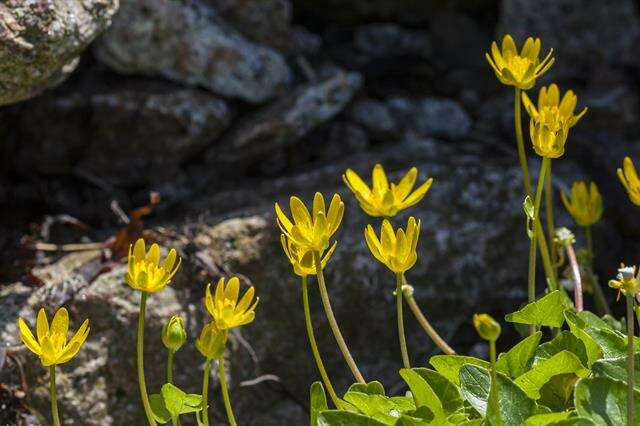
Sign in to saveFicaria is a small genus of several species of plants in the family Ranunculaceae, which were previously grouped with Ranunculus. The genus includes Ficaria verna, known as fig buttercup or lesser celandine, and related species. The name "Ficaria" is Classical Latin for fig. Plants in the genus are closely related to true buttercups, but generally have only three sepals and swollen smooth achenes.
Species
GENUS
- KingdomPlantae
- PhylumTracheophyta
- ClassMagnoliopsida
- OrderRanunculales
- FamilyRanunculaceae
Чистя́к (лат. Ficaria) — род растений, входящий в семейство Лютиковые (Ranunculaceae). В некоторых системах классификации включается в род Лютик (Ranunculus) в ранге подрода.
via GBIF · Kew POWO
Museum specimens
- Specimen records
- 12
- With media
- 12
- Family
- Ranunculaceae
- Collections
- MNHN, NY, VT
- Recorded in
- Portugal, France, Georgia, Italie, Denmark, Poland, Chypre, Macedonia
Wikidata facts
- Instance of
- taxon
- Parent taxon
- Ranunculeae
- Image
- (MHNT) Ficaria verna - flower.jpg
Show 7 more facts
- taxon name
- Ficaria
- taxon rank
- genus
- taxonomic type
- Ficaria verna
- Commons category
- Ficaria
- taxon common name
- Speenkruid
- Commons gallery
- Ficaria
Sources (2)
via Wikidata · CC0
~2 min read
Encyclopedic overview
5 sectionsContents
- Splitting of genus ''Ranunculus''
- Toxicity
- Species list
- References
- External links
Ficaria is a small genus of several species of plants in the family Ranunculaceae, which were previously grouped with Ranunculus. The genus includes Ficaria verna, known as fig buttercup or lesser celandine, and related species. The name "Ficaria" is Classical Latin for fig. Plants in the genus are closely related to true buttercups, but generally have only three sepals and swollen smooth achenes.
== Splitting of genus Ranunculus== Molecular investigation of the genus Ranunculus revealed that it was not monophyletic with respect to a number of other recognized genera in the family – e.g. Ceratocephala, Halerpestes, Hamadryas, Laccopetalum, Myosurus, Oxygraphis, Paroxygraphis and Trautvetteria. The work revealed the need to separate Ficaria from Ranunculus, and both were added to the tribe Ranunculeae.
Excerpted from Wikipedia’s “Ficaria” article, available under the CC BY-SA 4.0 licence.