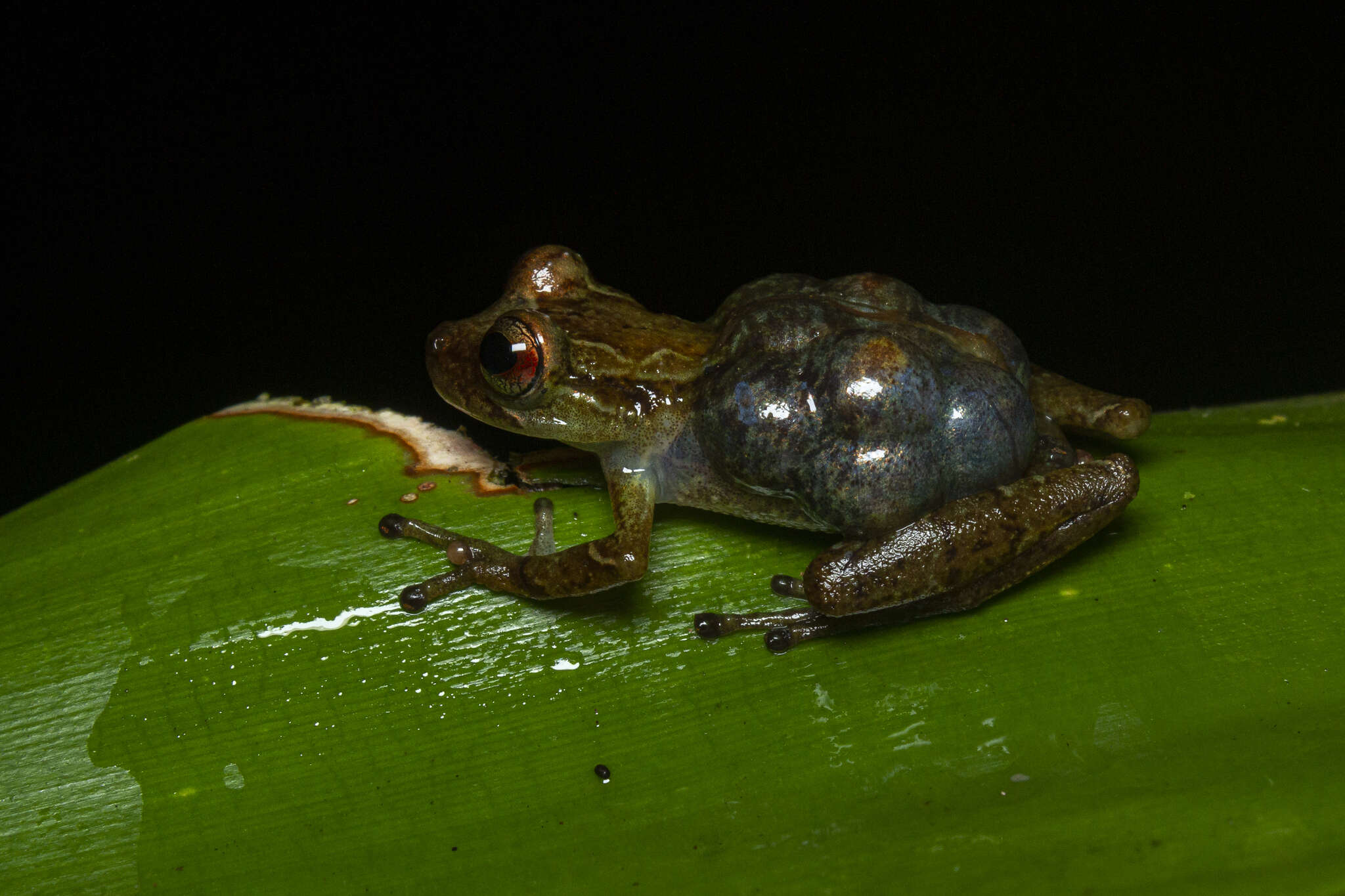
Encyclopedia of Life · EOL (see source)
Flectonotus
Sign in to saveFlectonotus is a genus of frogs of the family Hemiphractidae. They are found on the Andes of northeastern Colombia and adjacent Venezuela as well as in Trinidad and Tobago.
Species
GENUS
- KingdomAnimalia
- PhylumChordata
- ClassAmphibia
- OrderAnura
- FamilyHemiphractidae
Fritziana es un género de anfibio anuro de la familia de Hemiphractidae. Son endémicos del sudeste de Brasil. Especies Se reconocen las cinco especies siguientes:[1] Fritziana fissilis (Miranda Ribeiro, 1920) Fritziana goeldii (Boulenger, 1895) Fritziana ohausi (Wandolleck, 1907) Fritziana tonimi Walker, Gasparini & Haddad, 2016 Fritziana ulei (Miranda Ribeiro, 1926) Referencias ↑ Frost, D.R. «Fritziana ». Amphibian Species of the World: an Online Reference. Version 6.1. (en inglés). Nueva York, EEUU: Museo Americano de Historia Natural. Consultado el 12 de diciembre de 2016. Faivovich, J., Haddad, C.F.B., García, P.C.O., Frost, D.R., Campbell, J.A. & Wheeler, W.C. 2005. Systematic review of the frog family Hylidae, with special reference to Hylinae: Phylogenetic analysis and taxonomic revisión. Bulletin of the American Museum of Natural History. 294: 1-240.
via GBIF
Museum specimens
- Specimen records
- 6
- Family
- Hemiphractidae
- Collections
- MUSEU NACIONAL/UFRJ, FMNH
- Recorded in
- Brasil, Brazil
Wikidata facts
- Instance of
- taxon
- Parent taxon
- Hemiphractidae
- Image
- Flectonotus pygmaeus02.jpg
Show 5 more facts
- Commons category
- Flectonotus
- taxon name
- Flectonotus
- taxon rank
- genus
- topic's main category
- Category:Flectonotus
- taxon common name
- Brazilian Treefrogs
Sources (1)
via Wikidata · CC0
~1 min read
Encyclopedic overview
3 sectionsContents
- Taxonomy
- Species
- References
Flectonotus is a genus of frogs of the family Hemiphractidae. They are found on the Andes of northeastern Colombia and adjacent Venezuela as well as in Trinidad and Tobago.
==Taxonomy== The genus has been considered to include Fritziana, but the latter genus was recognized again in 2011. The former Flectonotus consisted of two geographically disjunctive components, one from northern South America (=Flectonotus, as understood today) and the other from southeastern Brazil (now Fritziana). The distinctiveness of these taxa is now well established and based on both molecular, behavioural, and morphological characters.
Excerpted from Wikipedia’s “Flectonotus” article, available under the CC BY-SA 4.0 licence.
Available in 18 languages
- Español
- Français
- 中文
- Русский
- Português
- Italiano
- Azerbaijani
- Basque
- Catalan
- Cebuano
- Egyptian Arabic
- Hungarian
- Nederlands
- Polski
- Svenska
- Tiếng Việt
- Waray
via Wikidata sitelinks · CC0