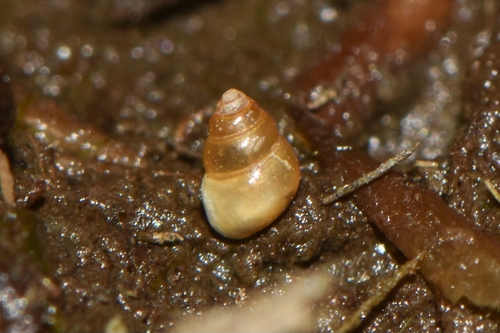
(c) Levi smith, some rights reserved (CC BY-NC), uploaded by Levi smith · cc-by-nc
Floridobia
Sign in to saveFloridobia is a genus of very small freshwater snails (and one species found in brackish coastal marshes) that have an operculum, in the family Hydrobiidae, the mud snails.
Species
New England Siltsnail
GENUS
- KingdomAnimalia
- PhylumMollusca
- ClassGastropoda
- OrderLittorinimorpha
- FamilyHydrobiidae
via GBIF
Wikidata facts
- Instance of
- taxon
- Parent taxon
- Hydrobiidae
Show 2 more facts
- taxon name
- Floridobia
- taxon rank
- genus
Sources (1)
via Wikidata · CC0
~3 min read
Encyclopedic overview
2 sectionsContents
- Species
- References
Floridobia is a genus of very small freshwater snails (and one species found in brackish coastal marshes) that have an operculum, in the family Hydrobiidae, the mud snails.
Floridobia siltsnails are dioecious (having separate male and female individuals). Females are usually much larger and more numerous than males. They are believed to have a life-span of about one year. In the relatively warm waters of Florida springs, reproduction occurs year-round. The snails feed on microbial organisms and detritus attached to surfaces. Floridobia species tolerate low dissolved oxygen levels found near spring vents, which helps protect then from most fish predators.
Excerpted from Wikipedia’s “Floridobia” article, available under the CC BY-SA 4.0 licence.