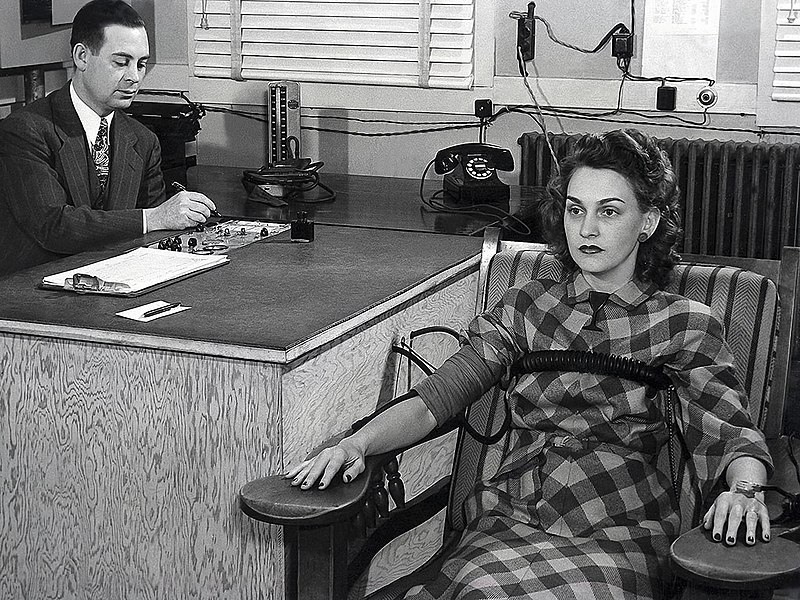
File:Lie_detector_test.jpg · Wikimedia Commons · See Wikimedia Commons
forensic psychology
Sign in to savethe intersection between psychology and the justice system
Wikidata facts
- Subclass of
- clinical psychology
- Said to be same as
- legal psychology
Show 2 more facts
- topic's main category
- Category:Forensic psychology
- different from
- legal psychology
via Wikidata · CC0
~40 min read
Encyclopedic overview
Forensic psychology is the application of scientific knowledge and methods (in relation to psychology) to assist in answering legal questions that may arise in criminal, civil, contractual, personal injury, or other judicial proceedings. Practitioners and researchers in the field may engage in various psychology-law topics, such as: jury selection, reducing systemic racism in criminal law, eyewitness testimony and jury research, evaluating competency to stand trial, identifying cognitive, behavioral or organizational factors contributing to systems failures, or assessing military veterans for service-connected disability compensation. The American Psychological Association's Specialty Guidelines for Forensic Psychologists reference several psychology sub-disciplines, such as: social, clinical, experimental, counseling, and neuropsychology.
History
Excerpted from Wikipedia’s “forensic psychology” article, available under the CC BY-SA 4.0 licence.