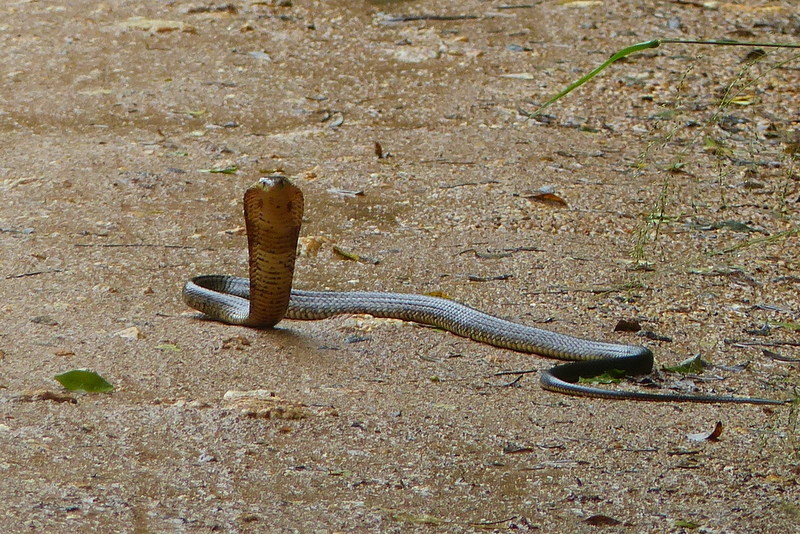
Encyclopedia of Life · EOL (see source)
Species
Least ConcernMaximum longevity: 29.1 years (captivity) Observations: These animals are also known as forest cobra.
via IUCN
Wikidata facts
Show 6 more facts
- taxon rank
- species
- taxon name
- Naja melanoleuca
- Commons category
- Naja melanoleuca
- Commons gallery
- Naja melanoleuca
- IUCN conservation status
- Least Concern
- short name
- N. melanoleuca
Sources (1)
via Wikidata · CC0
~15 min read
Encyclopedic overview
The forest cobra (Naja melanoleuca), also commonly called the black cobra and the black and white-lipped cobra, is a species of highly venomous snake in the family Elapidae. The species is native to Africa, mostly the central and western parts of the continent. It is the largest true cobra species with a record length of 3.2 metres (10 feet 6 inches).
Although it prefers lowland forest and moist savanna habitats, this cobra is highly adaptable and can be found in drier climates within its geographical range. It is a very capable swimmer and is often considered to be semi-aquatic. The forest cobra is a generalist in its feeding habits, having a highly varied diet: anything from large insects to small mammals and other reptiles. This species is alert, nervous and is considered to be a medically significant snake. When cornered or molested, it will assume the typical cobra warning posture by raising its fore body off the ground, spreading a narrow hood, and hissing loudly. Bites to humans are less common than from other African cobras due to various factors, though a bite from this species is a life-threatening emergency.
Excerpted from Wikipedia’s “Forest cobra” article, available under the CC BY-SA 4.0 licence.