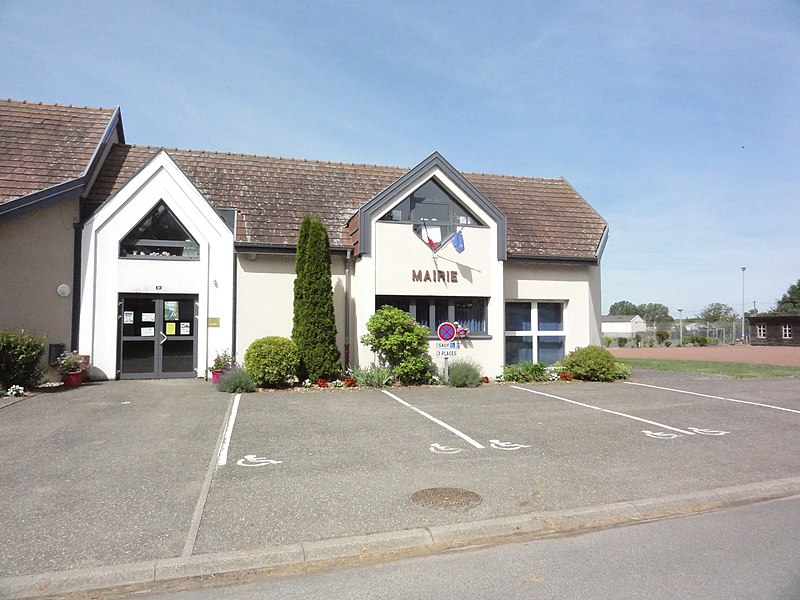
File:Fribourg_(Moselle)_mairie.jpg · Wikimedia Commons · See Wikimedia Commons
Weather now
cached 9h ago18°clear sky
54% 2.0 m/s OpenWeatherMap
7-day forecast
via Open-Meteo
Place details
- Locality
- Fribourg
- Region
- Grand Est
- Country
- France
- Population
- 179
via · GeoNames
Travel guide
Understand
300px|thumb|Panorama of Fribourg Fribourg has been a part of the Swiss Confederation since 1481, with over 10,000 inhabitants at that time. Since the city was founded on a peninsula many bridges were built to span the Sarine River, the first one in 1250. In the 19th century Fribourg was famous for its suspension bridges which have now been replaced with concrete. The university was founded in 1889. The 2000 census showed a population of 35,000 city residents and 235,000 in the Fribourg canton.
Sprinkled throughout the city are Renaissance fountains and more recent fountains such as the Tinguely Fountain made in 1984.
Get around
Walk: most sights are within walking distance. You'll probably arrive at the SBB station in the modern city centre, which is bland, in parts brutalist. Go north about 300 m for the University. For the Old Town go east: the signposts take traffic down Route des Alpes but it's pleasanter to follow pedestrianised Rue de Lausanne. Both routes lead downhill to Place Tilleul, with the Cathedral of St Nicholas, the Basilica of Notre Dame, the Gutenberg Museum, and Espace Jean Tinguely Niki de St Phalle; nearby are the Convent and Museum of Art History. Continue downhill past the Cathedral to the foot of town in a loop of the River Sarine, crossed by the wooden Pont de Berne.
Bus routes 2 & 6 run from the SBB down to Place Tilleul and the Cathedral. Networks during the day: local bus regio bus rail
Do
300px|thumb|Zaehringen Bridge from the steeple of the cathedral
Drink
400px|thumb|Another Fribourg little panorama
Go next
Gruyères Basel Bern Neuchatel Murten/Morat
Travel guide from Wikivoyage (CC BY-SA 4.0)
~1 min read
Article
Fribourg ( French pronunciation: [fʁibuʁ] ; German: Freiburg) is a commune in the Moselle department in Grand Est in north-eastern France.
See also