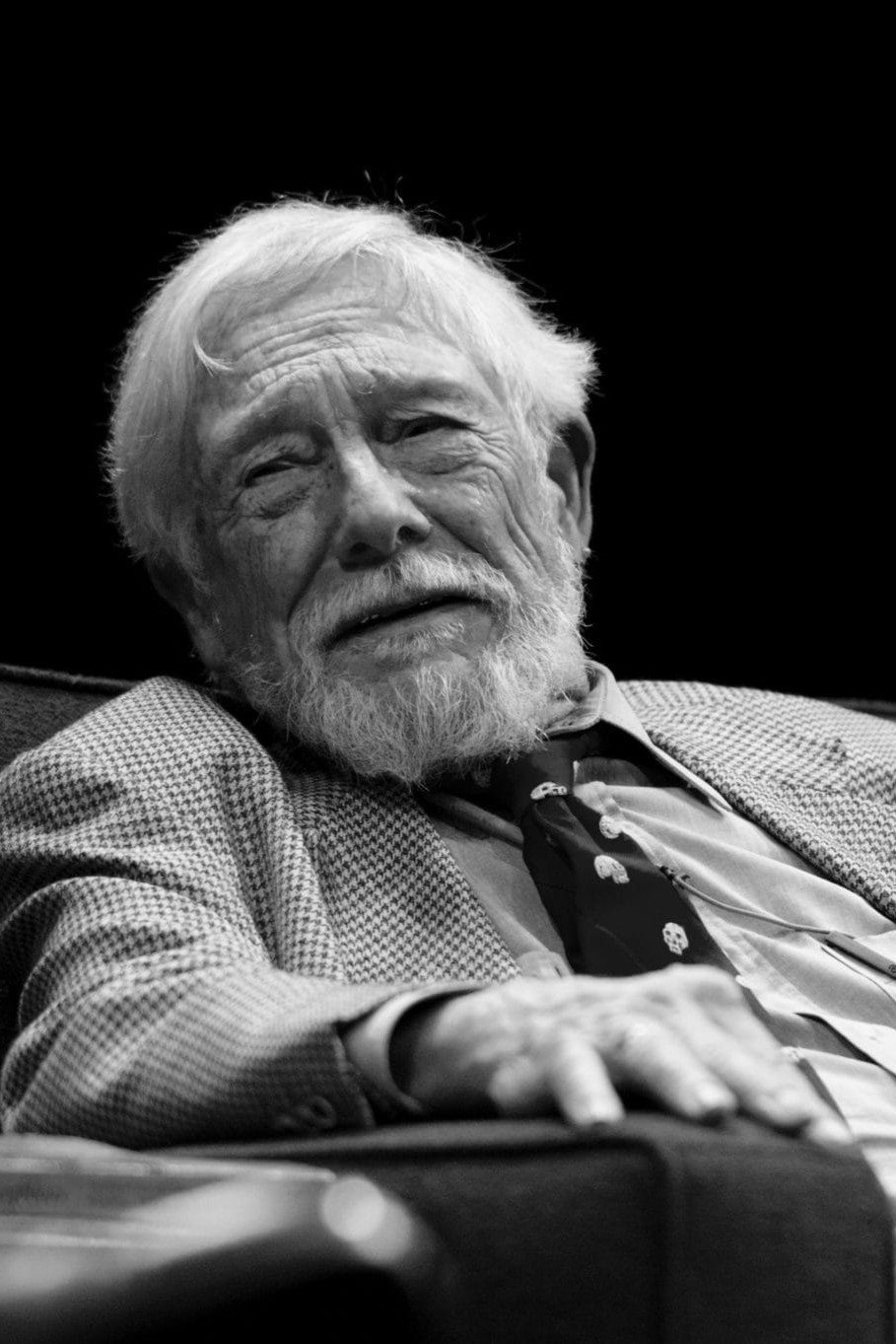
Profile via TMDB · Courtesy of TMDB
Gary Snyder
Sign in to saveAmerican poet (born 1930)
OverviewAI-generated
Gary Snyder is an American poet, translator, writer, and trade unionist born in San Francisco in 1930. He is associated with the Beat Generation and began his work period in 1950. Snyder is a member of the American Academy of Arts and Letters and the American Academy of Arts and Sciences. He was educated at Reed College and has been employed by the University of California, Davis. His archives are held at the University of California, Davis, and Kent State University.
Snyder has received the Guggenheim Fellowship, Bollingen Prize, Pulitzer Prize for Poetry, and American Book Awards. He is recognized in the Pulitzer Prize collection and the American Academy Arts Sciences collection. His notable works include *William Carlos Williams*, *Tree song*, *Roadkills*, *American Earth*, and *שירים לגאיה*. He writes in the English language.
Synthesized by Vinony from 26 facts across 4 sources: Wikidata, Open Library, TMDb, Vinony collections. Generated from structured data (not the Wikipedia text) and checked against those facts — may still contain errors.
Person · Open Library
- Born
- 1930
- Works
- 154
Top works
- William Carlos Williams
- Tree song
- Roadkills
- American Earth
- שירים לגאיה
via Open Library + Wikidata
Film & TV
San Francisco, California, USA
Known for
- O Mother Gaia: The World of Gary Snyder — Self2025
- The Practice of the Wild — Self2010
- Cold Mountain: Han Shan — Self2009
- A Zen Life: D.T. Suzuki — Self2006
- The Source — Self1999
- Poetry in Motion — Self1982
via TMDB
Key facts
- Born
- Gary Sherman Snyder , ( 1930-05-08 ) May 8, 1930 (age 96) , San Francisco , California , U.S.
- Occupation
- Poet essayist travel writer translator educator
- Education
- Reed College ( BA ), Indiana University, Bloomington
- Period
- 1950–present
- Literary movement
- San Francisco Renaissance , Beat Generation
- Notable works
- Turtle Island , 1974; The Real Work , 1980; A Place in Space , 1995; Mountains and Rivers Without End , 1996
- Notable awards
- Pulitzer Prize for poetry, 1975; American Book Award , 1984; Bollingen Prize for Poetry, 1997; John Hay Award for Nature Writing, 1997; Ruth Lilly Poetry Prize , 2008
via Wikipedia infobox
Wikidata facts
- Instance of
- human
- Given name
- Gary
- Family name
- Snyder
- Gender
- male
- Citizenship
- United States
- Place of birth
- San Francisco
- Occupation
- environmentalist
- Employer
- University of California, Davis
- Languages spoken
- English language
- Movement
- Beat Generation
- Image
- Gary Snyder, 2007 (cropped).jpg
Show 5 more facts
- date of birth
- 1930-05-08
- Commons category
- Gary Snyder
- writing language
- English language
- start of work period
- 1950-00-00
Sources (7)
via Wikidata · CC0
~30 min read
Encyclopedic overview
Gary Sherman Snyder (born May 8, 1930) is an American poet, essayist, lecturer, and environmental activist. His early poetry has been associated with the Beat Generation and the San Francisco Renaissance and he has been described as the "poet laureate of Deep Ecology". Snyder is a winner of a Pulitzer Prize for Poetry and the American Book Award. His work, in his various roles, reflects an immersion in both Buddhist spirituality and nature. He has translated literature into English from ancient Chinese and modern Japanese. For many years, Snyder was an academic at the University of California, Davis, and for a time served as a member of the California Arts Council.
Life and career
Excerpted from Wikipedia’s “Gary Snyder” article, available under the CC BY-SA 4.0 licence.