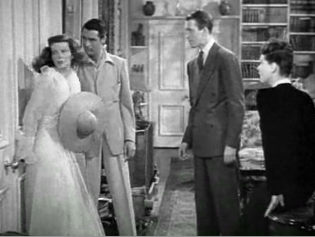
File:PhiladelphiaStory_trailer.png · Wikimedia Commons · See Wikimedia Commons
George Cukor
Sign in to saveAlso known as George Dewey Cukor
American film director and producer (1899–1983)
George Cukor was an American film director and producer who worked in Hollywood from the early 1900s until his death in 1983. He is remembered as an influential figure in cinema history during the classical Hollywood era.
AI-generated from the Wikipedia summary — may contain errors.
Film & TV
Lower East Side, Manhattan, New York City, New York, USA
From Wikipedia, the free encyclopedia George Dewey Cukor was an American film director. He mainly concentrated on comedies and literary adaptations. His career flourished at RKO and later MGM, where he directed What Price Hollywood? (1932), A Bill of Divorcement (1932), Dinner at Eight (1933), Little Women (1933), David Copperfield (1935), Romeo and Juliet (1936) and Camille (1936). He was…
Known for
- Charmed Lives: A Family Romance — Self (archive footage)2028
- Anna Karina, Remember — Self (archive footage) (uncredited)2020
- Sid & Judy — Self (archive footage)2019
- Scotty and the Secret History of Hollywood — Self (archive footage)2018
- Fascination: Unauthorized Story of Marilyn Monroe — Self (archive footage)2012
- 1939: Hollywood's Greatest Year — Self (archive footage)2009
- Cary Grant: A Class Apart — Self (archive footage)2004
- Judy Garland: By Myself — Self (archive footage)2004
- Cole Porter in Hollywood: Ça c'est l'amour — Self (archive footage)2003
- On Cukor — Self (archive footage)2000
via TMDB
Wikidata facts
- Instance of
- human
- Given name
- George
- Gender
- male
- Citizenship
- United States
- Place of birth
- New York City
- Place of death
- Los Angeles
- Occupation
- producer
- Educated at
- DeWitt Clinton High School
- Languages spoken
- English language
- Award
- Primetime Emmy Award for Outstanding Directing for a Limited Series, Movie, or Dramatic Special
- Conflict
- World War I
- Image
- George Cukor Allan Warren.jpg
Show 13 more facts
- manner of death
- natural causes
- place of burial
- Forest Lawn Memorial Park
- Commons category
- George Cukor
- date of birth
- 1899-07-07
- date of death
- 1983-01-24
- nominated for
- Academy Award for Best Director
- cause of death
- heart failure
- start of work period
- 1930-00-00
- sexual orientation
- homosexuality
- related category
- Category:Films directed by George Cukor
- end of work period
- 1981-00-00
- name in native language
- George Dewey Cukor
- birth name
- George Dewey Cukor
Sources (13)
via Wikidata · CC0
~26 min read
Encyclopedic overview
George Dewey Cukor (/ˈkjuːkɔːr/ KEW-kor; July 7, 1899 – January 24, 1983) was an American film director and producer. He mainly concentrated on comedies and literary adaptations. His career flourished at RKO when David O. Selznick, the studio's head of production, assigned Cukor to direct several of RKO's major films, including What Price Hollywood? (1932), A Bill of Divorcement (1932), Our Betters (1933), and Little Women (1933). When Selznick moved to Metro-Goldwyn-Mayer in 1933, Cukor followed and directed Dinner at Eight (1933) and David Copperfield (1935) for Selznick, and Romeo and Juliet (1936) and Camille (1936) for Irving Thalberg.
He was replaced as one of the directors of Gone with the Wind (1939), but he went on to direct The Philadelphia Story (1940), Gaslight (1944), Adam's Rib (1949), Born Yesterday (1950), A Star Is Born (1954), and Bhowani Junction (1956), and won the Academy Award, the British Academy Film Award, and the Golden Globe Award for directing My Fair Lady (1964). In 1975, Cukor won the Primetime Emmy Award for Outstanding Directing in a Special Program - Drama or Comedy for Love Among the Ruins. He continued to work into the early 1980s.
Excerpted from Wikipedia’s “George Cukor” article, available under the CC BY-SA 4.0 licence.
Gallery (9)
Available in 63 languages
- Español
- Français
- Deutsch
- 中文
- 日本語
- Русский
- Português
- Italiano
- العربية
- Aragonese
- Asturian
- Azerbaijani
- Bahasa Indonesia
- Bangla
- Basque
- Belarusian
- Breton
- Bulgarian
Show 44 more
- Catalan
- Croatian
- Czech
- Danish
- Egyptian Arabic
- Esperanto
- Filipino
- Finnish
- Galician
- Georgian
- Greek
- Hebrew
- Hungarian
- Ido
- Kazakh
- Latvian
- Limburgish
- Lithuanian
- Luxembourgish
- Malagasy
- Mingrelian
- Nederlands
- Norwegian
- Polski
- Punjabi
- Romanian
- Scots
- Serbian
- Serbian (Latin)
- simple
- Slovak
- Svenska
- Tamil
- Telugu
- Tiếng Việt
- Türkçe
- Ukrainian
- Urdu
- Waray
- Wu Chinese
- zh_yue
- فارسی
- ไทย
- 한국어
via Wikidata sitelinks · CC0