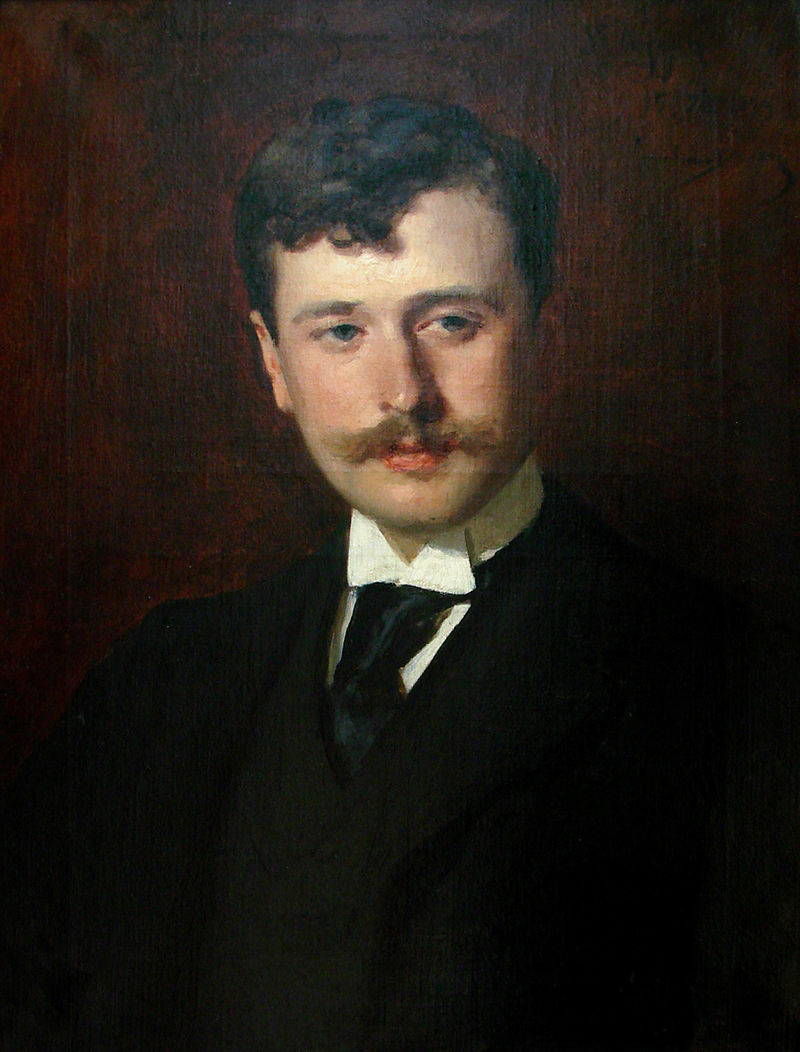
File:G_Feydeau_Carolus-Duran_Lille_2918.jpg · Wikimedia Commons · See Wikimedia Commons
Film & TV
Paris, France
Georges-Léon-Jules-Marie Feydeau (8 December 1862 – 5 June 1921) was a French playwright of the Belle Époque era, remembered for his farces, written between 1886 and 1914. Feydeau was born in Paris to middle-class parents and raised in an artistic and literary environment. From an early age he was fascinated by the theatre, and as a child he wrote plays and organised his schoolfellows into a…
via TMDB
Wikidata facts
- Instance of
- human
- Given name
- Georges
- Gender
- male
- Citizenship
- France
- Place of death
- Rueil-Malmaison
- Child
- Jean-Pierre Feydeau
- Father
- Ernest-Aimé Feydeau
- Occupation
- writer
- Languages spoken
- French
- Native language
- French
- Image
- G Feydeau Carolus-Duran Lille 2918.jpg
- Work location
- Paris
Show 13 more facts
- place of burial
- Montmartre Cemetery
- Commons category
- Georges Feydeau
- date of birth
- 1862-12-08
- date of death
- 1921-06-05
- Commons Creator page
- Georges Feydeau
- manner of death
- natural causes
- birth name
- Georges Léon Jules Marie Joseph Feydeau
- topic's main category
- Category:Georges Feydeau
- cause of death
- syphilis
- relative
- Henry Fouquier
- name in native language
- Georges Feydeau
- writing language
- French
- P12674
- York Höller
via Wikidata · CC0
Works in European collections
13 objects attributed to Georges Feydeau, held across European museums, libraries & archives · via Europeana


~30 min read
Encyclopedic overview
Feydeau in 1899, painted by his father-in-law, Carolus-Duran Georges-Léon-Jules-Marie Feydeau ( French: [ʒɔʁʒ fɛ.do]; 8 December 1862 – 5 June 1921) was a French playwright of the Belle Époque era, remembered for his farces, written between 1886 and 1914.
Feydeau was born in Paris to middle-class parents and raised in an artistic and literary environment. From an early age he was fascinated by the theatre, and as a child he wrote plays and organised his schoolfellows into a drama group. In his teens he wrote comic monologues and moved on to writing longer plays. His first full-length comedy, Tailleur pour dames [fr] ('Ladies' tailor'), was well received, but was followed by a string of comparative failures. He gave up writing for a time in the early 1890s and studied the methods of earlier masters of French comedy, particularly Eugène Labiche, Alfred Hennequin and Henri Meilhac. With his technique honed, and sometimes in collaboration with a co-author, he wrote seventeen full-length plays between 1892 and 1914, many of which have become staples of the theatrical repertoire in France and abroad. They include L'Hôtel du libre échange ('The Free Exchange Hotel', 1894), La Dame de chez Maxim ('The lady from Maxim's', 1899), La Puce à l'oreille ('A flea in her ear', 1907) and Occupe-toi d'Amélie! ('Look after Amélie', 1908).
Excerpted from Wikipedia’s “Georges Feydeau” article, available under the CC BY-SA 4.0 licence.