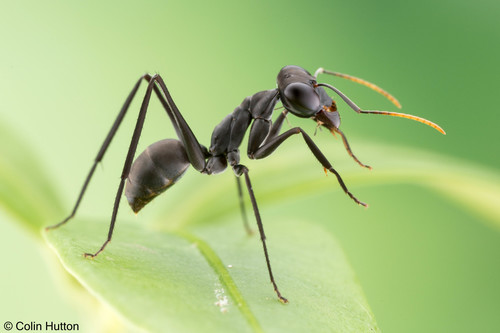
(c) c_hutton, all rights reserved, uploaded by c_hutton
Gigantiops destructor
Sign in to saveGigantiops is a South American genus of jumping ants in the subfamily Formicinae. The genus contains the single species Gigantiops destructor, which is also the sole member of the tribe Gigantiopini. They have the largest eyes among all ants, are known for their ability to jump, and have the highest number of chromosomes of any member of the subfamily Formicinae (2n=78).
Species
SPECIES
- KingdomAnimalia
- PhylumArthropoda
- ClassInsecta
- OrderHymenoptera
- FamilyFormicidae
Gigantiops destructor Gigantiops destructor (лат.) — вид крупноглазых муравьёв (Formicidae) из подсемейства Формицины.
via GBIF
Museum specimens
- Specimen records
- 156
- With media
- 52
- Family
- Formicidae
- Collections
- UTEP, USNM, CAS
- Recorded in
- Brazil, Ecuador, Guyana, France, Venezuela, Peru
Wikidata facts
- Instance of
- taxon
- Image
- Gigantiops destructor 334326176.jpg
Show 5 more facts
- taxon name
- Gigantiops destructor
- taxon rank
- species
- Commons category
- Gigantiops destructor
- diel cycle
- diurnality
- short name
- G. destructor
Sources (1)
via Wikidata · CC0
~1 min read
Encyclopedic overview
4 sectionsContents
- Distribution and habitat
- Feeding habits
- References
- External links
Gigantiops is a South American genus of jumping ants in the subfamily Formicinae. The genus contains the single species Gigantiops destructor, which is also the sole member of the tribe Gigantiopini. They have the largest eyes among all ants, are known for their ability to jump, and have the highest number of chromosomes of any member of the subfamily Formicinae (2n=78).
==Distribution and habitat== The genus is known from the Amazon region in South America, where they nest in soil, rotten wood or cavities excavated by other animals (beetle galleries or nests of the bullet ant, Paraponera clavata). They are distributed from about 10 degrees north to 15 degrees south of the equator.
Excerpted from Wikipedia’s “Gigantiops destructor” article, available under the CC BY-SA 4.0 licence.
Gallery (4)
Available in 10 languages
via Wikidata sitelinks · CC0