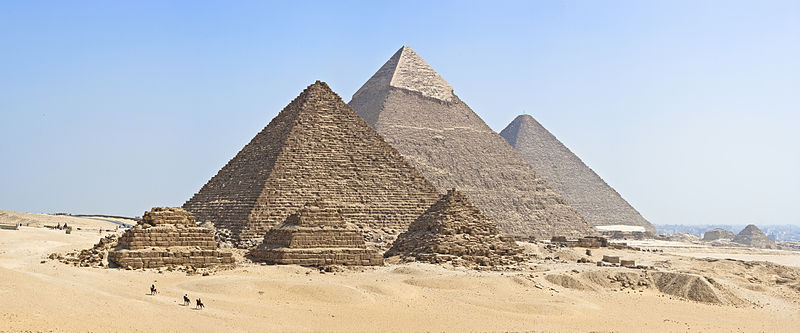
Giza Necropolis
part of the archaeological site on the Giza plateau, near Cairo, Egypt
AI overview
The Giza Necropolis is an archaeological site on the Giza plateau near Cairo, Egypt, where ancient tombs and monuments were built. It is significant as one of the world's most important sources of evidence about ancient Egyptian civilization and burial practices.
AI-generated from the Wikipedia summary — may contain errors.
Wikidata facts
- Image
- All Gizah Pyramids.jpg
Sources (3)
via Wikidata · CC0
Article
The Giza pyramid complex (also called the Giza necropolis) in Egypt is home to the Great Pyramid, the pyramid of Khafre, and the pyramid of Menkaure, along with their associated pyramid complexes and the Great Sphinx. All were built during the Fourth Dynasty of the Old Kingdom of ancient Egypt, between c. 2600 – c. 2500 BC. The site also includes several temples, cemeteries, and the remains of a workers' village.
The site is at the edge of the Western Desert, approximately 9 km (5.6 mi) west of the Nile River in the city of Giza, and about 13 km (8.1 mi) southwest of the city centre of Cairo. It forms the northernmost part of the 16,000 ha (160 km; 62 sq mi) Pyramid Fields of the Memphis and its Necropolis UNESCO World Heritage Site, inscribed in 1979. The pyramid fields include the Abusir, Saqqara, and Dahshur pyramid complexes, which were all built in the vicinity of Egypt's ancient capital of Memphis. Further Old Kingdom pyramid fields were located at the sites Abu Rawash, Zawyet El Aryan, and Meidum. Most of the limestone used to build the pyramids originates from the underlying Mokattam Formation.