(c) Besnik Fetiu, all rights reserved, uploaded by Besnik Fetiu
Globularia
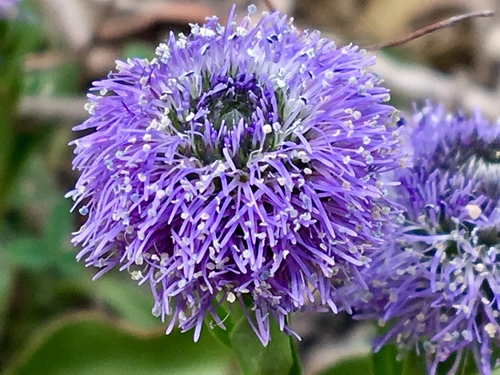
Sign in to saveGlobularia is a genus of about 22 species of flowering plants in the family Plantaginaceae, native to central and southern Europe, Macaronesia, northwest Africa and southwest Asia. They are dense low evergreen mat-forming perennials or subshrubs, with leathery oval leaves 1–10 cm long. The flowers are produced in dense inflorescences (capitula) held above the plant on a 1–30 cm tall stem; the capitula is 1–3 cm in diameter, with numerous tightly packed purple, violet, pink or white flowers.
Species
Common Globularia
species
via · Kew POWO
Museum specimens
- Specimen records
- 529
- With media
- 238
- Family
- Ampullinidae
- Collections
- PRI, USNM, UF, SD, NHMUK, MU
- Recorded in
- United States, Panama, United Kingdom, Ukraine
Wikidata facts
- Instance of
- taxon
- Parent taxon
- Plantaginaceae
- Image
- Globularia repens02.jpg
Show 8 more facts
- taxon rank
- genus
- taxon name
- Globularia
- Commons category
- Globularia
- taxonomic type
- Globularia vulgaris
- topic's main category
- Category:Globularia
- Commons gallery
- Globularia
- taxon common name
- 球花属
Sources (2)
via Wikidata · CC0
~1 min read
Encyclopedic overview
2 sectionsContents
- Species
- References
Globularia is a genus of about 22 species of flowering plants in the family Plantaginaceae, native to central and southern Europe, Macaronesia, northwest Africa and southwest Asia. They are dense low evergreen mat-forming perennials or subshrubs, with leathery oval leaves 1–10 cm long. The flowers are produced in dense inflorescences (capitula) held above the plant on a 1–30 cm tall stem; the capitula is 1–3 cm in diameter, with numerous tightly packed purple, violet, pink or white flowers.
Globularia species are used as food plants by the larvae of some Lepidoptera species including Coleophora virgatella.
Excerpted from Wikipedia’s “Globularia” article, available under the CC BY-SA 4.0 licence.