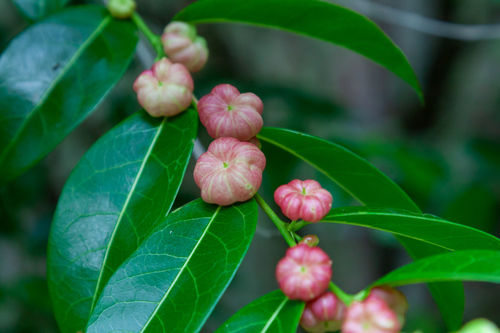
(c) Craig Robbins, some rights reserved (CC BY-NC), uploaded by Craig Robbins · cc-by-nc
Glochidion
Sign in to saveGlochidion is a genus of flowering plants in the family Phyllanthaceae, known as cheese trees or buttonwood in Australia, and leafflower trees in the scientific literature. It comprises about 170 species, distributed from Madagascar to the Pacific Islands. Glochidion species are used as food plants by the larvae of some Lepidoptera species including Aenetus eximia and Endoclita damor. The Nicobarese people have attested to the medicinal properties found in G. calocarpum, saying that its bark and seed are most effective in curing abdominal disorders associated with amoebiasis.
Species
カンコノキ属
GENUS
- KingdomPlantae
- PhylumTracheophyta
- ClassMagnoliopsida
- OrderMalpighiales
- FamilyPhyllanthaceae
General: Glochidion species have been collected throughout New
via GBIF · Kew POWO
Museum specimens
- Specimen records
- 4,125
- With media
- 3,721
- Family
- Phyllanthaceae
- Collections
- MICH, NY, US, A, RSA, BRIT
- Recorded in
- Nepal, Sri Lanka, India, Papua New Guinea, Federated States Of Micronesia, Indonesia, Malaysia, Philippines
Wikidata facts
- Instance of
- taxon
- Image
- Glochidion ramiflorum.jpg
Show 6 more facts
- Commons category
- Glochidion
- topic's main category
- Category:Glochidion
- taxon name
- Glochidion
- taxon rank
- genus
- taxon common name
- 算盘子属
Sources (2)
via Wikidata · CC0
~4 min read
Encyclopedic overview
3 sectionsContents
- Selected species
- References
- External links
Glochidion is a genus of flowering plants in the family Phyllanthaceae, known as cheese trees or buttonwood in Australia, and leafflower trees in the scientific literature. It comprises about 170 species, distributed from Madagascar to the Pacific Islands. Glochidion species are used as food plants by the larvae of some Lepidoptera species including Aenetus eximia and Endoclita damor. The Nicobarese people have attested to the medicinal properties found in G. calocarpum, saying that its bark and seed are most effective in curing abdominal disorders associated with amoebiasis.
Glochidion are of note in the fields of pollination biology and coevolution because they have a specialized mutualism with moths in the genus Epicephala (leafflower moths), in which the moths actively pollinate the flowers—thereby ensuring that the tree may produce viable seeds—but also lay eggs in the flowers' ovaries, where their larvae consume a subset of the developing seeds as nourishment. Other species of Epicephala are pollinators, and in some cases, non-pollinating seed predators, of certain species of plants in the genera Phyllanthus and Breynia, both closely related to Glochidion. This relationship is similar to those between figs and fig wasps and yuccas and yucca moths.
Excerpted from Wikipedia’s “Glochidion” article, available under the CC BY-SA 4.0 licence.
Gallery (3)
Available in 20 languages
- Español
- Français
- 中文
- 日本語
- Português
- azb
- Azerbaijani
- Bahasa Indonesia
- Bosnian
- Cebuano
- Czech
- Egyptian Arabic
- Latin
- Malay
- Nederlands
- Sundanese
- Svenska
- Tiếng Việt
Show 1 more
via Wikidata sitelinks · CC0