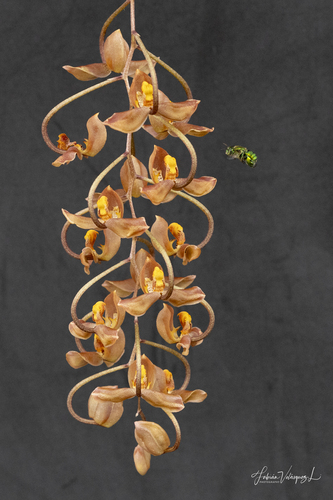
(c) fabian_velasquez, some rights reserved (CC BY-NC), uploaded by fabian_velasquez · cc-by-nc
Gongora
Sign in to saveGongora, abbreviated Gga in horticultural trade, is a member of the orchid family (Orchidaceae). It consists of 65 species known from Central America, Trinidad, and tropical South America, with most species found in Colombia. They grow across a wide geographical range, from wet forests at sea level, to mountainous regions in the Andes, as high as 1,800 m.
Species
GENUS
- KingdomPlantae
- PhylumTracheophyta
- ClassLiliopsida
- OrderAsparagales
- FamilyOrchidaceae
ゴンゴラ属 Gongora arcuata 分類(APG III) 界 : 植物界 Plantae 階級なし : 被子植物 angiosperms 階級なし : 単子葉類 monocots 目 : キジカクシ目 Asparagales 科 : ラン科 Orchidaceae 亜科 : セッコク亜科 Epidendroideae 連 : マキシラリア連 Maxillarieae 亜連 : スタンホペア亜連 Stanhopeinae 属 : ゴンゴラ属 Gongora 学名 Gongora Ruiz. et Pav. 種 本文参照 図版(G. atropurpurea) ゴンゴラ属 Gongora Ruiz. et Pav. は、ラン科植物の1群。長い花茎を下垂し、多数の花をつける。 目次 1 特徴 2 分布と生育環境 3 分類 4 利用 5 出典 6 参考文献 特徴[編集] 花の構造(G. aromatica) 常緑性の着生植物で、偽鱗茎は長卵形から長円錐形[1]。偽鱗茎の表面には縦に数本の稜があり、先端には葉が2枚付く。葉は大きくて革質でひだが多い。 花茎は偽鱗茎の基部から出る。花穂は長くなって下向きに垂れ、多数の花を付ける。 花は側萼片が外側に巻き、蕊柱が倒立しており、細くて長い蕊柱の先端近くに小型の背萼片と側花弁が着いている[2]。上側にある唇弁は多肉質で細長い袋状をしている。花色は赤褐色、黄褐色から黄白色で紫褐色の斑紋がある。なお花は短命である。 学名はニュー・グラナダのスペイン総督であったゴンゴラ (Cabalero y Gongora, 1740-1818) にちなむ。花が操り人形のように見えることから、イギリスの代表的な大衆人形劇『パンチとジュディ』にちなんで、パンチ・アンド・ジュディ・オーキッドという英名がつけられている[3]。 分布と生育環境[編集] メキシコからボリビアにかけて分布する。低地の樹上に着生する[4]。 往々に株元にアリが巣を作り、共生しているとされる[5]。 分類[編集] スタンホペア属 Stanhopea やコリアンテス属 Coryanthes と近縁とされる。 約25種が知られる。代表的なものを以下にあげる。 Gongora G. armeniaca G. bufonia G. galeata G. quinquenervis G. truncata 利用[編集] 洋ランとして栽培される。略号は Gga. である。ただし普及はしていない。人工交配も行われていない。栽培そのものは容易で、花茎が長く垂れ下がるので吊り鉢で栽培する[6]。 出典[編集] ^ 以下、主として園芸植物大事典(1994)p.2791 ^ 前川(1978),p.2037 ^ 前川(1978),p.2037 ^ 斎藤・唐澤(1997),p.166 ^ 唐澤
via GBIF · Kew POWO
Museum specimens
- Specimen records
- 138
- With media
- 91
- Family
- Orchidaceae
- Collections
- UNIVERSITY OF ALBERTA MUSEUMS, GH, SEL, INECOL, MEM, NY
- Recorded in
- Mexico, Ecuador, United States, Peru, Bolivia, Brazil, Guyana, Nicaragua
Wikidata facts
- Instance of
- taxon
- Parent taxon
- Stanhopeinae
- Image
- Gongora quinquenervis Orchi 061.jpg
Show 8 more facts
- taxon name
- Gongora
- taxon rank
- genus
- topic's main category
- Category:Gongora
- Commons category
- Gongora (Orchidaceae)
- Commons gallery
- Gongora (Orchidaceae)
- taxon common name
- 爪唇兰属
- different from
- Luis de Góngora
Sources (2)
via Wikidata · CC0
~8 min read
Encyclopedic overview
4 sectionsContents
- Species
- Intergeneric hybrids
- References
- External links
Gongora, abbreviated Gga in horticultural trade, is a member of the orchid family (Orchidaceae). It consists of 65 species known from Central America, Trinidad, and tropical South America, with most species found in Colombia. They grow across a wide geographical range, from wet forests at sea level, to mountainous regions in the Andes, as high as 1,800 m.
The name comes from Antonio Caballero y Gongora, a viceroy of New Granada (Colombia and Ecuador) and the governor of Peru during the Ruiz and Pavón botanical expedition.
Excerpted from Wikipedia’s “Gongora” article, available under the CC BY-SA 4.0 licence.
Gallery (12)
Available in 22 languages
- Español
- Français
- 中文
- 日本語
- Русский
- Português
- العربية
- Armenian
- Cebuano
- Egyptian Arabic
- Komi
- Komi-Permyak
- Lithuanian
- Moksha
- Polski
- Svenska
- Tiếng Việt
- Udmurt
Show 3 more
via Wikidata sitelinks · CC0