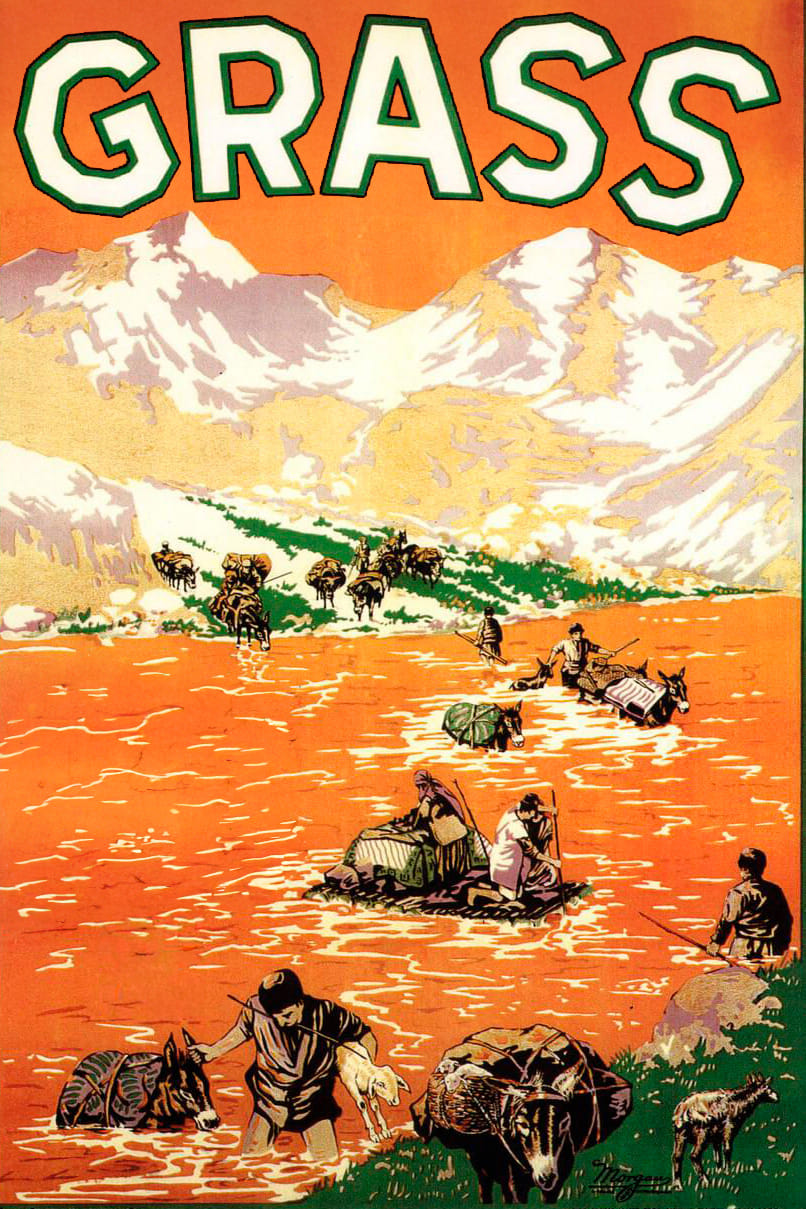
Poster from TMDB
Grass: A Nation's Battle for Life
Sign in to savefilm del 1925 diretto da Merian C. Cooper e Ernest B. Schoedsack
Film · TMDB
7.7A silent documentary which follows a branch of the Bakhtiari tribe of Persia as they and their herds make their epic seasonal journey to better pastures.
Cast
- Merian C. Cooper as Self (as Merian Cooper)
- Ernest B. Schoedsack as Self
- Marguerite Harrison as Self - a Journalist
- Haidar Khan as Self - Chief of the Bakhtyari Tribe
- Lufta as Self - Haidar Khan's son
Themes
- migration
- mountain pass
This product uses the TMDB API but is not endorsed or certified by TMDB.
Wikidata facts
- Instance of
- film
- Part of
- National Film Registry
- Genre
- silent film
- Country of origin
- United States
- Director
- Ernest B. Schoedsack
- Composer
- Hugo Riesenfeld
- Producer
- Ernest B. Schoedsack
- Cinematographer
- Merian C. Cooper
- Narrative location
- Iran
- Duration
- 71
- FilmAffinity ID
- 581531
- Distribution format
- video on demand
- Image
- Grass 1925 film advertisement from the book - 25 Paramount Showman's Pictures (1925) (page 44 crop).jpg
Show 6 more facts
- publication date
- 1925-01-01
- title
- Grass
- distributed by
- Netflix
- aspect ratio (W:H)
- 4:3
- color
- black-and-white
- Commons category
- Grass (1925 film)
via Wikidata · CC0
Article · Italiano
Grass: A Nation's Battle for Life è un film muto del 1925 diretto da Merian C. Cooper e Ernest B. Schoedsack. Assieme a Nanuk l'esquimese di Robert J. Flaherty (1922), il film fu uno dei primi grandi documentari etnografici ad essere realizzati nella storia del cinema. Cooper era un ricercatore per l'American Geographical Society, Schoedsack un fotografo. Furono i primi occidentali ad unirsi alla tribù dei Bakhtiari nella loro migrazione annuale verso i pascoli estivi. Due anni dopo, il team Cooper-Schoedsack realizzò un secondo documentario, questa volta in Tailandia, Chang: la giungla misteriosa (1927), prima di mettere le conoscenze così acquisite al servizio della realizzazione del film King Kong (1933), uno dei maggiori successi della cinematografia mondiale. Nel 1947 Cooper accarezzò l'idea di un remake, ma le condizioni di vita dei Bakhtiari erano nel frattempo radicalmente mutate. La migrazione avveniva ora per la maggior parte usando le strade e la ferrovia e un ponte attraversava il fiume Karun. Nel 1997 il film è stato scelto per la conservazione nel National Film Registry della Biblioteca del Congresso degli Stati Uniti d'America.
Abstract from DBpedia / Wikipedia · CC BY-SA