Encyclopedia of Life · EOL (see source)
Guam Rail
Sign in to saveAlso known as Gallirallus owstoni, Rallus owstoni, Hypotaenidia owstoni
species of bird
Species
Critically Endangered二名法 Gallirallus owstoniWalter Rothschild, 1895 關島秧雞(Gallirallus owstoni)是一種不會飛的鳥,可說是關島的原住民。關島秧雞於1970年代初期於關島南部消失,於1980年代末在整個島上滅絕。牠們現正由關島及一些美國動物園所飼養。自1995年起,在北馬里亞納群島的羅塔島就有超過100隻關島秧雞。 關島秧雞被引進關島一個22公頃的森林中,並用陷阱及欄柵阻隔蛇對牠們的獵食。在這個限制區域內就有發現雛雞叫聲。[2] 保育 1960年代初,褐樹蛇大量殺害了關島的鳥類。關島的鳥類是在沒有蛇這類獵食者的環境下得到演化。牠們沒有經驗及保護能力對抗這類掠食者,故牠們很快地成為了獵物。這類蛇廣泛分佈在島上,且以幾何級數的增長,而牠們的數量亦因此而減少。 關島森林中的11種鳥類中已有9種滅絕,當中有5個更是當地的特有種或特有亞種。關島秧雞及密克羅尼西亞翠鳥都已被飼養來保護其免受滅絕,期望日後能於野外再度生存。其他幾種鳥類都只餘少量,在關島的命運岌岌可危。 於2011年,部分關島秧雞種羣被再引入至關島的可可島(英语:Cocos Island (Guam))中。 參考 ^ Gallirallus owstoni. IUCN Red List of Threatened Species 2008. International Union for Conservation of Nature. 2008. ^ Fort Collins Science Center. (原始内容存档于2005-03-12). 外部連結 BirdLife Species Factsheet USGS: Extinctions and Loss of Species from Guam: Birds 取自“https://zh.wikipedia.org/w/index.php?title=關島秧雞&oldid=50997012” 分类: IUCN野外絕滅物種 秧雞科 不会飞的鸟 隐藏分类: CS1含有外文文本 含有拉丁語的條目 TaxoboxLatinName 本地相关图片与维基数据相同
via IUCN
Wikidata facts
- Instance of
- taxon
- Parent taxon
- Gallirallus
- Image
- GuamRail02.jpg
Show 8 more facts
- taxon rank
- species
- taxon name
- Gallirallus owstoni
- Commons category
- Gallirallus owstoni
- taxon common name
- пастушок гуамський
- egg incubation period
- 19
- short name
- G. owstoni
- taxon range
- Africa
- IUCN conservation status
- Critically Endangered
Sources (2)
via Wikidata · CC0
~12 min read
Encyclopedic overview
The Guam rail (Gallirallus owstoni), known locally and in Chamorro as ko'ko', is a small, terrestrial bird endemic to Guam in the Rallidae family. They are one of the island's few remaining endemic bird species. The species became extinct in the wild in the early 1980s when biologists captured the remaining wild population to establish a breeding program. They have since been successfully introduced to the nearby Rota and Cocos islands. In 2019, they became the second bird species to be reclassified by the International Union for the Conservation of Nature from Extinct in the Wild to Critically Endangered.
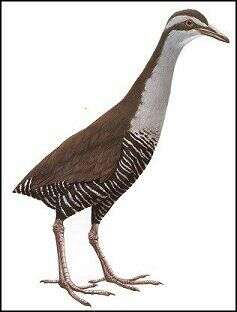
Adult male and female plumage is primarily brown with barred black-and-white plumage on their underside. Their heads are brown with a grey stripe running above the eye and a medium-length grey bill. They have strong legs with long toes that help them walk over marshy ground. Their most common vocalizations are short "kip" notes, but also screeches during the breeding season.
Excerpted from Wikipedia’s “Guam Rail” article, available under the CC BY-SA 4.0 licence.