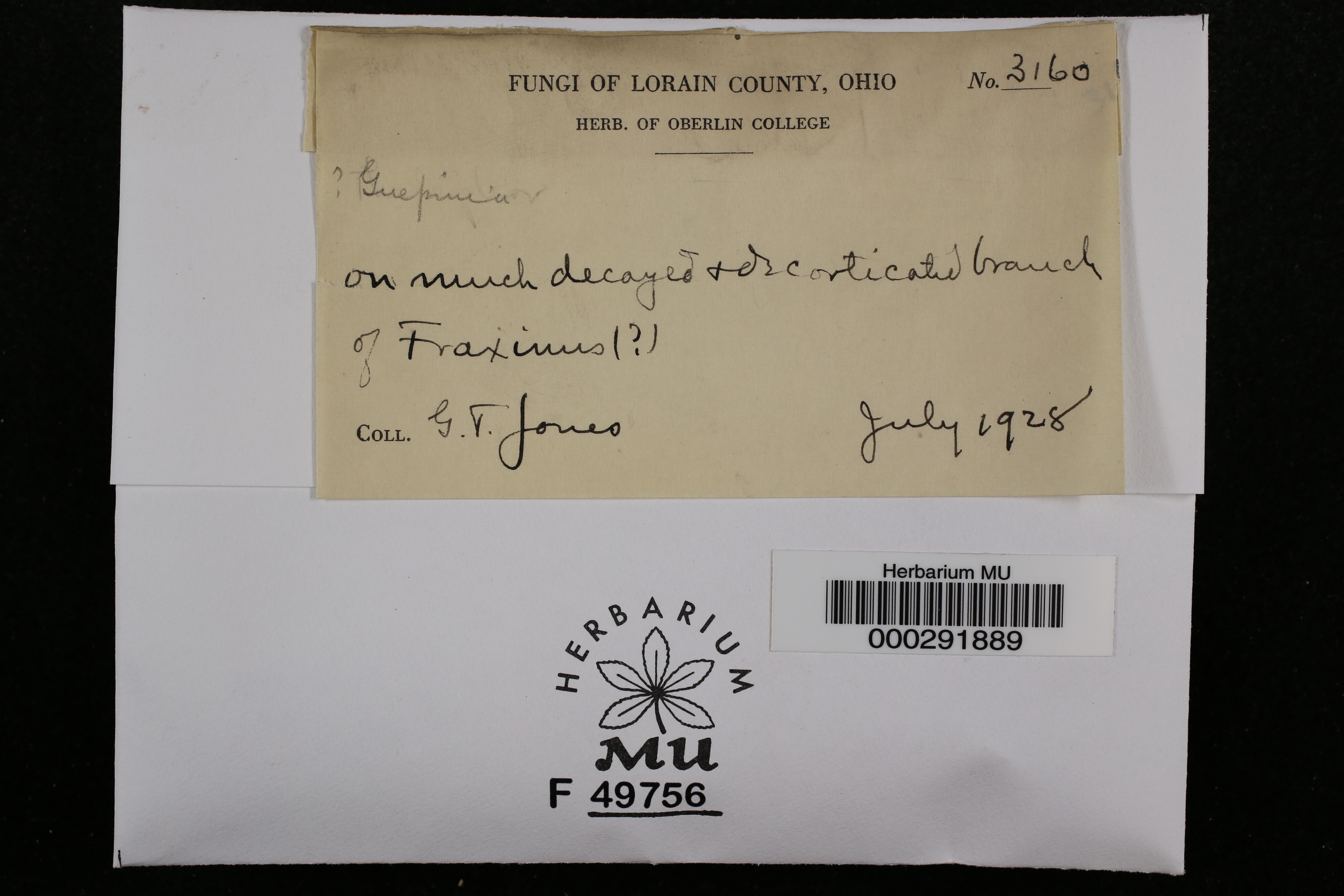
Specimen image via iDigBio · CC0
Guepinia
Sign in to saveGuepinia is a genus of fungus in the Auriculariales order. It is a monotypic genus, containing the single species Guepinia helvelloides, commonly known as the apricot jelly or salmon salad. The fungus produces salmon-pink, ear-shaped, gelatinous fruit bodies that grow solitarily or in small tufted groups on soil, usually associated with buried rotting wood. The fruit bodies are up to tall and up to wide; the stalks are not well-differentiated from the cap. It has a white spore deposit, and the oblong to ellipsoid spores measure 9–11 by 5–6 micrometers.
Museum specimens
- Specimen records
- 72
- With media
- 27
- Family
- Lichinaceae
- Collections
- NYSM, LSUM, INSTITUTO NACIONAL DE PESQUISAS DA AMAZÔNIA (INPA), MU, NEB, CINC
- Recorded in
- United States, Argentina, Brasil, Cuba, Australia, Dominican Republic, Puerto Rico, Venezuela
Wikidata facts
- Instance of
- taxon
- Parent taxon
- Auriculariales
- Image
- Guepinia helvelloides 47030.jpg
Show 4 more facts
- taxon author citation
- Fr.
- taxon name
- Guepinia
- taxon rank
- genus
- Commons category
- Guepinia
Sources (2)
via Wikidata · CC0
~6 min read
Encyclopedic overview
7 sectionsContents
- Taxonomy
- Description
- Similar species
- Habitat and distribution
- Uses
- References
- External links
Guepinia is a genus of fungus in the Auriculariales order. It is a monotypic genus, containing the single species Guepinia helvelloides, commonly known as the apricot jelly or salmon salad. The fungus produces salmon-pink, ear-shaped, gelatinous fruit bodies that grow solitarily or in small tufted groups on soil, usually associated with buried rotting wood. The fruit bodies are up to tall and up to wide; the stalks are not well-differentiated from the cap. It has a white spore deposit, and the oblong to ellipsoid spores measure 9–11 by 5–6 micrometers.
The fungus is widely distributed in the Northern Hemisphere, and has also been collected from South America. Although rubbery, the flesh is edible; it may be eaten raw with salads, pickled, or candied.
Excerpted from Wikipedia’s “Guepinia” article, available under the CC BY-SA 4.0 licence.