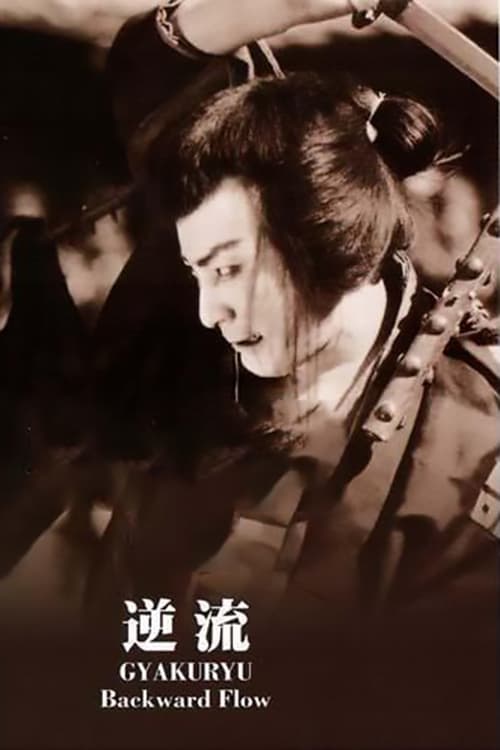
Poster from TMDB
Gyakuryu
Sign in to saveAlso known as Backward Flow, Gyakuryū
is a 1924 black and white Japanese silent film with benshi accompaniment directed by Buntaro Futagawa. Often acclaimed as the predecessor to Orochi, it tells the tale of a nihilistic samurai, played by Tsumasaburo Bando whose mother is killed, whose sister is used and deceived and who loses the only love of his life.
Film · TMDB
5.8Nanjo Mikisaburo is a young samurai trying to restore his ruined family to its past glory. Enduring the contempt and disdain of high-ranking samurai, Mikisaburo devotes himself to the way of the warrior, mastering the literary and martial arts. His master Kurahashi Jupeita's daughter Misao feels for Mikisahuro who maintains his pride in the face of the arrogant samurai's scorn. She sympathizes with and encourages him. However this sympathy ignites a passionate love for her in Mikisaburo.
Cast
- Kanzaburo Arashi as Jitheita Kurahashi
- Tsumasaburō Bandō as Mikiaburô Nanjô
- Kōzaburō Kataoka as Genzaburô Hayamizu
- Teruko Makino as Misao
- Yoshie Nakagawa as Gonta
- Michisaburō Segawa as Heikichi Yamamuro
This product uses the TMDB API but is not endorsed or certified by TMDB.
Wikidata facts
- Instance of
- film
- Genre
- silent film
- Country of origin
- Japan
- Director
- Buntarō Futagawa
- Duration
- 28
- FilmAffinity ID
- 249660
- Image
- Gyakuryu (1924) Tsumasaburo Bando 2.jpg
Show 5 more facts
- publication date
- 1924-01-01
- color
- black-and-white
- copyright status
- public domain
- title
- 逆流
- Commons category
- Backward Flow
Sources (1)
via Wikidata · CC0
~1 min read
Encyclopedic overview
2 sectionsContents
- References
- External links
is a 1924 black and white Japanese silent film with benshi accompaniment directed by Buntaro Futagawa. Often acclaimed as the predecessor to Orochi, it tells the tale of a nihilistic samurai, played by Tsumasaburo Bando whose mother is killed, whose sister is used and deceived and who loses the only love of his life.
== References ==
Excerpted from Wikipedia’s “Gyakuryu” article, available under the CC BY-SA 4.0 licence.