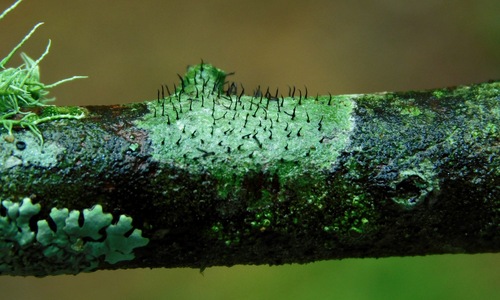
(c) Michael J. Papay, some rights reserved (CC BY), uploaded by Michael J. Papay · cc-by
Gyalideopsis
Sign in to saveGyalideopsis is a genus of lichen-forming fungi in the family Gomphillaceae. Gyalideopsis species form delicate, film-like crusts on a wide variety of surfaces including tree bark, rocks, and mosses, often in tropical and temperate forests worldwide. Species in the genus produce distinctive small, scale-like structures called , which are thought to aid in asexual reproduction where ascospore-producing structures are absent or uncommon. Members of this genus lack the distinctive chemical compounds found in many other lichens, making them reliant on microscopic features and spore characteristics
Species
Buck's Whiskers
GENUS
- KingdomFungi
- PhylumAscomycota
- ClassLecanoromycetes
- OrderOstropales
- FamilyGomphillaceae
via GBIF
Museum specimens
- Specimen records
- 169
- With media
- 116
- Family
- Gomphillaceae
- Collections
- WIS, US, LSU, UFS, UC, NY
- Recorded in
- Kenya, Ecuador, Austria, Brazil, Reunion, United States, Brasil, Costa Rica
Wikidata facts
- Instance of
- taxon
- Parent taxon
- Gomphillaceae
- Image
- Gyalideopsis buckii (4504890398).jpg
Show 5 more facts
- taxon name
- Gyalideopsis
- taxon rank
- genus
- taxon common name
- gyalideopsis lichen
- Commons category
- Gyalideopsis
- taxon author citation
- Vězda
via Wikidata · CC0
~6 min read
Encyclopedic overview
4 sectionsContents
- Taxonomy
- Description
- Species
- References
Gyalideopsis is a genus of lichen-forming fungi in the family Gomphillaceae. Gyalideopsis species form delicate, film-like crusts on a wide variety of surfaces including tree bark, rocks, and mosses, often in tropical and temperate forests worldwide. Species in the genus produce distinctive small, scale-like structures called , which are thought to aid in asexual reproduction where ascospore-producing structures are absent or uncommon. Members of this genus lack the distinctive chemical compounds found in many other lichens, making them reliant on microscopic features and spore characteristics for scientific identification.
==Taxonomy==
Excerpted from Wikipedia’s “Gyalideopsis” article, available under the CC BY-SA 4.0 licence.