Encyclopedia of Life · EOL (see source)
Halictus
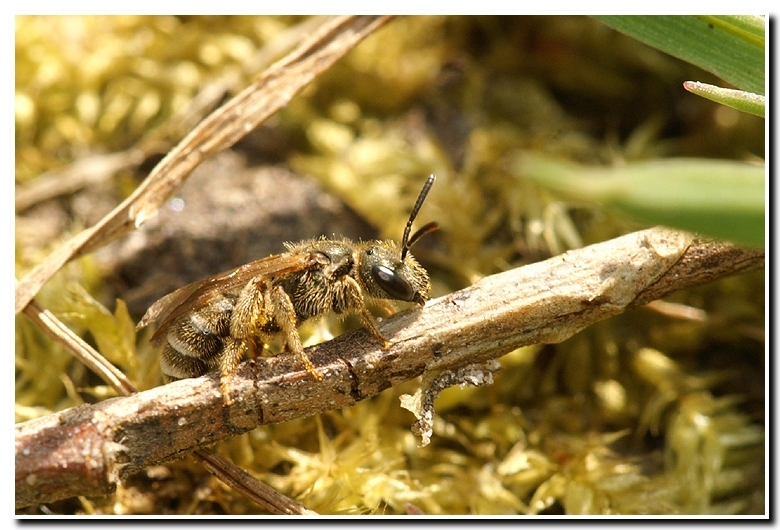
Sign in to saveThe genus Halictus is a large assemblage of bee species in the family Halictidae. The genus is divided into 15 subgenera, some of dubious monophyly, containing over 200 species, primarily in the Northern Hemisphere (a few species occur in South America, Asia and Africa). Most species are black or dark brown, sometimes metallic greenish-tinted, with apical whitish abdominal bands on the terga (the related genus Lasioglossum, which is otherwise often similar in appearance, has the abdominal hair bands located basally, not apically).
Species
GENUS
- KingdomAnimalia
- PhylumArthropoda
- ClassInsecta
- OrderHymenoptera
- FamilyHalictidae
Halictus scabiosae Галикты[1] (лат. Halictus) — род пчёл из семейства Halictidae, распространённых по всему миру, включающий более 200 видов. Содержание 1 Биология 2 Распространение 3 Характеристика 4 Синонимы рода 5 Классификация 6 Обычные виды 7 См. также 8 Примечания 9 Литература 10 Ссылки Биология Многие виды рода эусоциальные, с размером колоний от 2—4 пчёл до более чем 200. Гнезда подземные, на сухих открытых участках, с несколькими ячейками, в которые собирается нектар и пыльца для личинок. Все виды полилекты. Распространение Основные области распространения: Северное полушарие, несколько видов встречаются также в Южной Америке и Африке. Характеристика Пчёлы мелкого и среднего размера (5—18 мм). Большинство видов черные или темно-коричневые, иногда с зеленоватым металлическим блеском (Seladonia), с апикальными брюшными пучками волосков, брюшко иногда частично красное. 1-я субмаргинальная ячейка переднего крыла больше 3-й, маргинальная ячейка переднего крыла узко закругленная или заостренная, нижние латеральные части клипеуса изгибаются назад под углом 45°. Клипеус длиннее лабрума, слабовыпуклый и не выступающий вперед относительно налобника, лабрум на дистальном крае с среди
via GBIF
Museum specimens
- Specimen records
- 18,521
- With media
- 1,846
- Family
- Halictidae
- Collections
- ECOSUR
- Recorded in
- Guatemala, Mexico
Wikidata facts
Show 7 more facts
- Commons category
- Halictus
- taxon name
- Halictus
- taxon rank
- genus
- topic's main category
- Category:Halictus
- taxon common name
- båndbier
- taxon range
- Michigan
- external data available at URL
- www.gbif.org/dataset/543c4afc-4ffb-4e11-a858-a6d1d9745214
Sources (3)
via Wikidata · CC0
~9 min read
Encyclopedic overview
3 sectionsContents
- Species
- References
- External links
The genus Halictus is a large assemblage of bee species in the family Halictidae. The genus is divided into 15 subgenera, some of dubious monophyly, containing over 200 species, primarily in the Northern Hemisphere (a few species occur in South America, Asia and Africa). Most species are black or dark brown, sometimes metallic greenish-tinted, with apical whitish abdominal bands on the terga (the related genus Lasioglossum, which is otherwise often similar in appearance, has the abdominal hair bands located basally, not apically).
Many species in the genus are eusocial, with colony sizes ranging from very small (two to four bees) to large (>200). Nests are typically burrows in the soil, with several ovoid "cells" in which pollen mixed with nectar is provided as food for the developing larvae; a single egg is laid on a pollen mass, and the cell is sealed. In a few species, the cells are arranged in clusters resembling a honeycomb, but constructed of soil rather than beeswax. Like most ground-nesting bees, the brood cells are lined internally with a waterproofing secretion.
Excerpted from Wikipedia’s “Halictus” article, available under the CC BY-SA 4.0 licence.