
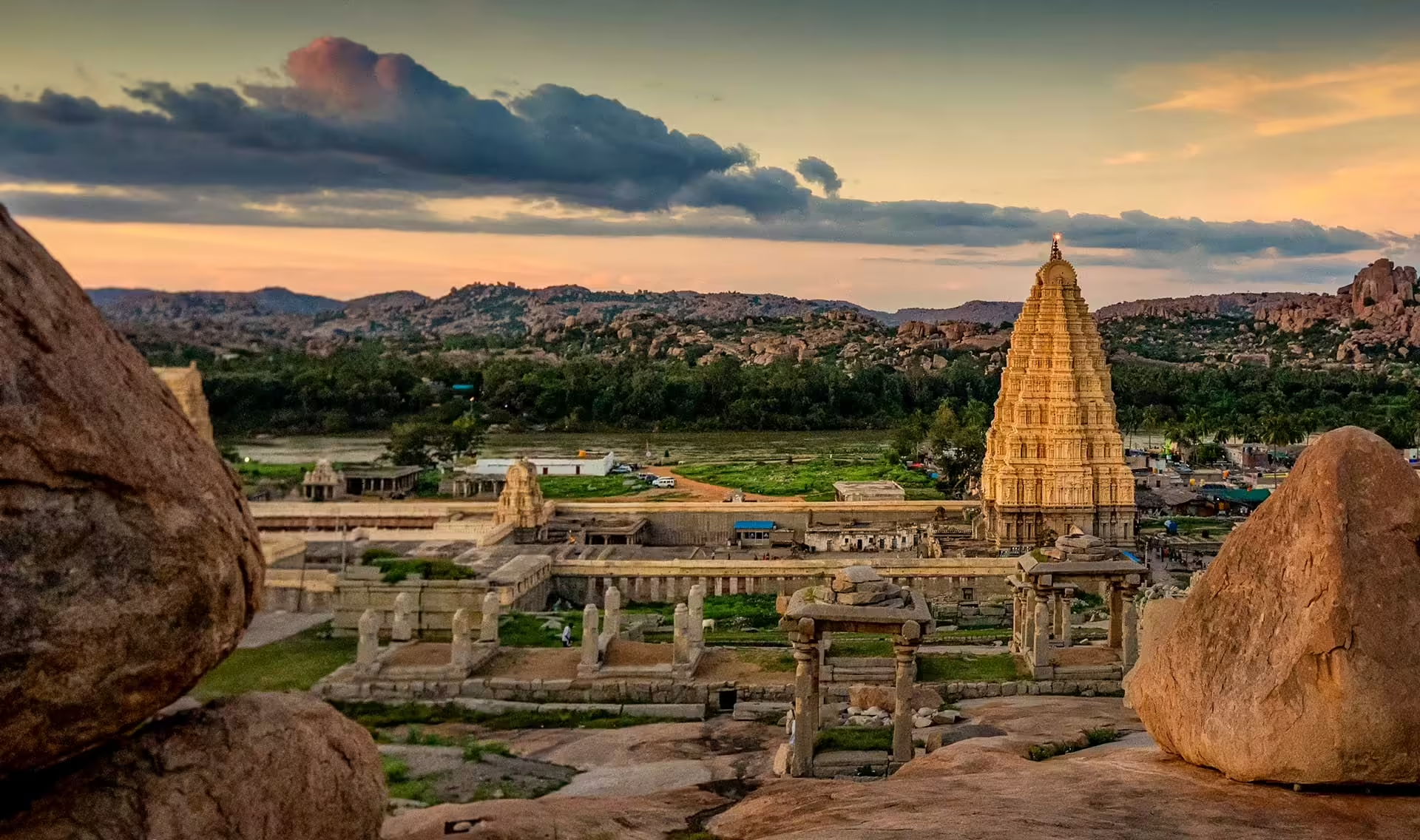
File:Wide_angle_of_Galigopuram_of_Virupaksha_Temple,_Hampi_(04)_(cropped).jpg · Wikimedia Commons · See Wikimedia Commons
Hampi
Sign in to saveAlso known as Hampi Group of Monuments, Group of Monuments at Hampi, Vijayanagara ruins, Bhaskara-kshetra, Kishkindha-kshetra, Hampe, Pampa-kshetra, Hampi group of monuments (except those under ASI)
Hampi or Hampe (), also referred to as the Group of Monuments at Hampi, is a UNESCO World Heritage Site located in the town of Hampi in Vijayanagara district, east-central Karnataka, India. Hampi predates the Vijayanagara Empire; it is mentioned in the Ramayana and the Puranas of Hinduism as Pampa Devi Tirtha Kshetra. Hampi continues as a religious centre, with the Virupaksha Temple, an active Adi Shankara-linked monastery and various monuments belonging to the old city.
Hampi is a UNESCO World Heritage Site in Karnataka, India, consisting of a group of ancient monuments that have been sacred to Hinduism for centuries, mentioned in texts like the Ramayana and the Puranas. Today it remains an active religious center, home to the functioning Virupaksha Temple and other historic structures from the old city.
AI-generated from the Wikipedia summary — may contain errors.
Key facts
- UNESCO World Heritage Site.WHS
- Groups of Monuments at Hampi
- UNESCO World Heritage Site.location
- Hampi (town), Vijayanagara district, Karnataka, India
- UNESCO World Heritage Site.criteria
- Cultural: (i), (iii), (iv)
- UNESCO World Heritage Site.ID
- 241
- UNESCO World Heritage Site.year
- 1986
- UNESCO World Heritage Site.danger
- 1999–2006
- UNESCO World Heritage Site.area
- 4,187.24 ha
- UNESCO World Heritage Site.buffer_zone
- 19,453.62 ha
- UNESCO World Heritage Site.locmapin
- India Karnataka#India
- UNESCO World Heritage Site.map_caption
- Location of Hampi in Karnataka, India
via Wikipedia infobox
Described at
Hampi - India - PlaceMania
Hampi: rozsiahle ruiny niekdajšieho hlavného mesta ríše Vijayanagara.
placemania.sk →Na balvanmi posiatych brehoch rieky Tungabhadra v Karnatake sa nachádzajú ruiny mesta Hampi, kde kedysi stálo hlavné mesto kráľovstva Vijayanagara. Od roku 1336 až do svojho pádu v roku 1565, keď ho vyplienili moslimskí útočníci zo severu, bolo toto mesto hlavným mestom hinduistickej ríše Vijayanagara v južnej Indii. Archeológovia odhadujú, že v tom čase tu žilo približne 250 000 ľudí, čo by z neho robilo najväčšie mesto na svete. V Hampi sa nachádza nespočetné množstvo architektonických divov. Podobne ako v iných starovekých opustených mestách – napríklad v Palmýre alebo Teotihuacane – je možné prechádzať sa po zarastených cestičkách od budovy k budove a predstavovať si, akou veľkolepou metropolou Hampi kedysi bolo. V týchto slávnych ruinách si však treba uvedomiť, že ani nie pred 500 rokmi (z archeologického hľadiska celkom nedávno) bola táto metropola väčšia ako Rím, Bagdad alebo Istanbul. Architektonický štýl Vijayanagar kombinoval islamský štýl obľúbený v severnej Indii s východnejšími prvkami, čím vznikol nový, jedinečný spôsob, ktorý archeológovia nazývajú indosaracénska architektúra. Výsledkom sú budovy, ktoré sa vyznačujú úžasnými geometrickými vzormi a významnými konštrukčnými pokrokmi, ktoré spopularizovali islamskí stavitelia, ale obsahujú aj nádherné rezby a sochy hinduistických bohov a iných významných mýtických postáv. Okrem veľkolepého chrámu Virupaksha – ktorý pozostáva z postupne sa zmenšujúcich poschodí, takže pri pohľade zdola sa zdá, že sa budova tiahne do nekonečnej výšky – je tu niekoľko fascinujúcich stavieb, ktoré si nenechajte ujsť, vrátane Lotus Mahalu, geometricky zložitej stupňovitej nádrže a ikonického kamenného voza (ťahaného malými kamennými slonmi). Nezabudnite sa pozrieť na brehy hučiacej rieky s neuveriteľne veľkými a vratko umiestnenými balvanmi. Zakladateľ projektu PlaceMania.sk a zodpovedá za jeho obsah, technické fungovanie a dlhodobý rozvoj. Cestovné zápisky na webe vychádzajú z vlastnej skúsenosti z ciest; faktografické záznamy o miestach vznikajú kombináciou verejných zdrojov, automatizovaného spracovania dát a redakčného overovania. Zameriava sa na netradičné lokality, ich historický a geografický kontext a menej známe súvislosti. Things to do near Hampi, हम्पी, ensemble monumental de Hampi, Conjunto Monumental de Hampi, Hampe, Хампи, Hinduistický chrám, Svätostánok, hindu temple, place of worship, Kalaburagi Division, Karnátaka, India, IN, IND, Hampe, Karnátaka 583239, India. Find tours, guided tours, local activities, attractions, tickets, excursions, sightseeing, day trips and travel experiences nearby. Coordinates: 15.3351333, 76.4586529. Vstupnú halu tohto starého kultúrneho inštitútu zdobí umelecké dielo Azulejo zobrazujúce cestu Vasca da Gamu do Indie. Pozrite si ďalšie zaujímave miesta vo svete, ktoré stoja za naplánovanie ďalšej cesty. Chrám zasvätený bohu Slnka, kde prvý lúč dopadá do svätyne počas rovnodennosti. Do tohto 300 rokov starého chrámu každoročne prúdia davy ľudí, aby oslávili jedinečný hinduistický festival zameraný na bohyne. V Indii je neúrekom božstiev a uctievajú takmer hocičo. Napr. aj také krysy, ktorým patrí celý chrám. A nieže jednu… Chcete vidieť ďalšie úchvatné miesta ako Hampi? Nájdeš ich u nás na mape. Objav s nami ďalšie úžasné miesta na zemi.
Excerpt from a page describing this subject · 17,287 chars · not written by Vinony
Wikidata facts
- Instance of
- archaeological site
- Named after
- Tungabhadra River
- Country
- Vijayanagara Empire
- Located in
- Ballari district
- Area
- 19453.62
- Elevation
- 467
- Time zone
- Indian Standard Time
- Body of water
- Tungabhadra River
- Founded by
- Vijayanagara Empire
- Official website
- asi.nic.in/hampi
- Image
- Hampi, India, Granite boulders of Matanga Hill.jpg
Show 4 more facts
- topic's main category
- Category:Hampi
- Commons category
- Group of monuments at Hampi
- P12749
- Sōjutsu
- described at URL
- www.placemania.sk/svetova-zaujimavost/hampi
Sources (7)
via Wikidata · CC0
~47 min read
Encyclopedic overview
32 sectionsContents
- Etymology
- Location
- Ancient to 14th century CE
- 14th century and after
- Archaeological site
- Description
- List of attractions
- Hindu temples and monuments
- Virupaksha temple and market complex
- Krishna temple, market, Narasimha and linga
- Achyutaraya temple and market complex
- Vitthala temple and market complex
- Hemakuta hill monuments
- Hazara Rama temple
- Kodandarama temple and riverside monuments
- Pattabhirama temple complex
- Mahanavami platform, public square complex
- Water infrastructure
- Fountains and community kitchen
- Elephant stables and enclosure
- Other Hindu temples and monuments
- Jain monuments
- Ganagitti temple complex
- Other Jain temples and monuments
- Muslim monuments
- Ahmad Khan mosque and tomb
- Reception
- See also
- Notes
- References
- Bibliography
- External links
Hampi or Hampe (), also referred to as the Group of Monuments at Hampi, is a UNESCO World Heritage Site located in the town of Hampi in Vijayanagara district, east-central Karnataka, India. Hampi predates the Vijayanagara Empire; it is mentioned in the Ramayana and the Puranas of Hinduism as Pampa Devi Tirtha Kshetra. Hampi continues as a religious centre, with the Virupaksha Temple, an active Adi Shankara-linked monastery and various monuments belonging to the old city.
Hampi was the capital of the Vijayanagara Empire from 1336 to 1565 (as Vijayanagara), when it was abandoned. It was a fortified city. Chronicles left by Persian and European travellers, particularly the Portuguese, say that Hampi was a prosperous, wealthy and grand city near the Tungabhadra River, with numerous temples, farms and trading markets. Hampi-Vijayanagara is estimated to be the world's second-largest city by 1500, after Beijing, and probably India's richest at that time, attracting traders from Persia and Portugal. The Vijayanagara Empire was defeated by a coalition of Muslim sultanates; its capital was conquered, pillaged and destroyed by Muslim armies in 1565, after which Hampi remained in ruins.
Excerpted from Wikipedia’s “Hampi” article, available under the CC BY-SA 4.0 licence.
Gallery (44)
On the map
3 mapped locations
Available in 67 languages
- Español
- Français
- Deutsch
- 中文
- 日本語
- Русский
- Português
- Italiano
- العربية
- हिन्दी
- Assamese
- Azerbaijani
- Bahasa Indonesia
- Bangla
- Basque
- Bavarian
- Bhojpuri
- Bulgarian
Show 48 more
- Burmese
- Catalan
- Cebuano
- Croatian
- Czech
- Danish
- Egyptian Arabic
- Finnish
- Georgian
- Gujarati
- Hebrew
- Hungarian
- Kannada
- Latvian
- Lithuanian
- Maithili
- Malay
- Malayalam
- Maltese
- Marathi
- Nederlands
- Nepali
- Newari
- Norwegian
- Odia
- Polski
- Punjabi
- Sanskrit
- Santali
- Serbian
- Sinhala
- skr
- Slovak
- Slovenian
- Svenska
- Tamil
- Telugu
- Tiếng Việt
- Tulu
- Türkçe
- Ukrainian
- Urdu
- Western Panjabi
- Wu Chinese
- zh_min_nan
- فارسی
- ไทย
- 한국어
via Wikidata sitelinks · CC0