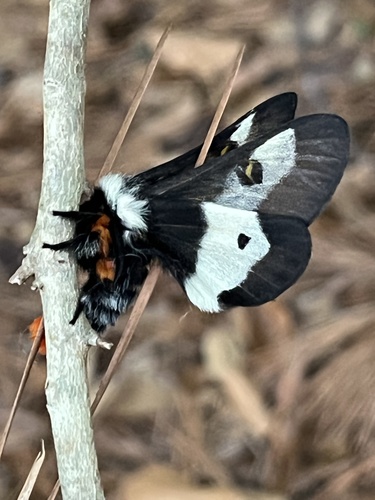
(c) martinmk1, all rights reserved
Hemileuca
Sign in to saveAlso known as Euchronia, Pseudohazis, Hera, Euleucophaeus, Agryrauges
Hemileuca is a genus of North American moths in the family Saturniidae first described by Francis Walker in 1855. The Finnish University and Research Network currently lists 32 species of the genus. These moths are popular with butterfly collectors because of their variable coloration and wing patterns and their unusual lifestyle, which is an adaptation to the hot and dry habitats where most species live. Most of these moths fly in summer and autumn. The eggs are laid in ring-shaped clusters on stems or branches of the caterpillar's host plants and overwinter. The caterpillars develop to pupat
Species
Eastern Buck Moth
GENUS
- KingdomAnimalia
- PhylumArthropoda
- ClassInsecta
- OrderLepidoptera
- FamilySaturniidae
via GBIF
Museum specimens
- Specimen records
- 347
- With media
- 92
- Family
- Saturniidae
- Collections
- UCD, UMNH, DMNS
- Recorded in
- United States
Wikidata facts
- Instance of
- taxon
- Parent taxon
- Hemileucinae
- Image
- Hemileuca maia 0014195.jpg
Show 4 more facts
- taxon rank
- genus
- taxon name
- Hemileuca
- Commons category
- Hemileuca
- topic's main category
- Category:Hemileuca
Sources (1)
via Wikidata · CC0
~10 min read
Encyclopedic overview
9 sectionsContents
- Features
- Distribution
- Behavior
- Flight and caterpillar times
- Food of the caterpillars
- Development
- Taxonomy and systematics
- Species
- References
Hemileuca is a genus of North American moths in the family Saturniidae first described by Francis Walker in 1855. The Finnish University and Research Network currently lists 32 species of the genus. These moths are popular with butterfly collectors because of their variable coloration and wing patterns and their unusual lifestyle, which is an adaptation to the hot and dry habitats where most species live. Most of these moths fly in summer and autumn. The eggs are laid in ring-shaped clusters on stems or branches of the caterpillar's host plants and overwinter. The caterpillars develop to pupation before the hot summer of the following year; most pupate in summer, so that the moths emerge in the cooler late summer and autumn. The stinging hairs of the caterpillars cause a rash when touched. The rash can last from an hour to more than a week. In favorable years, the caterpillars can appear in masses.
== Features == The moths can be softly or brightly colored, in shades of gray, brown, white, black, yellow and red, and are very variable in appearance even within a species. In many species, the abdomen is colored red, which may serve to warn predators. In other species, it is ringed with yellow and black. The antennae of the males are bipectinate. The genitalia look similar to those of the genus Coloradia .
Excerpted from Wikipedia’s “Hemileuca” article, available under the CC BY-SA 4.0 licence.