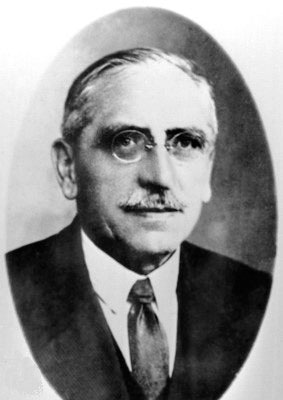
File:Lebesgue_2.jpeg · Wikimedia Commons · See Wikimedia Commons
Henri Lebesgue
Sign in to saveAlso known as Henri Leon Lebesgue, Henri L. Lebesgue, Lebesgue, Henri Léon Lebesgue
French mathematician (1875–1941)
Key facts
- Born
- ( 1875-06-28 ) June 28, 1875, Beauvais , Oise , France
- Died
- July 26, 1941 (1941-07-26) (aged 66), Paris , France
- Alma mater
- École Normale Supérieure , University of Paris
- Known for
- Lebesgue integration , Lebesgue measure
- Awards
- Fellow of the Royal Society , Poncelet Prize for 1914
- Fields
- Mathematics
- Institutions
- University of Rennes , University of Poitiers , University of Paris , Collège de France
- Thesis
- Intégrale, longueur, aire (1902)
- Doctoral advisor
- Émile Borel
- Doctoral students
- Paul Montel , Zygmunt Janiszewski , Georges de Rham
via Wikipedia infobox
Wikidata facts
- Instance of
- human
- Gender
- male
- Citizenship
- France
- Place of birth
- Beauvais
- Place of death
- Paris
- Occupation
- university teacher
- Educated at
- Lycée Saint-Louis
- Employer
- University of Rennes
- Languages spoken
- French
- Notable work
- Lebesgue's density theorem
- Doctoral advisor
- Émile Borel
- Field of work
- measure theory
- Image
- Lebesgue 2.jpeg
Show 10 more facts
- student
- Arnaud Denjoy
- member of
- Accademia Nazionale dei Lincei
- Commons category
- Henri-Léon Lebesgue
- date of birth
- 1875-06-28
- date of death
- 1941-07-26
- P8168
- Wild at Heart
- name in native language
- Henri-Léon Lebesgue
- writing language
- French
- Commons Creator page
- Henri-Léon Lebesgue
- maintained by WikiProject
- WikiProject Mathematics
Sources (3)
via Wikidata · CC0
~12 min read
Encyclopedic overview
Henri Léon Lebesgue (/ləˈbɛɡ/; French: [ɑ̃ʁi leɔ̃ ləbɛɡ]; June 28, 1875 – July 26, 1941) was a French mathematician known for his theory of integration, which was a generalization of the 17th-century concept of integration—summing the area between an axis and the curve of a function defined for that axis. His theory was published originally in his dissertation Intégrale, longueur, aire ("Integral, length, area") at the University of Nancy during 1902.
Personal life
Excerpted from Wikipedia’s “Henri Lebesgue” article, available under the CC BY-SA 4.0 licence.