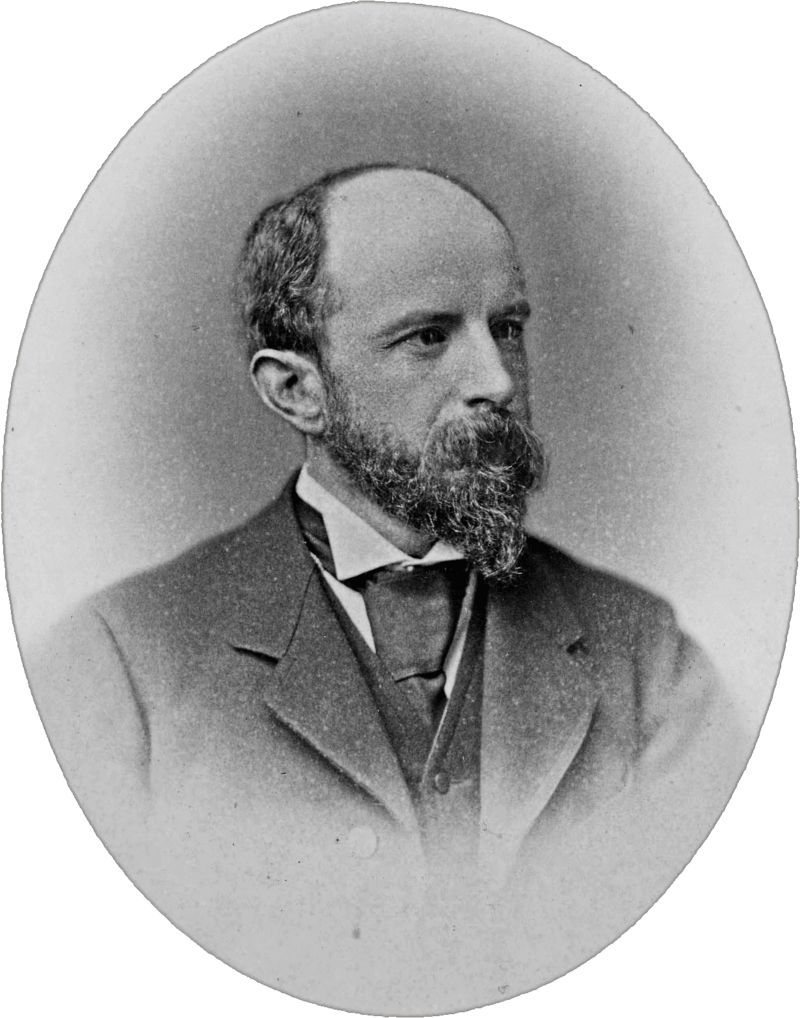
File:William_Notman_-_Henry_Brooks_Adams,_1885_(transparent).png · Wikimedia Commons · See Wikimedia Commons
Henry Adams
Sign in to saveAlso known as Frances Snow Compton, Henry B. Adams, Henry Brooks Adams
American journalist, historian, academic, novelist (1838-1918)
Henry Adams was a prominent American writer, historian, and intellectual who lived from 1838 to 1918 and made significant contributions as a journalist, academic, and novelist. He matters because he was an influential figure in American intellectual life who helped shape how people understood American history and society during a transformative period in the nation's development.
AI-generated from the Wikipedia summary — may contain errors.
Wikidata facts
- Instance of
- human
- Given name
- Henry
- Family name
- Adams
- Gender
- male
- Citizenship
- United States
- Place of birth
- Boston
- Place of death
- Washington, D.C.
- Spouse
- Marian Hooper Adams
- Sibling
- John Quincy Adams II
- Occupation
- art historian
- Educated at
- Humboldt-Universität zu Berlin
- Employer
- North American Review
- Languages spoken
- English language
- Native language
- English language
- Notable work
- The Education of Henry Adams
- Doctoral student
- J. Laurence Laughlin
- Field of work
- history
- Image
- Henry Adams.jpg
Show 13 more facts
- Commons Creator page
- Henry Adams
- Commons category
- Henry Adams
- date of birth
- 1838-01-01
- date of death
- 1918-01-01
- relative
- John Quincy Adams
- place of burial
- Adams Memorial
- described by source
- Encyclopædia Britannica 11th edition
- member of
- American Historical Association
- pseudonym
- Frances Snow Compton
- P8168
- Écoquenéauville
- writing language
- English language
- name in native language
- Henry Brooks Adams
- archives at
- New York Public Library Main Branch
Sources (6)
via Wikidata · CC0
~29 min read
Encyclopedic overview
Henry Brooks Adams (February 16, 1838 – March 27, 1918) was an American historian and a member of the Adams political family, descended from two U.S. presidents. As a young Harvard graduate, he served as secretary to his father, Charles Francis Adams, Abraham Lincoln's ambassador to the United Kingdom. The posting influenced the younger man through the experience of wartime diplomacy and absorption in English culture, especially the works of John Stuart Mill. After the American Civil War, he became a political journalist who entertained America's foremost intellectuals at his homes in Washington and Boston.
During his lifetime, he was best known for The History of the United States of America 1801–1817, a nine-volume work, praised for its literary style, command of the documentary evidence, and deep (family) knowledge of the period and its major figures. His posthumously published memoir, The Education of Henry Adams, won the Pulitzer Prize and went on to be named by the Modern Library as the best English-language nonfiction book of the 20th century.
Excerpted from Wikipedia’s “Henry Adams” article, available under the CC BY-SA 4.0 licence.