Herbert Gintis
Sign in to saveAlso known as Herbert M. Gintis
economist, Sociobiology researcher (1940–2023)
Person · Open Library
- Born
- 1940
- Died
- 2023
- Works
- 17
Top works
- Unequal chances
- A cooperative species
- Complexity and Institutions
- Schooling in Capitalist America
- Game Theory in Action
via Open Library + Wikidata
Music · MusicBrainz
- Type
- Person
- Gender
- Male
- Origin
- United States
- Active from
- 1940-02-11
- Active to
- 2023-01-05
via MusicBrainz · CC0
Listeners · Last.fm
- Listeners
- 1
- Total plays
- 1
<a href="https://www.last.fm/music/Herbert+Gintis">Read more on Last.fm</a>
Described at
Herbert Gintis - The Decision Lab
Herbert Gintis is a Harvard educated economist who studies behavioral science through a sociobiological lens.
thedecisionlab.com →Gintis’ contributions to the sociobiology literature include his book A Cooperative Species: Human Reciprocity and Its Evolution , which he co-authored with Samuel Bowles. In this 2011 release, Gintis and Bowles apply the concept of gene-culture coevolution to inform our understanding of human cooperation.3 The basic idea behind gene-culture coevolution is that there are cases when the interaction between certain aspects of culture and specific genes made certain traits more adaptive than others, which results in these traits being propagated within a species throughout evolution.4 Gintis and Bowles describe how in our evolutionary history, cooperation was the key to survival, especially in the context of competition and warfare with other groups. In these cases, cooperative groups tended to come out ahead. Gintis and Bowles also detail the importance of emotions like shame and guilt and the function of social norms in promoting in-group cooperation. We are incentivized to cooperate as failing to do so would result in punishment, both in the form of negative emotions and in the form of social consequences, such as being ostracized. Using models of gene-culture coevolution, Gintis and Bowles provide evidence for a sociobiological perspective of social cooperation.5 The central issue is not why selfish people act generously, but instead how genetic and cultural evolution has produced a species in which substantial numbers make sacrifices to uphold ethical norms and to help even total strangers.” Herbert Gintis in A Cooperative Species: Human Reciprocity and Its Evolution Why do biologists use agent-based models, whereas economists consider them unworthy of recognition? Why do sociologists ignore the brilliant cultural models developed in biology? Why do some disciplines tolerate learning-by-experience models but not imitation models? Why do psychologists delight in interpreting their findings as undermining economic theory? Why do some disciplines barely tolerate analytical methods, while others barely tolerate applied, historical, and ethnographic methods? I do not presume to have answers for these questions.” Gintis was an undergraduate at the University of Pennsylvania from 1958 to 1961. During his college years, he did not take a single economics course - in fact, he knew nothing of the discipline whatsoever. Following his graduation, he was accepted into graduate school at Harvard University. His original plan was to obtain his Ph.D. in mathematics, however, he left school after receiving his master’s degree. Gintis then took some time off and took over running a sandal shop in Boston from one of his friends. Eventually, he made the decision to return to school. Unsure of what studies to pursue, he turned to his friend, economist Chuck Levenstein, for advice. Levenstein asked Gintis if he was a Marxist, to which Gintis replied “yes” . Although he had done a few readings on the topic of Marxism, he wasn’t entirely sure what that meant.10 Yet, funnily enough, that answer changed the course of his future. Levenstein suggested Gintis study economics, stating that “the economy determines everything” (p. 2).11 Gintis says that, as a Ph.D. student, his primary interests were theoretical. With the encouragement of his colleague, economist Samuel Bowles, he slowly began to think about the evidence as well. As his career progressed, Gintis gained more and more interest in collecting evidence, which has now become his main focus.12 My colleagues and I found dramatic evidence of this positive relationship between markets and morality in our study of fairness in simple societies—hunter-gatherers, horticulturalists, nomadic herders, and small-scale sedentary farmers—in Africa, Latin America, and Asia. … As in advanced industrial societies, members of all of these societies exhibited a considerable degree of moral motivation and a willingness to sacrifice monetary gain to achieve fairness and reciprocity, even in anonymous one-shot sit
Excerpt from a page describing this subject · 32,691 chars · not written by Vinony
Wikidata facts
- Instance of
- human
- Given name
- Malena
- Gender
- male
- Citizenship
- United States
- Place of birth
- Philadelphia
- Place of death
- Northampton
- Occupation
- university teacher
- Educated at
- Harvard University
- Languages spoken
- English language
- Official website
- people.umass.edu/gintis
- Image
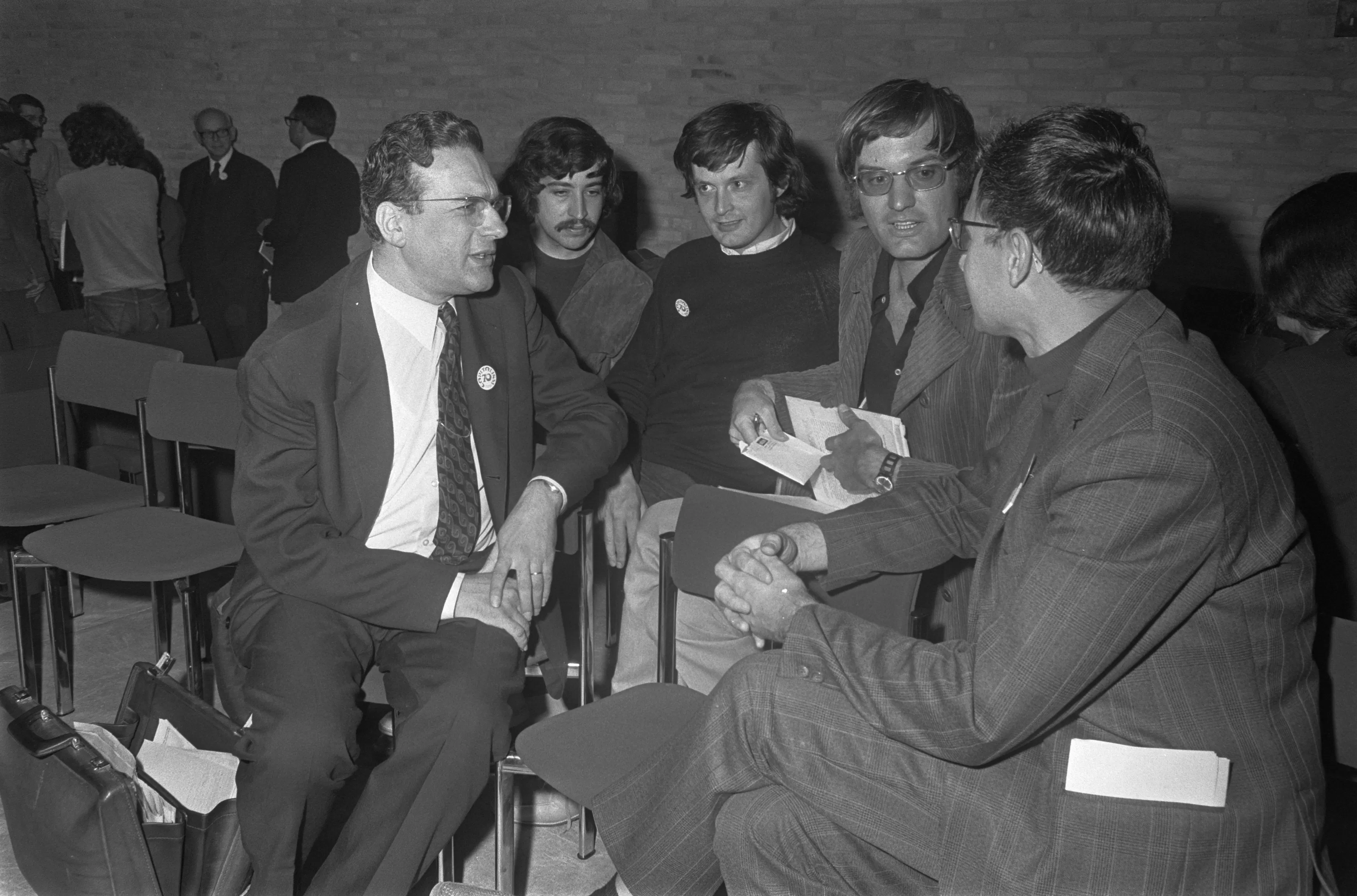
- Congres over Kapitalisme in 70-er jaren in Tilburgse Hogeschool v.l.n.r. Ern, Bestanddeelnr 923-8343.jpg
Show 5 more facts
- date of birth
- 1940-02-11
- Commons category
- Herbert Gintis
- date of death
- 2023-01-05
- described at URL
- thedecisionlab.com/thinkers/anthropology/herbert-gintis
- name in native language
- Herbert Gintis
Sources (4)
via Wikidata · CC0