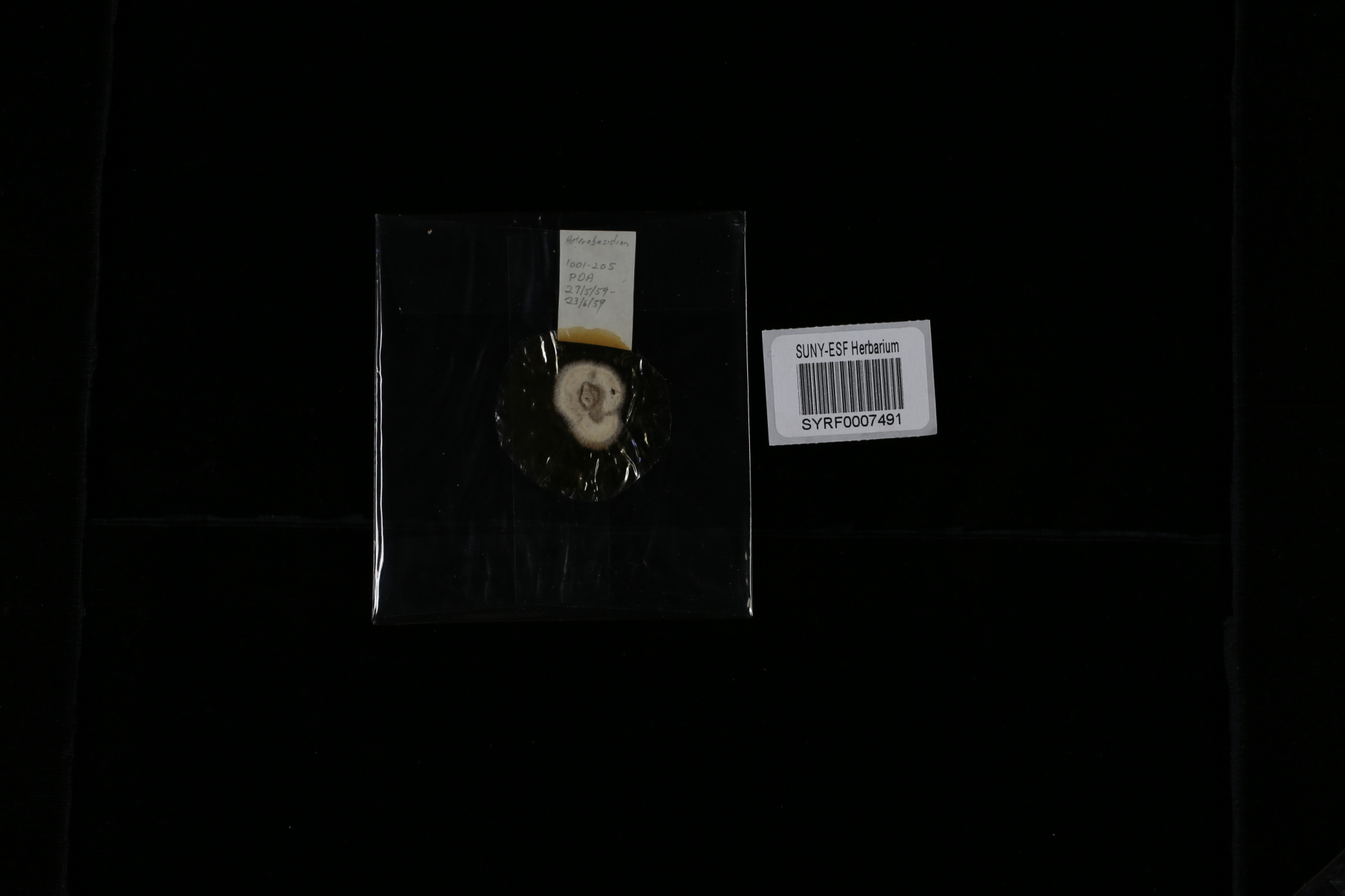
Specimen image via iDigBio · BY-NC-SA
Heterobasidion
Sign in to saveHeterobasidion is a genus of basidiomycetes in the family of Bondarzewiaceae. Species in this genus include tree decay fungi that may be pathogenic and cause deterioration of tree health including mortality. Fungi in the genus produce shelf-like polyporous fruiting bodies that release spores from pores. Mating studies in the late twentieth century and genetic studies in the early twenty-first century have led to description of several new species and replacement of some of the original names. As a result, two former Heterobasidion species, H. annosum and H. insulare, are now recogniz
Species
GENUS
- KingdomFungi
- PhylumBasidiomycota
- ClassAgaricomycetes
- OrderRussulales
- FamilyBondarzewiaceae
via GBIF
Museum specimens
- Specimen records
- 21
- With media
- 9
- Family
- Bondarzewiaceae
- Collections
- ECOSUR, UC, TENN-F, MEL, BPI, SYRF
- Recorded in
- Mexico, United States, Russian Federation, Australia, Venezuela, Canada, Pakistan, Norway
Wikidata facts
- Instance of
- taxon
- Parent taxon
- Bondarzewiaceae
- Image
- Heterobasidion annosum 2 - Lindsey.jpg
Show 5 more facts
- taxon name
- Heterobasidion
- taxon rank
- genus
- Commons category
- Heterobasidion
- topic's main category
- Category:Heterobasidion
- taxon author citation
- Bref.
Sources (2)
via Wikidata · CC0
~4 min read
Encyclopedic overview
5 sectionsContents
- ''Heterobasidion annosum'' sensu lato
- ''Heterobasidion insulare''
- ''Heterobasidion araucariae''
- Other Species
- References
Heterobasidion is a genus of basidiomycetes in the family of Bondarzewiaceae. Species in this genus include tree decay fungi that may be pathogenic and cause deterioration of tree health including mortality. Fungi in the genus produce shelf-like polyporous fruiting bodies that release spores from pores. Mating studies in the late twentieth century and genetic studies in the early twenty-first century have led to description of several new species and replacement of some of the original names. As a result, two former Heterobasidion species, H. annosum and H. insulare, are now recognized to each comprise multiple distinct species.
==Heterobasidion annosum sensu lato== Heterobasidion annosum sensu lato is a collection of the several species that cause Heterobasidion root disease and butt rot of forest trees and occasionally those in landscape plantings across the Northern Hemisphere. These fungi can be saprotrophic or necrotrophic, colonizing nonliving heartwood or living roots. Numerous tree species have been identified as hosts, but evergreen trees such as pine are most commonly affected. Heterobasidion root disease and butt rot are a serious issues to forest health due to tree mortality, decreased lumber volume and quality, and lessened carbon sequestration. This group of species include some of the most intensively studied forest tree pathogens, becoming the first basidiomycete forest pathogen to have its genome sequenced in 2012.
Excerpted from Wikipedia’s “Heterobasidion” article, available under the CC BY-SA 4.0 licence.