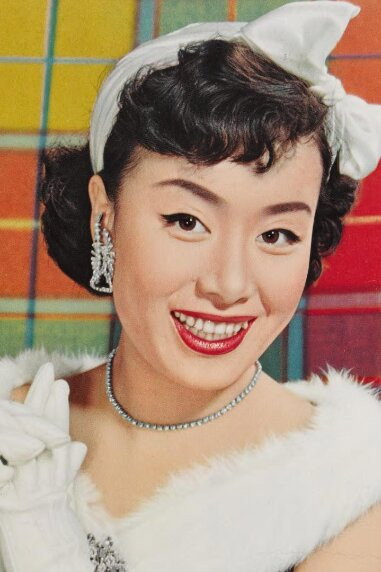
Profile via TMDB · Courtesy of TMDB
OverviewAI-generated
Hibari Misora, born 加藤 和枝 on 29 May 1937 in Yokohama, Kanagawa, Japan, was a Japanese actor, singer, jazz musician and lyricist with a contralto voice. She began her career in 1945, worked in the kayōkyoku and jazz genres, and recorded for Nippon Columbia and Columbia Records.
She received the People's Honour Award and a Japan Record Award, and was also known by the nickname 御嬢. She died on 24 June 1989 in Hongō, of pneumonia.
Synthesized by Vinony from 32 facts across 4 sources: Wikidata, MusicBrainz, Last.fm, TMDb. Generated from structured data (not the Wikipedia text) and checked against those facts — may still contain errors.
Film & TV
Yokohama, Kanagawa, Japan
Hibari Misora (美空 ひばり, Misora Hibari, born Kazue Katō (加藤 和枝, Katō Kazue) May 29, 1937 – June 24, 1989) was a Japanese singer, actress and cultural icon. She received a Medal of Honor for her contributions to music and for improving the welfare of the public, and was the first woman to receive the People's Honour Award, which was conferred posthumously for giving the public hope and encouragement…
Known for
- Hibari Misora Concert: ‘The Phoenix: Hibari Misora in Tokyo Dome’2019
- Princess Raccoon — CG Appearance2005
- 美空ひばりコンサート「愛ある限り私は歌う '82美空ひばりリサイタル」2002
- 春一番! 熱唱美空ひばり1989
- 美空ひばりコンサート「美空ひばり芸能生活40周年記念リサイタル」1986
- Hibari no Subete1971
- Onna no hanamichi1971
- The Performers — Kasumi Fujihana1970
- Hana no fushicho — Seto Kami1970
- ひばり・橋の花と喧嘩 — 寺田夏子 / 寺田春子 / 笹川お辰1969
via TMDB
Music · MusicBrainz
- Type
- Person
- Gender
- Female
- Origin
- Ibaraki
- Active from
- 1937
- Active to
- 1989
Discography
- 長崎の蝶々さん1957
- ひばりの歌変化1958
- ひばりの花絵巻1958
- ひばり端唄草紙 Hibari Hauta Zōshi1958
- 美空ひばりのマドロスさん1958
- ひばりのドドンパ1961
- ひばりの哀愁波止場1961
- ひばりの渡り鳥だよ1962
- ステレオ 美空ひばりの花ステージ (第2集)1965
- 美空ひばりの花のステージ 第3集1966
via MusicBrainz · CC0
Listeners · Last.fm
- Listeners
- 12,163
- Total plays
- 383,316
Tags
Hibari Misora (美空 ひばり Misora Hibari, May 29, 1937 - June 24, 1989) was a Japanese singer and the predominant figure in postwar enka music. Born Kazue Kato (加藤和枝) in Yokohama, she was an accomplished singer by the age of seven, and appeared in film for the first time at age 12. Between 1949's Kanashiki kuchibue and 1971's Onna no Hanamichi, she appeared in over 60 movies. In April of 1987, on the way to a performance in Fukuoka, she suddenly collapsed. <a href="https://www.last.fm/music/%E7%BE%8
via Last.fm · 美空ひばり
Key facts
- Born
- Katō Kazue ( 加藤 和枝 ) , May 29, 1937, Yokohama, Kanagawa , Japan
- Died
- June 24, 1989 (1989-06-24) (aged 52), Minato, Tokyo , Japan
- Other names
- Queen of Showa, Queen of the popular song, Queen of Enka
- Occupations
- Singer, Actress
- Honours
- Peoples Honor Award on July 2, 1989 after her death
- Genres
- Kayōkyoku Jazz Enka
- Years active
- 1945–1989
- Website
- misorahibari .com
via Wikipedia infobox
Wikidata facts
- Instance of
- human
- Family name
- Katō
- Gender
- female
- Citizenship
- Japan
- Place of birth
- Isogo-ku
- Place of death
- Hongō
- Spouse
- Akira Kobayashi
- Occupation
- child actor
- Languages spoken
- Japanese
- Native language
- Japanese
- Genre
- jazz
- Instrument
- voice
- Record label
- Columbia Records
- Official website
- www.misorahibari.com
- Image
- Hibari Misora 01.jpg
- Height
- 147
- Voice type
- contralto
Show 15 more facts
- Commons category
- Hibari Misora
- date of death
- 1989-06-24
- date of birth
- 1937-05-29
- cause of death
- pneumonia
- manner of death
- natural causes
- name in kana
- みそら ひばり
- name in native language
- 美空ひばり
- start of work period
- 1945-00-00
- birth name
- 加藤 和枝
- nickname
- 御嬢
- end of work period
- 1989-00-00
- writing language
- Japanese
- social media followers
- 11600
- ethnic group
- Japanese people
- pseudonym
- Hibari Misora
via Wikidata · CC0
~19 min read
Encyclopedic overview
Hibari Misora (美空 ひばり, Misora Hibari; born Kazue Katō (加藤 和枝, Katō Kazue) May 29, 1937 – June 24, 1989) was a Japanese singer and actress. She received a Medal of Honor for her contributions to music and for improving the welfare of the public, and was the first woman to receive the People's Honour Award, which was conferred posthumously for giving the public hope and encouragement after World War II.
Misora recorded a total of 1,200 songs and sold 68 million records. After she died, consumer demand for her recordings grew significantly, and, by 2001, she had sold more than 80 million records. By 2019, record sales surpassed 100 million. Her swan-song "Kawa no Nagare no Yō ni" (川の流れのように) is often performed by numerous artists and orchestras as a tribute to her, including notable renditions by The Three Tenors (Spanish/Italian), Teresa Teng (Taiwanese) and Mariachi Vargas de Tecalitlan (Mexican).
Excerpted from Wikipedia’s “Hibari Misora” article, available under the CC BY-SA 4.0 licence.