Hippobroma · Kew POWO · Kew Plants of the World Online
Hippobroma
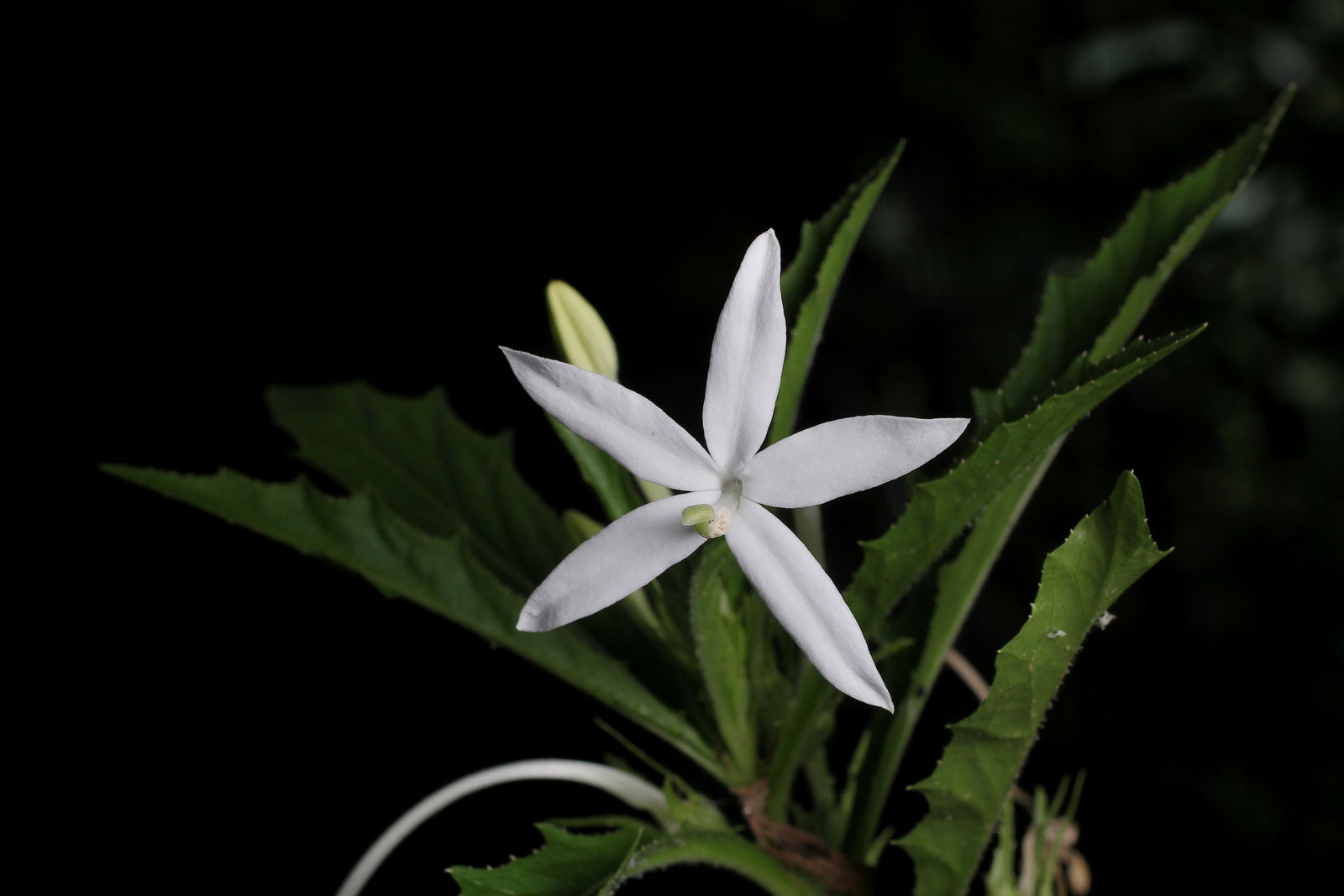
Sign in to saveHippobroma longiflora, also called Star of Bethlehem or madamfate, is a flowering plant in the family Campanulaceae. It is the only species in the genus Hippobroma. It is endemic to Jamaica in the West Indies, but has become naturalised across the American tropics, Madagascar, southern and southeastern Asia, and Oceania.
Species
GENUS
- KingdomPlantae
- PhylumTracheophyta
- ClassMagnoliopsida
- OrderAsterales
- FamilyCampanulaceae
via GBIF · Kew POWO
Museum specimens
- Specimen records
- 24
- With media
- 11
- Family
- Campanulaceae
- Collections
- GH, F, MO, UFPB, USCH, MNHN
- Recorded in
- Cuba, Ecuador, Peru, Honduras, Brasil, United States, Moluques, Costa Rica
Wikidata facts
- Instance of
- taxon
- Parent taxon
- Lobelioideae
- Image
- Hippobroma longiflora.jpg
Show 6 more facts
- taxon name
- Hippobroma
- taxon rank
- genus
- topic's main category
- Category:Hippobroma
- Commons category
- Hippobroma
- taxon common name
- 马醉草属
Sources (1)
via Wikidata · CC0
~1 min read
Encyclopedic overview
1 sectionsContents
- References
Hippobroma longiflora, also called Star of Bethlehem or madamfate, is a flowering plant in the family Campanulaceae. It is the only species in the genus Hippobroma. It is endemic to Jamaica in the West Indies, but has become naturalised across the American tropics, Madagascar, southern and southeastern Asia, and Oceania.
It is a perennial herbaceous plant growing to 35 cm tall, with leaves 7–16 cm long and 1–3.7 cm broad, with a coarsely toothed margin. The five-petaled white flower has a slender floral tube only wide by in length. The plant contains two pyridine alkaloids, lobeline and nicotine. The effects of nicotine and lobeline are quite similar, with psychoactive effects at small dosages and with unpleasant effects including vomiting, muscle paralysis, and trembling at higher dosages. For this reason, H. longiflora (and its various synonyms) is often referenced for both its toxicity and its ethnobotanical uses.
Excerpted from Wikipedia’s “Hippobroma” article, available under the CC BY-SA 4.0 licence.